Water for Bees: A Safe Urban Hive Setup
Honey bees need a dependable water source for cooling the colony and diluting stored food. In a city, set that source up before bees arrive, give them dry landing surfaces, keep it supplied during the water-foraging season, and refresh it often enough to prevent mosquitoes.
A good water station is not simply an open bucket. It is a small piece of hive infrastructure: safe for bees to land on, practical to clean, stable in wind, and placed where regular bee traffic will not conflict with people or pets.
Why honey bees collect water
According to Oregon State University Extension, colony water has two important uses:
- workers spread water through the brood area and fan to create evaporative cooling during hot weather; and
- bees use water to dilute stored honey, particularly before fresh nectar is readily available.
Unlike honey and pollen, water is not stored in the colony in large reserves. Demand can rise quickly when temperatures change. A source that repeatedly goes dry can train foragers to use a neighbor’s pool, bird bath, pet dish, leaking faucet, or damp soil instead.
Start the water station before the bees
Establish the source before installing a package, nuc, split, or relocated colony. If bees already use another source, adding a new container may not redirect them immediately. Keep the new source consistent and, where you control the old source, remove access safely rather than spraying or disturbing foraging bees.
For a new apiary:
- Choose the legal hive site with the urban placement scorecard.
- Put the water source on your property and away from doors, play areas, shared paths, and property lines.
- Add landing materials before filling it.
- Keep it supplied for several days before the colony arrives.
- Check the station during every hive visit and during sudden heat.
Some cities specify where water must be placed or when it must be available. Verify the exact-address rules with the beekeeping-law workflow rather than copying another city’s standard.
Four safe water-station designs
Shallow pan with stones
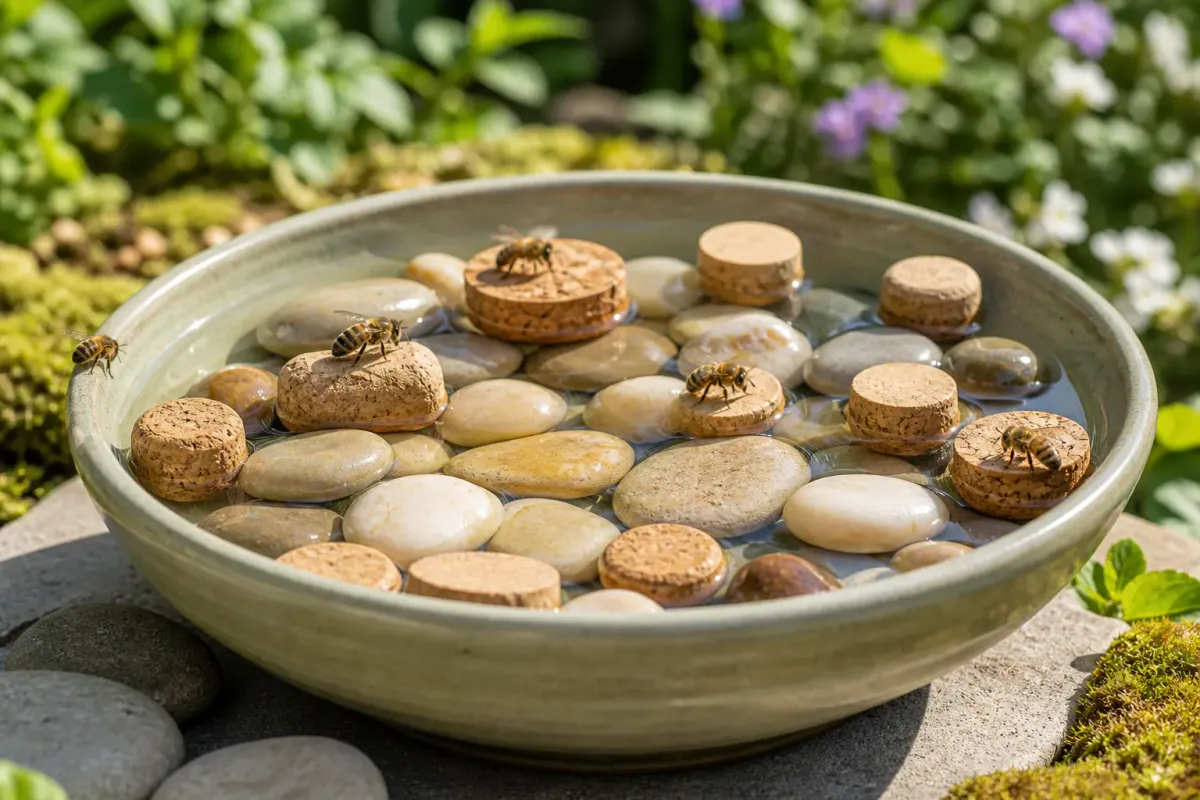
Use a wide, stable pan with washed stones or coarse gravel rising above the water. The wet edges provide many landing points while the exposed surfaces give bees a place to climb out.
This design is inexpensive and easy to inspect, but its small volume evaporates quickly. It needs frequent refilling in hot or windy weather.
Poultry waterer with a landing tray
A gravity reservoir can keep a shallow tray supplied for longer. Add clean pebbles or other textured landing objects to any exposed channel. Set the unit level and test for leaks before relying on it.
Clean the reservoir and tray on a schedule. A large container is not maintenance-free; hidden organic buildup and a blocked outlet can make it unreliable.
Drip source over gravel
A slow drip onto a tray of gravel or a contained patch of coarse stone creates wet surfaces without a deep pool. Use only where runoff cannot damage a roof, balcony, wall, or foundation and cannot create slippery surfaces.
Do not leave a hose connection under pressure where a failure could flood the site. Rooftop and balcony installations need a contained system and a safe drain path.
Recirculating container
A small recirculating feature can keep water moving, but it adds a pump, power source, cleaning requirement, and failure points. Cover deep areas with stable landing material and ensure the design remains safe if the pump stops.
Avoid exposed wiring, extension cords across work routes, or a basin that becomes a deep trap during a power outage.
Prevent drowning
Every open source needs landing and escape surfaces. Suitable options include:
- stones with rough surfaces;
- corks or untreated floating wood;
- a stable layer of coarse gravel;
- textured ramps that reach the waterline; or
- purpose-built mesh that cannot trap legs or sag underwater.
Do not rely on a single floating object in a deep bucket. Bees may land around the entire rim, fall between floats, or be unable to climb a smooth, wet wall. Keep the water shallow where bees can reach it and make the escape route obvious from every side.
Prevent mosquitoes and stagnation
Refresh water frequently, scrub biofilm from the container, and remove leaves or dead insects. Oregon State’s residential guidance specifically recommends changing water to avoid stagnation and mosquito breeding; local health rules may require a particular maintenance interval.
Use these checks:
- no mosquito larvae or pupae;
- no foul odor or heavy algae layer;
- no clogged outlet or pump;
- no sharp, unstable, or submerged landing pieces;
- no leaking reservoir or slippery runoff; and
- enough capacity for the next hot period.
Do not add pesticide, household cleaner, bleach, essential oil, or mosquito treatment unless the product is specifically labeled for that use and a qualified local source confirms it is appropriate around honey bees. Emptying, scrubbing, and refilling a manageable container is usually the clearest control.
Where to place water for an urban hive
Place the source closer to the apiary than the nuisance source you want bees to avoid, while keeping it outside the beekeeper’s standing and lifting area. It should not sit directly in front of the entrance, where concentrated traffic interferes with inspections.
A strong location is:
- on the beekeeper-controlled side of a flight barrier;
- visible and easy to reach for refilling;
- protected from tipping, pets, and casual contact;
- shaded enough to reduce extreme heating but still easy for bees to find;
- separated from electrical equipment and building drains; and
- placed so spilled water remains on the property.
On a balcony or roof, confirm load, waterproofing, drainage, access, and property permission. The balcony suitability guide and rooftop setup guide cover those site-specific constraints.
Seasonal water plan
Spring
Install or reactivate the source before regular water foraging begins. Clean winter debris, test reservoirs, and make sure landing materials did not shift.
Summer and heat events
Check more often. Evaporation, colony demand, and neighbor pool use can all rise rapidly. Pair the water plan with the urban heat-wave checklist; water cannot compensate for an unsafe, heat-trapping location.
Fall
Continue while bees are collecting water and while local rules require it. Reduce neglected standing water as activity declines, but do not remove the only dependable source during a warm spell.
Freezing weather
Liquid water may freeze or create ice around the work area. Follow climate-specific local guidance. Do not add salt, antifreeze, alcohol, or other de-icer to bee water.
If bees are already using a neighbor’s pool
Treat it as a management problem, not the neighbor’s fault.
- Confirm the insects are honey bees rather than wasps or native bees.
- Establish several safe, consistent sources near the apiary.
- Ask the neighbor what times and locations are affected.
- Clean and refill your stations without allowing them to run dry.
- Contact a local extension educator or experienced mentor if traffic does not decline.
Do not spray bees at the pool or put unverified mineral mixtures in their water. Oregon State Extension notes that there is no guaranteed way to redirect bees once they are trained to a source. Prevention is more reliable than correction.
Use the neighbor-concern response guide to document the issue and agree on follow-up.
Water-station checklist
- Installed before bees arrive or before seasonal water foraging begins
- Located on the apiary property and away from shared traffic
- Multiple dry landing and escape surfaces provided
- Stable, level, and protected from tipping
- Capacity checked for hot and windy weather
- No leaking runoff, roof damage, or electrical conflict
- Cleaned often enough to prevent stagnation and mosquitoes
- Included in every inspection and heat-event check
- Local water-placement rules verified
A dependable water source is part of responsible placement, swarm planning, and neighbor care. Build it into the site before the first colony arrives rather than waiting for bees to choose a source for you.
For international sites, check Vancouver water and hive-placement guidance, Victorian apiary requirements and Queensland backyard beekeeping duties. The Auckland bee control expressly requires a suitable water source on the apiary premises.