BC Beekeeping Regulations: Animal Health Act & Rules
By UrbanBee Editorial TeamSources checked Oct 14, 2026
⚠️ Not Legal Advice: Summaries for educational purposes only. Verify with official British Columbia authorities.
British Columbia requires beekeepers and apiary locations to be registered under its bee-health framework. Provincial registration does not replace municipal hive-placement rules or property permission. Vancouver’s guidance is one local example; other B.C. communities can use different requirements.
Start with the province’s apiculture registration instructions, then ask your municipality about the specific lot and hive proposal. If bears occur in the area, assess protection before bees arrive rather than waiting for the first damaged hive.
BC provincial duties and Vancouver guidance
| Topic | British Columbia | Vancouver example |
|---|---|---|
| Registration | Beekeeper and apiary locations must be registered | Provincial registration still applies |
| Fees and renewal | Premises ID participation is free; confirm registration renewal duties | Check any separate city or site charges |
| Permits | Transfers and some movements require provincial documents | Land-use or rooftop approvals may also apply |
| Hive limits | No single allowance for every residential property | Bulletin: 2 below 10,000 sq ft; 4 above |
| Placement | Check local rules and nuisance risks | Rear locations; fence, distance and elevation guidance |
At exactly 10,000 square feet, ask Vancouver to confirm the applicable category rather than assigning the lot to an unstated threshold.
Register the beekeeper and the apiary premises
The B.C. apiculture page directs beekeepers to the Premises ID registration system. The Premises ID program is free and links animal keeping, including bees, to a geographical site for emergency response.
Keep your contact and location information current and include any additional apiaries. The Bee Regulation separately provides a two-year registration term unless renewed or otherwise ended. Confirm how the current portal handles your registration and reminders; opening an account is not a reason to ignore expiry requirements.
Post the required beekeeper identification at the apiary and retain the program’s approval records. A temporary lack of live colonies does not necessarily end duties concerning exposed used equipment.
Vancouver hobby beekeeping: read the actual bulletin
The Urban Honey Beekeeping bulletin, dated November 2022, sets out guidance for residential, commercial, industrial, community-garden and rooftop sites. For residential properties it describes rear-yard siting, two hives below 10,000 square feet and four above.
Its placement provisions discuss a six-foot solid fence, ten feet from neighboring property lines, and an eight-foot elevated position when the fence is absent. Do not infer a separate street setback or an additional nucleus-colony allowance from those figures.
When building 2-metre flyway barriers for small lots, use Vancouver’s full site guidance and confirm how it applies. Other municipalities may require a different height, colony count or approval. A raised platform also needs safe access and sufficient working space.
Water and neighbor management
Install water before bringing in bees, monitor it during hot spells and use landing surfaces that let bees drink without drowning. Our guide to dedicated waterers for city apiaries explains options.

Point entrances away from paths and routinely occupied areas. Keep a reachable contact for the property manager or adjacent residents, and arrange experienced help if the colony becomes defensive. A good water station helps reduce unwanted visits; it cannot guarantee bees will never cross the property line.
Movement permits and buying used equipment
The Bee Regulation addresses imports, transport between bee districts and transfer of bees or used equipment. Confirm the correct permits and inspection documentation before accepting a sale or moving an apiary.
Keep the seller’s details and hive origin with your records. Do not treat a queen purchase, a used brood box or a move across a district as exempt simply because the operation is small. Ask an apiary inspector when the transaction does not fit the published guidance.
Bear protection and exposed locations
A hive supplies an attractive food source in bear habitat, including parts of the North Shore, Fraser Valley and Vancouver Island. Consider properly designed electric protection with local wildlife advice; check fence safety, signage, public access and municipal restrictions.
Do not assume every address legally requires the same fence. Remote land managers or specific approvals may impose conditions that differ from a residential yard. Keep stored comb and equipment secure and have a plan for storm, flood or wildfire disruptions.
Complete registration, local placement review, landowner permission and any required permits before installing or moving the colony.
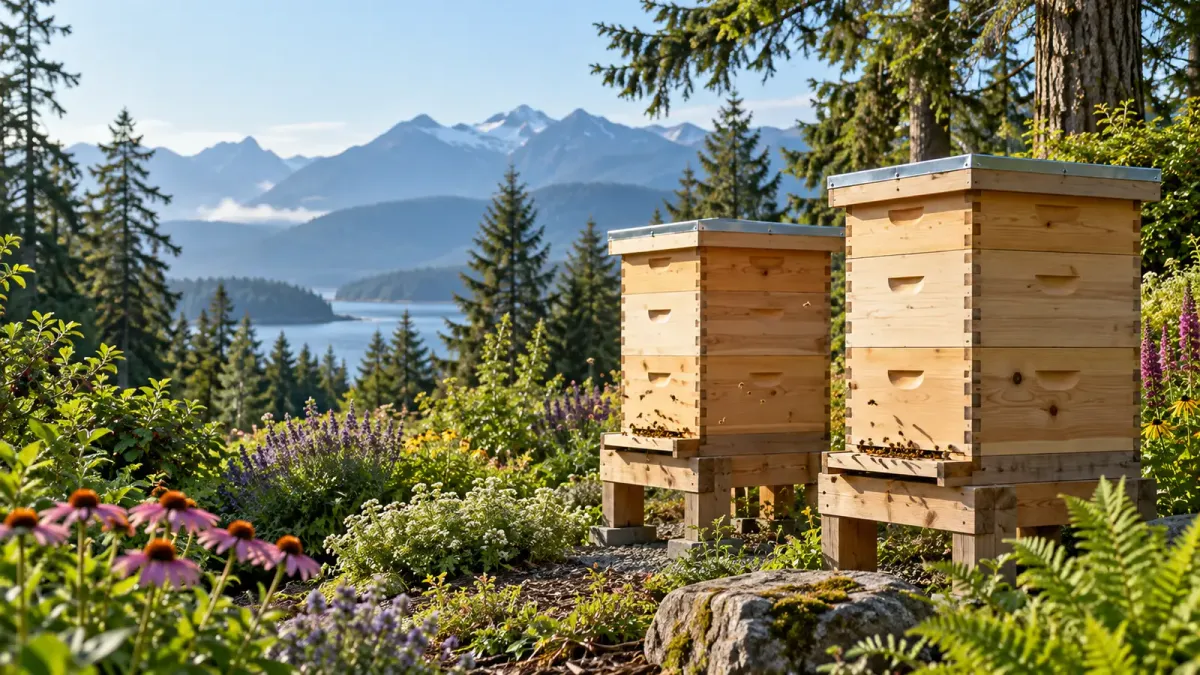
The images are generated illustrations, not approved B.C. apiaries or certified bear-protection designs.
Detailed Vancouver site requirements
Our Vancouver backyard, rooftop and community-garden guide compares the city’s site-specific hive allowances, placement requirements and shared-property agreements. Other B.C. municipalities need their own local review.
Frequently asked questions
Do I need to register one beehive in British Columbia?
Yes. The province requires beekeepers and apiary locations to be registered. The current provincial apiculture page directs registration through the Premises ID system.
How many hives can I keep in Vancouver?
The city’s November 2022 bulletin specifies two hives on parcels below 10,000 square feet and four on parcels above that size. Confirm the exact threshold, property category and current requirements with the city.
Does Vancouver require a 2-metre flyway barrier?
Its bulletin describes a six-foot (1.8-metre) solid fence, a ten-foot (3-metre) distance from neighboring property lines and an elevated-hive option where that fence is absent. Use the full guidance for the proposed site.
Is electric fencing compulsory at every BC apiary?
The sources reviewed do not establish a universal electric-fence requirement for every apiary. In bear habitat, plan suitable protection and check local wildlife, land-manager and fencing requirements.