How to Build a Flyway Barrier for Urban Bees
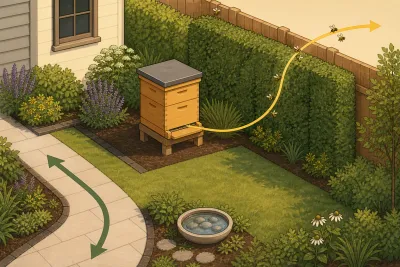
A flyway barrier is the highest-value structure in urban beekeeping: a simple 6-foot obstacle that forces bees to climb above head height before they cross your property line. It turns a low, person-level flight path across the neighbor’s patio into an invisible highway 10 feet overhead - and in several cities it isn’t just good manners, it’s written into the ordinance.
Why barriers work
Bees leaving a hive fly in the direction of the entrance and climb gradually. With nothing in the way, they cross your fence line at chest height - right where people walk, garden, and grill. Put a barrier within about 10 feet of the entrance and bees adopt a steep climb-out instead, crossing boundaries well above anyone’s head. Foragers return the same way. One structure removes the majority of human–bee collisions that cause neighbor complaints and stinging incidents.
Several cities formalize this: San Diego requires a 6-foot barrier (or 8-foot hive elevation) outright, and model ordinances used across many municipalities include flyway-barrier language. Building one often means complying with rules you haven’t read yet.
What counts as a barrier
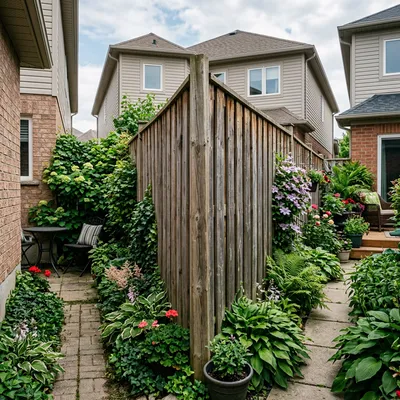
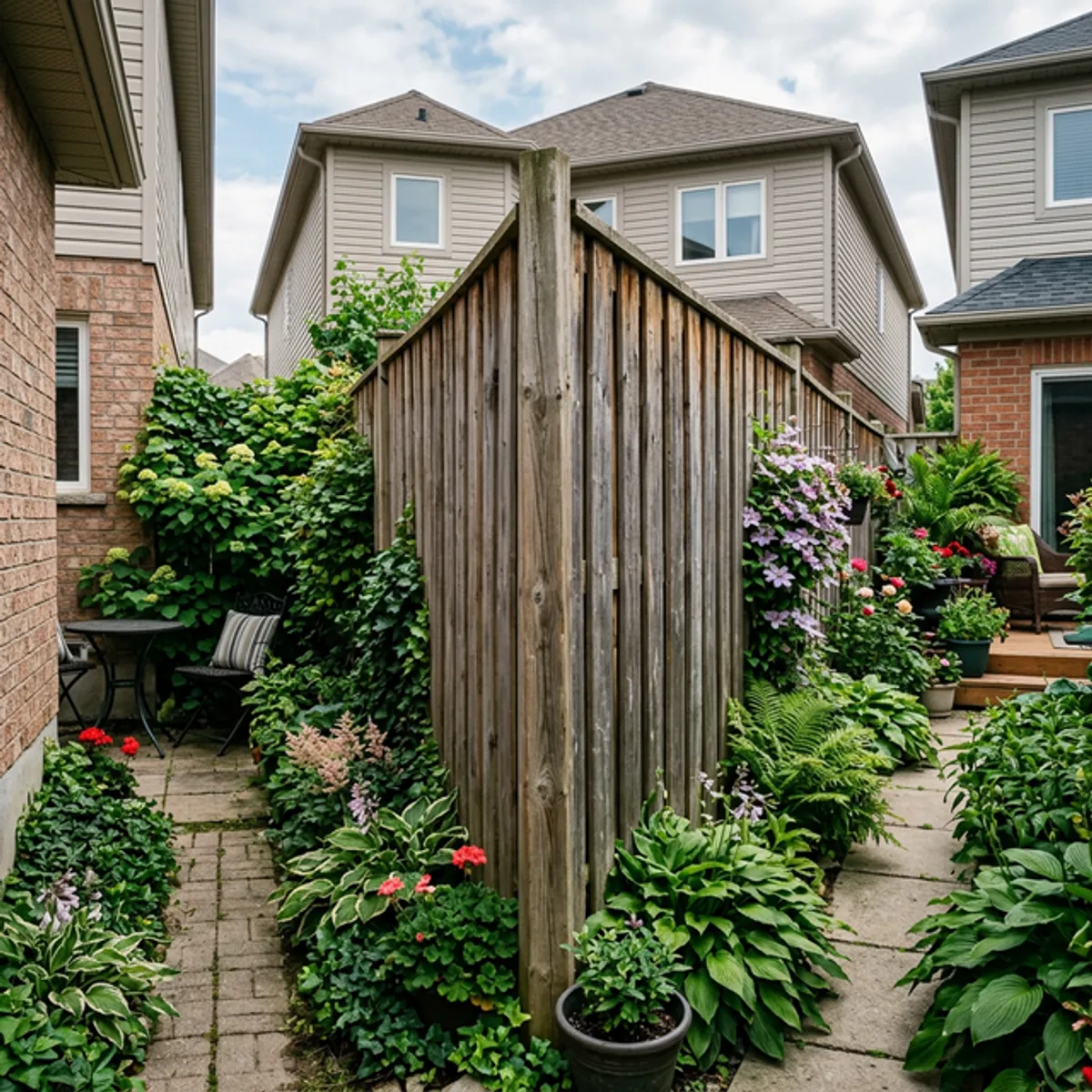
Anything visually solid and at least 6 feet tall works: a wooden privacy fence you already own, a dense hedge (arborvitae, privet, bamboo in planters), shade-cloth or windbreak fabric on posts, lattice with a climbing vine, or garden netting stretched on a frame. Bees don’t need it to be airtight - they need it to be not worth flying through. Netting and shade cloth are the budget answers at roughly $30–$80; they also double as wind protection, which rooftop and balcony hives need anyway.
Step-by-step build
- Map the flight path. The barrier belongs between the hive entrance and the nearest human space, within 10 feet of the entrance - closer forces a steeper climb.
- Choose your material. Existing fence? You’re done if it’s 6 feet. Otherwise, posts plus shade cloth or netting is a one-afternoon build.
- Get the geometry right. At least 6 feet tall, extending 2–3 feet past the hive on both sides so bees can’t slip around the ends low.
- Close the gaps. Open gates and gaps under 6 feet become bee doors. Check sightlines from a crouch at the entrance.
- Verify with real traffic. On the first warm afternoon after installation, watch the departure arc. Adjust ends where traffic leaks around.
Placement beats everything
A barrier fixes the flight path - it doesn’t fix a bad site. Point the entrance away from the property line where possible, keep water at the hive so bees aren’t commuting to the neighbor’s pool, and stay under your city’s hive limits (check your city’s rules). On balconies, the railing itself often becomes the barrier - our balcony beekeeping guide covers that variant.
Keep reading
Flyway barriers are step one of neighbor-proofing. Steps two and three are swarm prevention and a proactive relationship with the people next door - the three together are why some city beekeepers go a decade without a single complaint.
For an international site, check the actual height and placement rule: UK garden guidance, Vancouver’s beekeeping bulletin, NSW council checks, Victoria’s Apiary Code and Auckland’s bee-management control differ. A barrier does not automatically waive a statutory setback or authorize a site.