How to Get Rid of Bees Without Killing Them
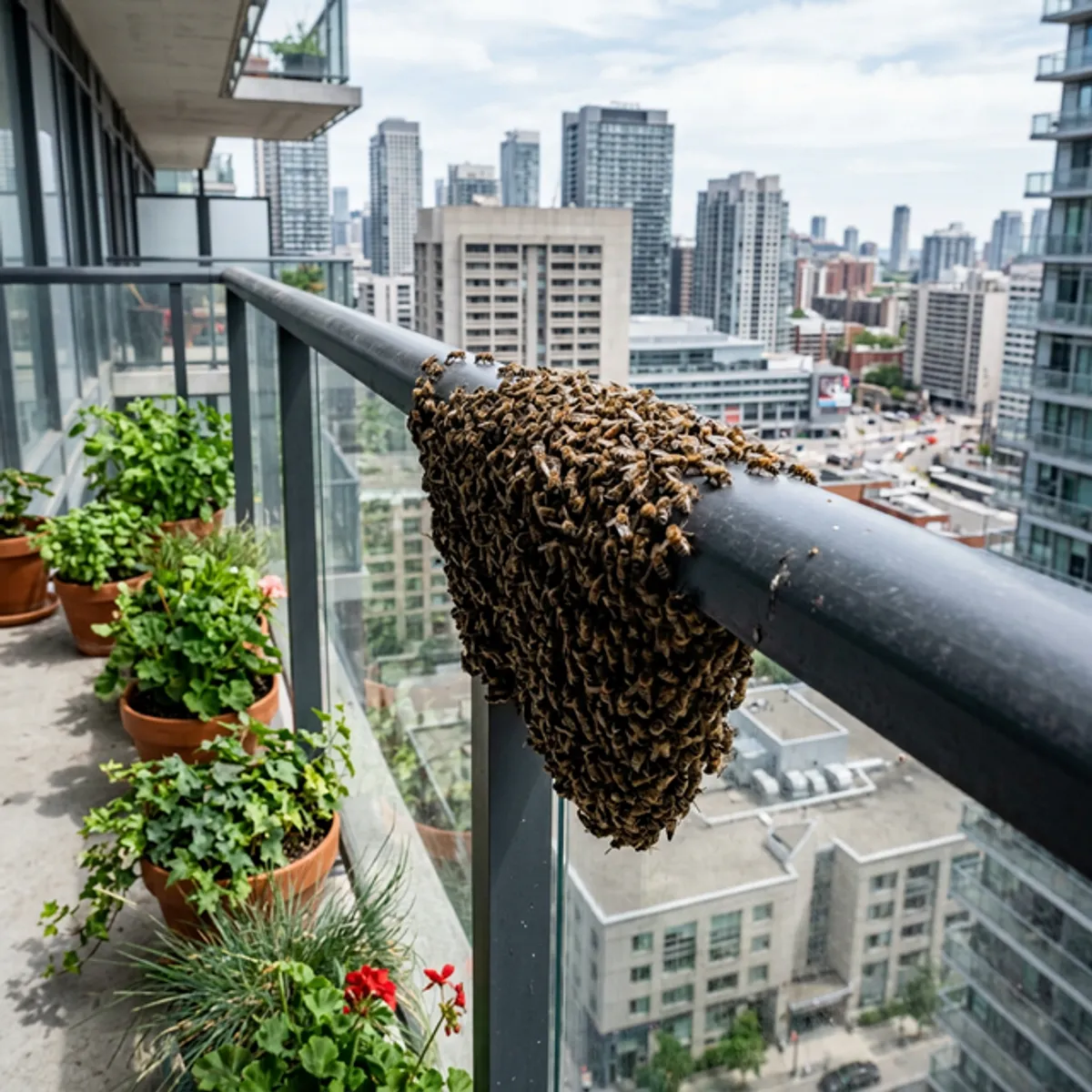
Bees showed up where you didn’t invite them - a cluster on the fence, traffic in and out of a wall vent, a hum in the chimney. The instinct is a can of spray. With honey bees, that instinct is wrong on every axis: it’s often ineffective, sometimes illegal, usually more expensive in the end, and always a waste of the one stinging insect everyone actually wants alive. Here’s the playbook that works.
First: figure out what you have
The response depends entirely on the insect and the situation, so start with two questions.
Is it actually a honey bee? Bright yellow insects at your trash or picnic are yellowjackets; a papery umbrella nest under the eave is paper wasps. Those are a different problem with different (and sometimes lethal-force-appropriate) solutions - run through our bee vs. wasp vs. hornet identification guide first.
Is it a swarm or a colony? A hanging cluster with no comb is a temporary swarm - usually gone in 48 hours and collectible for free. Steady traffic into a hole - wall void, soffit, chimney, irrigation box, compost bin - is an established or establishing colony. Colonies don’t leave on their own.
Option 1: The free one - a swarm call
For any accessible hanging cluster, contact your local beekeeping association’s swarm list (search “your city beekeepers swarm list” or call 311). A beekeeper typically arrives within hours, boxes the cluster, and leaves - no charge, because a swarm is valuable livestock. This is the single most underused free service in home ownership.
Option 2: Live removal for established colonies
For bees behind siding or drywall, our house-wall bee removal guide compares cutouts and trap-outs and gives you a cleanup-and-repair checklist to discuss with the specialist.
For a colony in a structure, hire a live bee removal specialist - many are beekeepers with construction skills. A proper removal:
- Locates the colony precisely (often with a thermal camera or listening).
- Opens the cavity and removes bees and every piece of comb - this is the step that matters.
- Relocates the colony to an apiary, ideally with the queen.
- Cleans and seals the cavity and entrance so the void doesn’t advertise itself to next spring’s swarms.
Expect $150–$800+ depending on access; simple exposed colonies cost less, second-story soffit cut-outs cost more. Insist the quote includes comb removal and sealing - a “removal” that skips the comb is a repeat appointment in disguise.
Why spraying backfires
Killing a wall colony leaves behind what the bees were maintaining: several pounds of honey and brood in a climate-controlled cavity that just lost its climate control. The honey ferments and bleeds through drywall and paint; dead brood rots; ants, moths, and mice arrive; and the comb’s scent attracts the next swarm to the same void. You end up paying for the cut-out anyway - plus remediation. There are also legal angles: managed honey bee colonies are regulated as livestock in some states, and several states restrict applying pesticides to bees (Florida’s framework is the strongest example).
Prevention: close the doors
After any removal - or to avoid ever needing one - seal cavity entrances bees scout for: gaps around vents and soffits, weep holes (use screen, not caulk), chimney caps, hollow fence posts, irrigation valve boxes. Do it in late winter, before spring swarm season; our swarm-season calendar tells you when scouting starts in your area.
If bees are simply visiting your yard
Foragers on your flowers or at your pool aren’t nesting - they’re commuting. Water visitors usually mean a nearby colony lacks a source; a bucket of water with corks or gravel placed closer to their flight path than your pool typically retrains them within weeks. If a neighbor keeps the bees, a friendly conversation about water stations and flyway barriers solves it faster than a complaint - and if the visiting bees have made you curious rather than annoyed, well, here’s how people end up with hives of their own.