Urban Beekeeping Calendar: Month-by-Month Hive Tasks
Beekeeping is a calendar sport: almost every failure - swarms in the neighbor’s tree, mite crashes in November, starvation in March - traces back to a task done late or skipped. This month-by-month calendar is tuned for city hives, where timing errors have an audience.
Adjust the months to your climate: “early spring” means dandelion bloom in your neighborhood, not a fixed date. Warm-region beekeepers (see our Houston notes) should shift the winter tasks toward their short, mild off-season.
January - plan and order
- Order bees now (package or nuc? - they sell out by late winter) and any equipment for expansion. Not sure what it all costs? See the urban beekeeping budget.
- Heft the hive from behind to judge stores; add emergency sugar on a mild day only if light.
- Read your city’s rules again if you plan to add hives - hive limits vary by city.
- Do not open the hive in cold weather.
February - late-winter checks
- On a calm day above ~50°F (10°C), take a quick peek under the lid: cluster position and stores. Seconds, not minutes.
- Emergency-feed hives that feel light - starvation peaks in late winter, not mid-winter.
- Clean, repair, and paint spare equipment.
March - first inspections
If feeding is warranted, use the 1:1 syrup recipe by weight to scale the batch.
- First real inspection on a warm, still day: is the queen laying? Are stores holding?
- If stores and forage show a real need, use the safe sugar-syrup guide and an internal feeder; never open-feed.
- Watch entrances: normal spring traffic, or robbing?
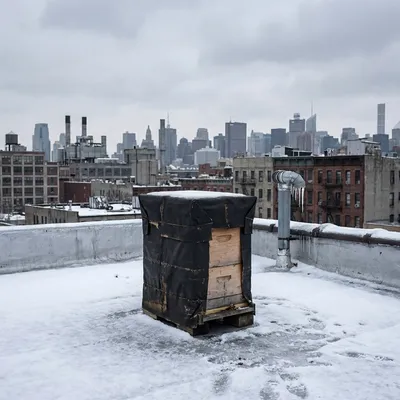
- Balcony and rooftop keepers: check straps, stands, and winter damage - our rooftop setup guide has the checklist.
April - swarm season opens
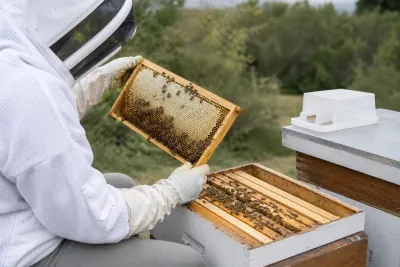
- Inspect every 7–10 days from now through June. This cadence is the single most important line in this calendar.
- Look for queen cells, congestion, and backfilled brood nests; add supers before they are needed.
- Learn the interventions in our city swarm prevention guide - checkerboarding, opening the brood nest, and proactive splits.
- Set up your water source before summer thirst arrives (your neighbors’ pools are the alternative).
May - peak buildup
- Keep the 7–10 day inspection rhythm; swarm pressure peaks now.
- Add supers ahead of the main nectar flow.
- Do your first Varroa mite count of the year and record it - here is how.
- If a swarm does issue and clusters nearby, act fast and calmly: our guide to handling a swarm on a balcony applies to most urban landing spots.
June - flow and expansion
- Inspections can stretch to every 2 weeks once swarm signs fade.
- Add supers while the flow lasts; a strong urban hive can fill one surprisingly fast.
- Mite check #2. Treat if counts cross threshold - summer treatments protect the winter bees being raised soon.
July - dearth begins
- Many cities hit a nectar dearth mid-summer: bees get testy and robbing starts. Reduce entrances and never spill syrup.
- Keep water full through heat waves - see protecting rooftop hives in extreme heat.
- Expect bearding on hot evenings - it looks alarming and is normal.
- Harvest spring honey if supers are capped: how to harvest without an extractor.
August - the most important mite month
- Mite check #3 - do not skip. August mite loads determine whether your winter bees are born healthy. Treat promptly if over threshold.
- Continue dearth management: entrance reducers, no open feeding.
- Goldenrod bloom starts late this month in many regions - if the hive suddenly smells like gym socks, that smell is usually normal.
September - winter bees
Where stores need supplementing before cold weather, check the 2:1 syrup recipe and feeding cautions.
- Assess stores: most temperate-climate hives need the equivalent of a full deep of honey. Feed 2:1 syrup early enough for bees to cure it.
- Final mite treatment window closes as temperatures drop.
- Combine weak colonies rather than wintering two doubtful ones.
October - button up
- Install mouse guards, tilt hives slightly forward for drainage, add wind protection.
- Full winterizing pass: insulation and moisture management per our winterizing guide - balcony keepers, see the balcony winter guide.
- Strap everything down before storm season.
November - last checks
- Confirm straps, covers, and ventilation before hard frosts.
- Stop internal inspections; watch entrances on mild days for orientation flights.
- Clean and store extracted supers safely away from wax moths.
December - rest and review
- Leave the bees alone. Brush snow from entrances after storms.
- Review your notes: swarm dates, mite counts, honey yield. Next year’s calendar starts from this year’s data.
- Gift honey to the neighbors - cheap diplomacy that pays all summer (more in keeping neighbors happy).
Make it yours
Two seasons of notes will localize this calendar better than any website can. If you are still setting up your first hive, work through the complete urban beekeeping guide first - the calendar assumes the foundations are in place.