Sugar Water for Bees: Safe Ratios and Feeding
Feed sugar syrup only when a colony assessment shows a need and local conditions support liquid feeding. A common spring mixture is 1 part white granulated sugar to 1 part water by weight. A common fall storage mixture is 2 parts sugar to 1 part water by weight. Those are management tools, not year-round prescriptions.
Do not feed syrup while honey supers intended for human harvest are on the colony. Do not use unknown honey, brown sugar, molasses, artificial sweetener, or an improvised additive. If a colony is unexpectedly light, failing, diseased, or unable to take feed, ask an experienced local beekeeper or extension educator to help diagnose why.
Decide whether feeding is actually needed
For weighed recipes and batch calculations, see sugar water ratios for bees.
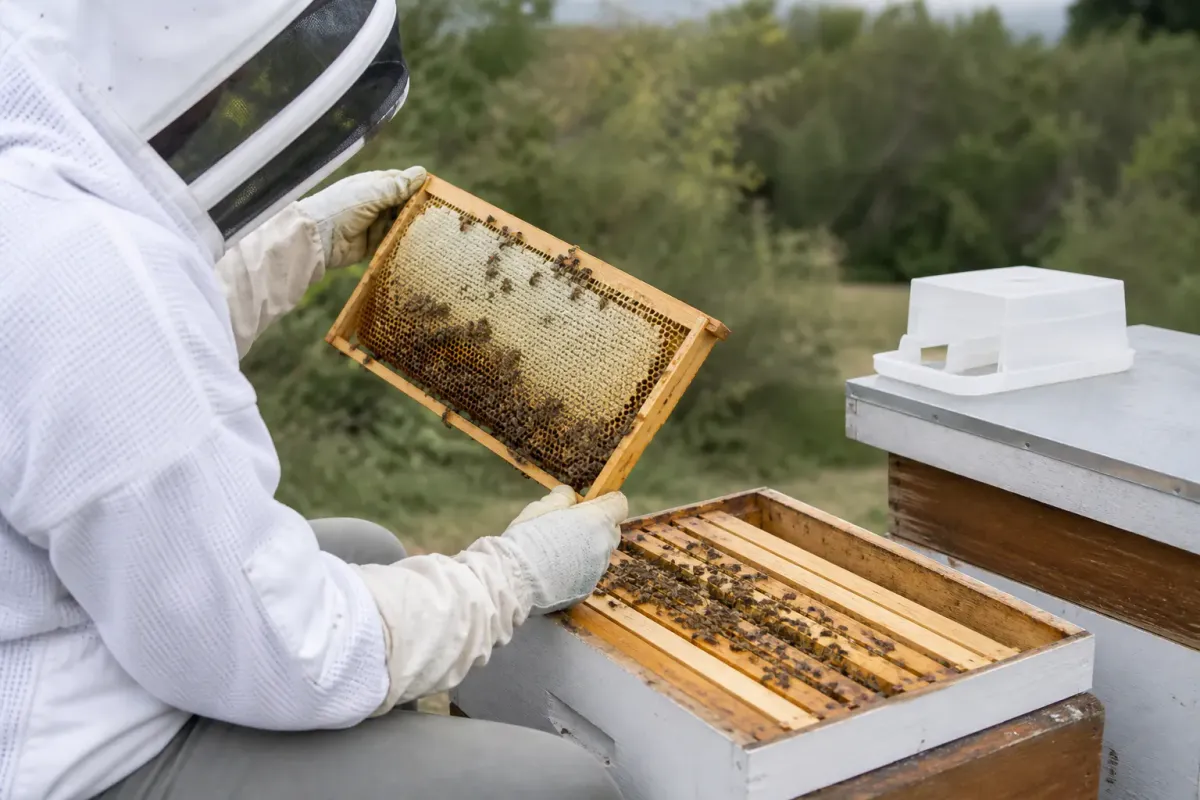
Before mixing syrup, inspect or assess:
- the colony’s usable capped food stores;
- adult population and brood area;
- whether nectar is entering the hive;
- weather and the local bloom forecast;
- feeder access and nighttime temperature;
- robbing pressure in the apiary; and
- whether harvest supers or medication restrictions make feeding inappropriate.
A light colony during a dearth, a newly installed package drawing comb, or a split with limited stores may need support. A strong colony in an active nectar flow may not. Feeding without checking can crowd the brood nest with syrup, increase robbing risk, hide an underlying health problem, or put stored sugar syrup into a harvest super.
Use a dated inspection record and seasonal plan rather than feeding because a calendar elsewhere says it is spring or fall.
Sugar syrup ratios: use weight, not an ambiguous cup recipe
The Connecticut Agricultural Experiment Station’s hive-health guidance defines these ratios by weight:
| Intended use | Sugar | Water | Important limit |
|---|---|---|---|
| Thin syrup often used for spring support | 1 part | 1 part | Use only while stores or local forage justify it; stop before honey production supers are used |
| Heavy syrup often used to add fall stores | 2 parts | 1 part | Use only when the colony can process liquid feed and before cold conditions prevent uptake |
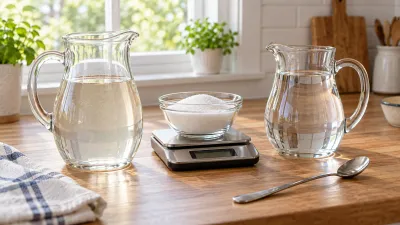
For example, a 1:1 batch can use 1 kilogram of white granulated sugar and 1 kilogram of water. A 2:1 batch can use 2 kilograms of sugar and 1 kilogram of water. A kitchen scale avoids the volume differences between dry sugar and liquid water. Use our Sugar Syrup Calculator to find exact water and batch weights for any bag of sugar.
Local recommendations vary by climate, colony type, and goal. If your extension program specifies a different concentration or a commercial feed, follow that program and the product label.
How to mix syrup safely
- Use potable water and clean food-safe equipment.
- Measure white granulated cane or beet sugar and water by weight.
- Heat the water enough to dissolve the sugar, then remove it from the heat.
- Stir until the solution is clear. Do not boil or caramelize the syrup.
- Let it cool completely before filling the feeder.
- Label stored feed with the ratio and preparation date.
- Discard fermented, moldy, scorched, or badly contaminated syrup.
Make an amount the colony can use before it spoils. Wash the feeder between batches and clean spills immediately.
What not to put in bee feed
Use plain white granulated sugar unless a qualified source gives a specific alternative.
Avoid:
- unknown honey: it can carry American foulbrood organisms or other disease hazards;
- brown sugar, raw sugar, or molasses: mineral and processing residues make them unsuitable substitutes;
- artificial sweeteners: they are not bee food;
- essential oils, vinegar, bleach, medication, or supplements: efficacy, residues, dose, and interactions are not established by a generic internet recipe; and
- scorched or caramelized syrup: overheating changes the feed and can create harmful compounds.
If feeding honey back to bees is part of an inspector- or mentor-directed plan, use only disease-free material from the beekeeper’s own known colonies and follow local disease rules.
Choose a feeder that reduces urban risk
In-hive top feeder
A covered feeder above the colony keeps most odors and activity inside the hive and can hold a larger volume. It must fit tightly, prevent bees from entering unsafe chambers, and be handled without spilling syrup down the boxes.
Frame feeder
A frame-style feeder sits inside the brood box. It needs floats, ladders, or another manufacturer-designed escape surface. Opening the colony to refill it can be disruptive, and a poorly designed unit can drown bees.
Entrance feeder
An entrance-mounted jar is easy to see but exposes syrup at the entrance and can intensify robbing, especially during a dearth. It is usually a weak choice in a dense urban apiary or among colonies of unequal strength.
Open feeding
Do not place an uncovered communal syrup container outdoors. It can recruit bees from many colonies, spread disease, create a public concentration of stinging insects, and trigger robbing.
Follow the feeder manufacturer’s instructions and inspect for leaks before installation. Keep syrup inside the hive footprint and away from neighboring property.
Prevent robbing while feeding
University of Florida IFAS warns that exposed syrup, honey, wet supers, and spills can escalate robbing quickly.
Reduce the risk:
- prefer an internal feeder during a dearth;
- feed all colonies in the apiary according to need, not only the weakest one without protection;
- reduce vulnerable entrances when seasonally appropriate;
- close boxes promptly and cover honey or syrup equipment;
- do not drip feed on the hive exterior or ground;
- clean feeder surfaces and spills immediately; and
- stop and close colonies if fighting or frantic side-entry traffic begins.
Robbing is not normal orientation flight. Look for bees fighting at entrances, searching cracks, shredded wax debris, and unusually frantic traffic between colonies.
When to stop feeding
Stop liquid syrup when:
- a dependable nectar flow supplies the colony’s needs;
- harvest supers intended for human food are installed;
- the target amount of winter stores is reached;
- bees stop taking the feed because of cold or another condition;
- syrup is fermenting faster than the colony consumes it;
- feeding is stimulating dangerous robbing; or
- a disease, queen, or population problem needs diagnosis instead of more feed.
The Honey Bee Health Coalition advises stopping spring syrup before the honey flow to avoid adulterating harvest honey. Additional feeding can resume after harvest supers are removed if a colony assessment supports it.
Cold-weather limits
Bees may be unable to use cold liquid syrup. Temperature thresholds and winter feed choices differ by climate and hive configuration. Do not apply a northern fondant plan to a warm climate - or continue liquid feed into freezing conditions - without local guidance.
Before winter, assess stores early enough to correct a shortfall. The winterizing guide covers access, moisture, wind, and food checks for exposed urban sites.
Feeding does not replace health management
A colony that will not build population or stores may have a queen problem, Varroa pressure, disease, or insufficient adult bees. Syrup does not treat those causes.
Check the urban hive health hub, use a validated Varroa monitoring method, and contact the state apiary inspector if brood disease is suspected. Never move questionable comb or feed between colonies to “help” until disease risk is understood.
Feeding checklist
- Colony stores and brood condition assessed
- Local forage and weather checked
- Ratio measured by weight and recorded
- Plain white granulated sugar and potable water used
- Syrup cooled before feeding
- Internal, leak-free feeder selected where practical
- Harvest supers removed
- Unknown honey and improvised additives excluded
- Spills cleaned and robbing monitored
- Stop condition and recheck date recorded
Feeding should solve a defined shortage for a defined period. If you cannot state the reason, ratio, stop condition, and next inspection date, pause and get local help before adding syrup.