Sugar Water Ratio for Bees: 1:1 vs 2:1 Spring/Fall
Use 1:1 sugar to water by weight when a colony assessment supports light syrup feeding, commonly for spring buildup or a new colony. Use 2:1 by weight when supplemental stores are needed before cold weather. Neither recipe is a standing instruction to feed every hive in that season.
Weigh the sugar you have, choose the ratio, and use the Sugar Syrup Calculator to find the water amount. Before mixing, check stores, forage, and whether bees can take liquid feed. Remove supers intended for human honey harvest before feeding.
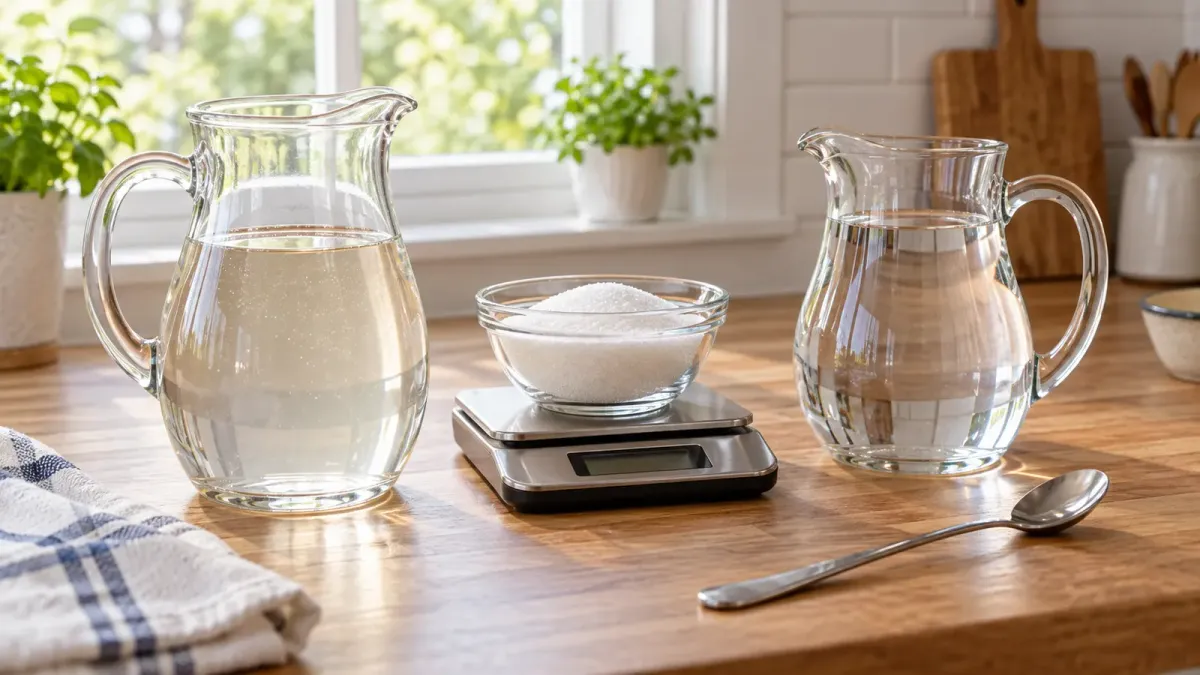
The AI-generated hero illustrates a preparation setup, not measured quantities. Use the weights below, not the apparent amounts in the pitchers.
The Ratios Mean Sugar First, Water Second
A kitchen scale removes the uncertainty of cup measurements. Set a suitable empty container on the scale, tare it, and weigh each ingredient separately. Sugar and water do not have the same weight per cup.
| Recipe | White sugar | Water | Total ingredient weight | Common purpose, if feeding is needed |
|---|---|---|---|---|
| 1:1, small metric batch | 1 kg | 1 kg | 2 kg | Light syrup for a colony needing support |
| 2:1, metric batch | 2 kg | 1 kg | 3 kg | More concentrated syrup for supplemental stores |
| 1:1, four-pound sugar bag | 4 lb | 4 lb | 8 lb | Same concentration as the first row |
| 2:1, four-pound sugar bag | 4 lb | 2 lb | 6 lb | Same concentration as the second row |
These totals are weights, not finished liters or gallons. Dissolved sugar changes the final volume; do not size a batch by assuming the two ingredient volumes simply add together.
For any sugar weight:
- 1:1: water weight equals sugar weight.
- 2:1: water weight equals half the sugar weight.
For a chosen total batch weight, divide it in half for 1:1. For 2:1, allocate two-thirds to sugar and one-third to water. A three-kilogram batch of 2:1 therefore contains two kilograms of sugar and one kilogram of water.
If you are still deciding whether feeding is appropriate, read the beginner guide to feeding sugar water first.
Choose the Purpose Before the Season
The Honey Bee Health Coalition’s hive-health guide, hosted by CAES, describes supplemental feeding as part of colony management. A calendar date alone cannot tell you how much food is available.
Spring or a new colony: Light syrup may help when stores and incoming nectar are insufficient. It cannot substitute for evaluating brood, pollen availability, colony strength, or disease. Stop treating an empty feeder as the only evidence of need.
Late-season storage: Concentrated syrup may be useful while bees can still take and process it. Do not wait for sustained cold and assume liquid feed will remain accessible. Coordinate feeding with local winter preparation using fall feeding for winter survival.
Summer heat: A 1:2 sugar-to-water recipe is not the default answer to a hot roof. Sweetened water attracts feeding activity and can create robbing pressure. Address hydration through providing fresh clean water for city bees, then assess any food shortage separately.
Mix a Clean Batch Without Cooking the Sugar
Use plain white granulated cane or beet sugar and clean water. Skip brown sugar, molasses, flavored products, confectioners’ sugar, artificial sweeteners, and honey of unknown origin. This is supplemental carbohydrate feed, not a place for household ingredient experiments.
- Weigh the water and sugar separately.
- Warm the water to help dissolution, then remove it from the heat.
- Add the sugar gradually and stir until dissolved. Do not boil the mixed syrup.
- Let it cool before filling a clean, leak-free feeder.
- Mix amounts the colony can use promptly. Discard fermented or moldy feed and clean the feeder before refilling.
Mississippi State’s beginning beekeeping guide describes adding sugar after removing heated water from the heat source. Warm water for dissolving sugar is different from prolonged cooking. Avoid scorching or caramelizing the mixture; there is no benefit to making it darker.
The Feeder Matters as Much as the Recipe
| Feeder | Practical advantage | What to check |
|---|---|---|
| Internal frame feeder | Holds feed inside the hive | Safe access or ladders, drowning protection, and room taken from comb |
| Covered hive-top feeder | Can hold a useful batch within the hive enclosure | Leaks, bee access, and whether the cover excludes outside bees |
| Entrance feeder | Easy to see and refill | Greater exposure to outside bees; a poor choice where robbing is a concern |
Do not set out an open bucket of syrup for the neighborhood. Refill without spills, keep containers closed, and watch for fighting or frantic attempts to enter other colonies. UF/IFAS explains how feeding practices affect robbing.
Safety alert: Cool syrup before handling or feeding it. If robbing starts, stop exposing feed and shorten disturbance; do not leave the hive open while trying to photograph the activity. Protect yourself and keep bystanders away from the entrance.
Know When to Stop
Reassess stores and forage instead of automatically topping up every empty feeder. Record the ratio, amount, date, and why you fed. Those notes help distinguish a genuine shortage from a routine that has outlived its purpose.
Legal and harvest alert: Do not feed with supers intended for human honey harvest in place. Check applicable food-labeling requirements before selling a crop, and keep feeding arrangements consistent with local nuisance rules and property permission. Bees storing syrup does not turn purchased sugar into a nectar harvest.
Frequently Asked Questions
Is bee syrup measured by weight or volume?
Use weight for the recipes in this guide. A 1:1 mixture uses equal weights of white sugar and water; 2:1 uses twice as much sugar as water.
How much water goes with four pounds of sugar?
For 1:1 syrup, use four pounds of water. For 2:1 syrup, use two pounds of water. These are ingredient weights, not the final volume of syrup.
Should I feed 1:2 syrup during hot weather?
Do not use dilute syrup as a default heat-wave treatment. Provide a separate dependable source of clean water and assess food stores before deciding whether the colony needs feed.
Can I feed syrup with honey supers on?
Do not feed while supers intended for human honey harvest are on the colony. Bees can store syrup in comb, so keep feeding and harvest management separate.