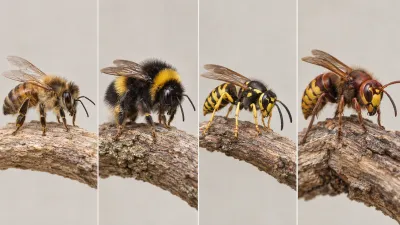
Hornet vs Wasp: How to Tell the Difference Safely
A hornet is a type of wasp, so the useful comparison is between true hornets, yellowjackets, and paper wasps. Look at several features together: body proportions, markings, and nest structure. Size alone cannot identify the insect, and a gray hanging nest does not necessarily belong to a true hornet.
Start by keeping clear of the nest’s flight path. If a photograph is possible from where you already stand safely, use zoom and record your location. Compare it with extension photographs before deciding whether anything needs removing. Do not approach the entrance for a better view.
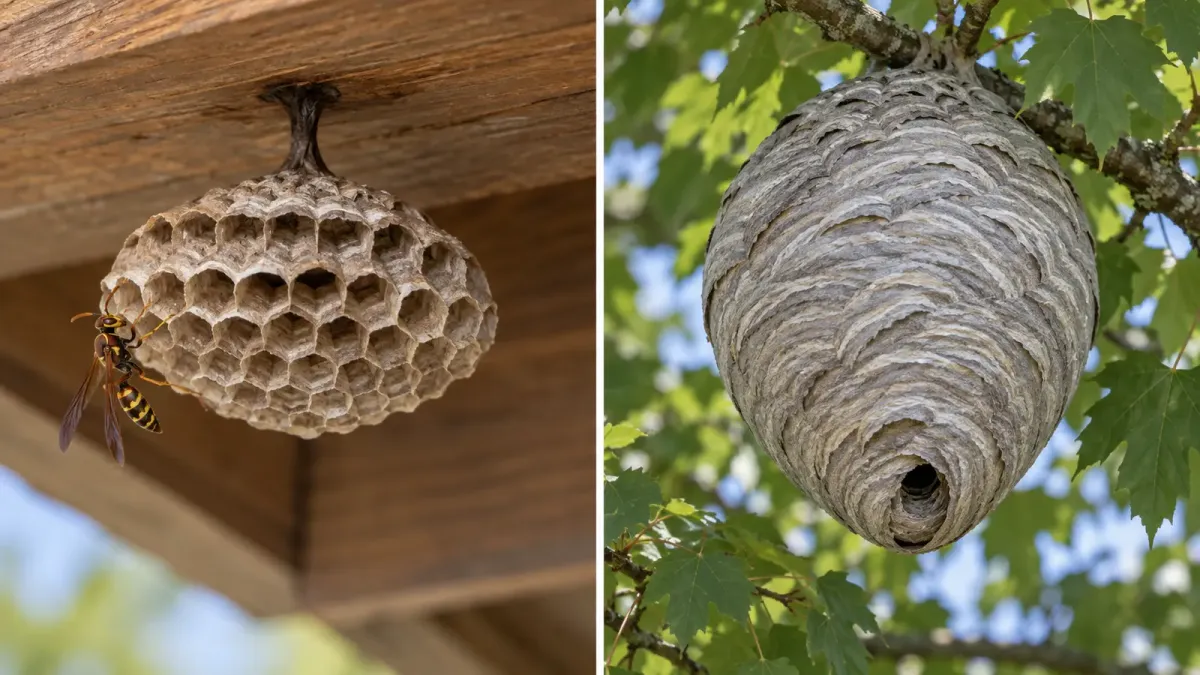
The AI-generated hero compares an open paper-wasp comb with an enclosed bald-faced hornet nest. It illustrates nest architecture, not verified species identification. European hornets commonly use concealed nest sites instead.
Hornet, Yellowjacket, or Paper Wasp?
These are common examples, not a worldwide identification key. Geography matters, and unfamiliar insects may need local identification.
| Group | Useful body clue | Typical nest clue | Easy mistake |
|---|---|---|---|
| European hornet, a true hornet | Large, with reddish-brown and yellow coloring | Paper nest inside a tree or building cavity | Assuming every large hornet makes a visible gray globe |
| Bald-faced hornet, an aerial yellowjacket | Black with pale facial and abdominal markings | Enclosed gray paper nest hanging above ground | Treating its common name as its scientific group |
| Other yellowjackets | Often compact, with yellow-and-black markings | Enclosed nest, frequently concealed | Calling every visitor to a soda can a yellowjacket |
| Paper wasps | Slender outline and conspicuously long legs | Open umbrella-shaped comb with visible cells | Assuming an exposed small nest is safe to touch |
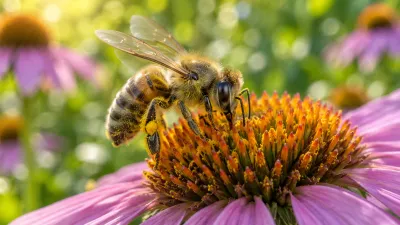
University of Maryland’s social-wasp photographs show these distinctions. If the insect may be a bee, start with the full pollinator and vespid identification guide or our explanation of how to tell bees from wasps.
Three Clues Worth Recording
Body shape is more useful than a size estimate
A flying insect close to your face is difficult to measure. A queen and worker of the same species can also differ in size. Record the overall outline and color pattern rather than guessing whether it passed a one-inch threshold.
European hornets have a substantial head and reddish-brown areas that can help distinguish them from familiar yellowjackets. Use a photograph for that comparison; inspecting head markings is not a reason to handle a live insect. Penn State’s European hornet guide provides species-specific reference material.
An exposed comb differs from a paper envelope
Paper wasp nests often reveal their individual cells from below. Enclosed social-wasp nests hide their combs behind a papery covering. A nest inside a wall may reveal neither structure: repeated traffic through a crack only tells you that insects are using that opening.
Do not peel away paper, pry off siding, or plug an active entrance to find out more. Give a professional the photograph and the entrance location instead.
Food and activity add context
An insect hunting caterpillars, feeding at a flower, or investigating a drink is not behaving outside the broad range of wasp activity. Some yellowjackets scavenge around human food; that does not make food attraction a reliable species test. UC IPM explains these feeding differences.
Record what you saw without testing the insect with bait. Cover drinks, close trash lids, and clear food scraps while staying away from nest traffic.
Does a Hornet Sting Hurt More?
There is no useful blanket rule that “hornet” means a more painful or medically dangerous sting. Penn State describes a European hornet sting as roughly comparable in pain to a honey bee sting, despite the hornet’s larger size. That comparison does not promise a mild reaction.
Species-based pain scales, including the Schmidt sting pain index, are not an allergy test or a treatment guide. Multiple stings and an individual’s reaction matter more to the immediate response than the insect’s common name.
Safety alert: Do not swat at insects or disturb a nest. If several stinging insects attack, get indoors or into an enclosed vehicle; do not jump into water. Carry prescribed emergency medication as directed. CDC’s sting precautions explain avoidance and emergency preparation.
Decide Whether the Location Creates a Problem
A nest beyond normal foot traffic may be avoidable. One beside a shared doorway, play area, or maintenance access needs prompt assessment. Tell the property manager where insects are entering and whether people can use another route.
For ongoing prevention, focus on preventing wasps and hornets around your home. Treating a nest and reducing food attraction are different jobs; a trap near a picnic table does not establish that a wall colony has been removed.
Legal alert: Get the property owner’s authorization before arranging treatment in a shared building. In the United States, pesticide use must follow its approved labeling; local licensing and building requirements may also apply. Check the EPA’s pesticide registration explanation and your local authority rather than improvising a treatment.
Frequently Asked Questions
Is a hornet a wasp?
Yes. True hornets belong to the wasp genus Vespa. The bald-faced hornet is an aerial yellowjacket, despite its common name.
Is a large gray paper nest always a true hornet nest?
No. Bald-faced hornets make enclosed aerial paper nests but are yellowjackets. European hornets commonly nest inside cavities. Do not open a nest to identify it.
Are hornet stings always worse than wasp stings?
No universal rule applies. Pain varies by species and circumstances, and pain rankings do not predict allergic reactions or the danger of multiple stings.
Should I remove a wasp nest near my door myself?
Keep people away from the flight path and ask a qualified pest professional to assess it. A nest near an unavoidable entrance needs a different response from one in an undisturbed corner.