Bumblebee vs Honey Bee vs Wasp vs Hornet ID Guide
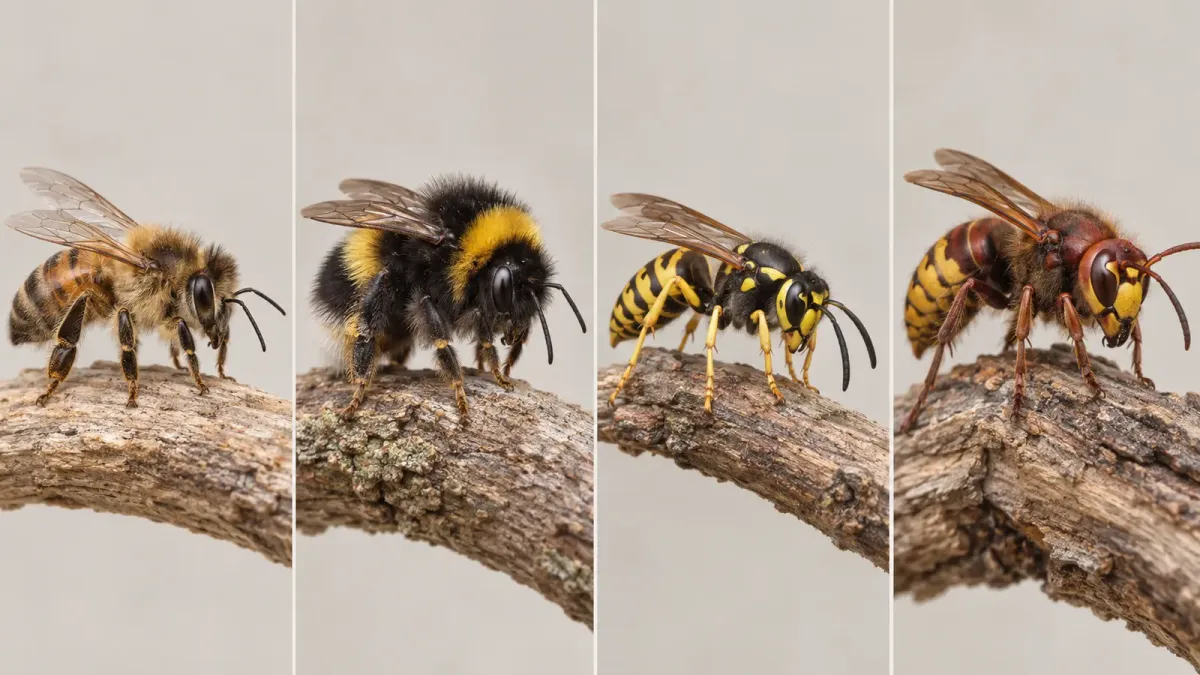
Start with body texture and shape: bumblebees are usually round and densely fuzzy, honey bees are slimmer with a hairy thorax, and common social wasps look smoother. Hornets are wasps, not a separate kind of bee. Yellow-and-black coloring alone will not settle the identification.
Watch from a distance and use camera zoom if you can photograph the insect without approaching its nest. Note your location, where it was feeding, and whether insects repeatedly enter one opening. Keep children and pets away from that traffic until you know what is there; do not open a wall, lift a nest cover, or dig into a burrow to investigate.
The hero illustrates a honey bee, bumblebee, yellowjacket, and European hornet from left to right. It is AI-generated, not to scale, and not a species-verification photograph. Use the extension photographs linked below for identification.
Compare the Insects You Are Most Likely to Notice
This table concerns familiar social bees and wasps, not every bee or wasp species. The University of Minnesota’s identification photographs are a useful companion for the common body forms.
| Insect | Body clues | Typical food activity | Nest clue |
|---|---|---|---|
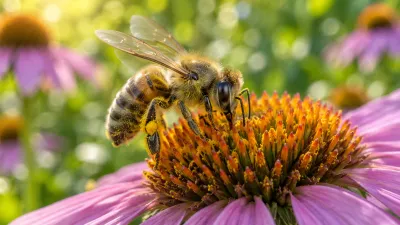
| Honey bee | Hairy thorax; slimmer, banded abdomen | Flowers, pollen collection, water | Wax comb in a hive or protected cavity |
| Bumblebee | Rounded body with dense hair; colors vary | Flowers and pollen collection | Small wax structures in a sheltered cavity |
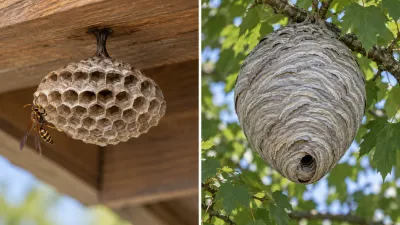
| Paper wasp | Slender body, narrow waist, long legs | Hunting insects; visiting nectar or other sugars | Exposed umbrella-shaped paper comb |
| Yellowjacket | Compact, relatively shiny; often yellow and black | Hunting or scavenging; some visit picnic food | Enclosed paper nest, often hidden |
| European hornet | Large wasp, reddish-brown and yellow | Hunting insects; sap and other sugars | Paper nest, commonly inside a cavity |
| Bald-faced hornet | Black with pale facial and abdominal markings | Hunting insects and gathering sugars | Hanging, enclosed gray paper nest |
The hornet distinctions and nest examples are illustrated by University of Maryland Extension. A nest’s location is a clue, not a species label.
Four Features Worth Checking
If you have narrowed it down to a wasp, use the hornet and wasp comparison to assess the nest and markings.
1. Hair is helpful, but “hairless wasp” is misleading
A bumblebee’s dense coat is often obvious even in a casual photograph. Honey bees are hairy too, especially around the thorax. Wasps have hairs, but the common yellowjackets and paper wasps usually look much less furry.
Not every large bee is a bumblebee. A carpenter bee can have a fuzzy thorax and a comparatively shiny abdomen. Oklahoma State’s bee guide includes this useful comparison. Avoid forcing an unfamiliar insect into the nearest category in the table.
2. Look at proportions, not just a “wasp waist”
Paper wasps often have a conspicuously slender outline and long legs that hang in flight. A yellowjacket is more compact, and its short waist can be hard to see. Bees also have a constriction between thorax and abdomen; “no waist means bee” is not a dependable rule.
Use a clear side or overhead image rather than trying to judge proportions while the insect circles your face. For another overview, see our comprehensive bee vs wasp distinction guide.
3. Food gives context, not certainty
Honey bees and bumblebees gather nectar and pollen. Social wasps commonly take animal prey for their young, while adults also use sugary foods. A wasp on a flower is not unusual.
Yellowjackets scavenging around a picnic are a familiar late-season problem, but honey bees can visit sweets too. UC IPM’s social-wasp guide makes that distinction. A visitor on a soda can is a reason to cover the drink, not proof of a particular insect.
4. Sting behavior is not an identification experiment
A worker honey bee commonly leaves its barbed sting apparatus in human skin and dies afterward. That familiar outcome should not be generalized to every bee or every surface it stings. Female bumblebees and social wasps can sting repeatedly; males cannot sting.
Do not wait for a sting to decide what you saw. Nor does an absent stinger establish that a wasp caused the injury. Oklahoma State’s bee information explains the difference between honey bee and bumblebee stings.
What the Nest Can—and Cannot—Tell You
An open paper umbrella under an eave strongly suggests paper wasps. An enclosed paper envelope suggests a different social-wasp nest. A gray hanging nest with black-and-white inhabitants may belong to bald-faced hornets, which are actually aerial yellowjackets, not true Vespa hornets.
Repeated traffic through a ground hole could involve yellowjackets or bumblebees. Traffic into a wall could involve honey bees or wasps. You may see only the entrance, so identifying the insect matters more than guessing the hidden nest’s shape.
Honey bee comb consists of sheets of wax, while bumblebee nests have smaller wax structures rather than a neat paper umbrella. These differences are described in Minnesota Extension’s nest guide. They are not an invitation to expose the nest.
Write down the entrance location without marking or blocking the hole. A photograph of traffic from a safe vantage point can help a professional plan the next step.
Which Insects Are More Likely to Sting?
Distance from the nest and what the insect is doing matter more than a simple “gentle bee, aggressive wasp” ranking. A foraging bee is usually occupied with flowers, but it can sting if trapped or handled. Bees and social wasps can defend their colonies.
Some yellowjacket species become more noticeable around human food in late summer and fall. That timing varies with climate; August is not a universal switch. Paper wasps and other predators can be useful garden visitors when their nests do not expose people to danger.
If you keep honey bees, use how to keep wasps and yellow jackets away from hives after identifying the visitor. Do not install traps simply because an unfamiliar insect is on a flower.
Safety alert: Do not swat a single insect hovering nearby. If several insects attack, run to enclosed shelter and do not jump into water. Call emergency services for breathing difficulty, throat swelling, or faintness after a sting. See CDC/NIOSH attack guidance and MedlinePlus sting first aid.
Decide Whether Anything Needs Removing
A few insects feeding on flowers usually call for space, not removal. A nest beside a busy doorway, a mowing route, or a vulnerable person’s living area deserves a professional assessment. Send a clear photo and the location to your extension office or a qualified local specialist; do not capture a live specimen unless they specifically provide a safe collection plan.
Legal and conservation alert: Protected bee species need special care. The rusty patched bumble bee is federally endangered. Check species protections, property permission, and local requirements before disturbing a nest. Any pesticide use must follow its label; “natural” or homemade does not mean safe or lawful for that use.
Our guide to humane removal of stinging insects explains whom to contact. Relocation is not practical for every nest, and a beekeeper who collects honey bee swarms may not handle wall colonies or wasps. Ask what the service includes before authorizing work.
Frequently Asked Questions
What is the difference between a bumblebee and a honey bee?
Bumblebees usually look rounder and much fuzzier; honey bees are slimmer with a hairy thorax and a more exposed, banded abdomen. Size and color overlap, so use several features rather than one stripe pattern.
Is a hornet a bee or a wasp?
A hornet is a wasp. True hornets belong to the genus Vespa. The bald-faced hornet is an aerial yellowjacket despite its common name.
Can bumblebees sting more than once?
Yes. Female bumblebees can sting repeatedly; males cannot sting. Do not handle a bee or disturb its nest to test its behavior.
Are yellowjackets the insects around soda and picnic food?
Often, especially later in the season, but food attraction alone is not identification. Honey bees may also visit sweets. Observe body features from a safe distance and keep food and drinks covered.