Package Bees vs. Nuc: Which Should City Beginners Buy?
Your first big beekeeping decision after the hive itself is what form your bees arrive in: a package (a screened box of loose bees with a caged queen) or a nuc (a five-frame miniature colony that’s already a working family). Both become full hives by summer. They fail differently, cost differently, and suit different urban situations.
What you actually get
A package is 2–3 lbs of bees - roughly 7,000–10,000 workers - shaken from other colonies, plus a mated queen in a cage. The bees and queen have just met; nothing else comes with them: no comb, no brood, no food. Cost: usually $120–$180.
A nuc is a functioning small colony on (usually) five frames: drawn comb, brood in all stages, pollen and honey stores, and a laying queen the bees have already accepted. You transfer the frames into your hive and the colony continues without missing a beat. Cost: usually $160–$250.
Head to head
- Buildup speed: nucs are 3–6 weeks ahead - brood is already emerging on day one. In northern cities with short seasons, that difference decides whether the colony is winter-ready (winter prep starts from a stronger base).
- Risk: the classic package failure is queen rejection or supersedure in the first weeks - exactly when a beginner can’t yet spot the signs. Nucs mostly skip that failure mode.
- Learning value: a nuc hands you readable frames - eggs, larvae, capped brood - from your first inspection, which makes every guide you read suddenly make sense.
- Cost & availability: packages are cheaper and shipped widely; nucs are usually picked up locally in spring. Local pickup is a feature in disguise: a local nuc comes from stock that survives your climate, and the seller is a mentorship contact.
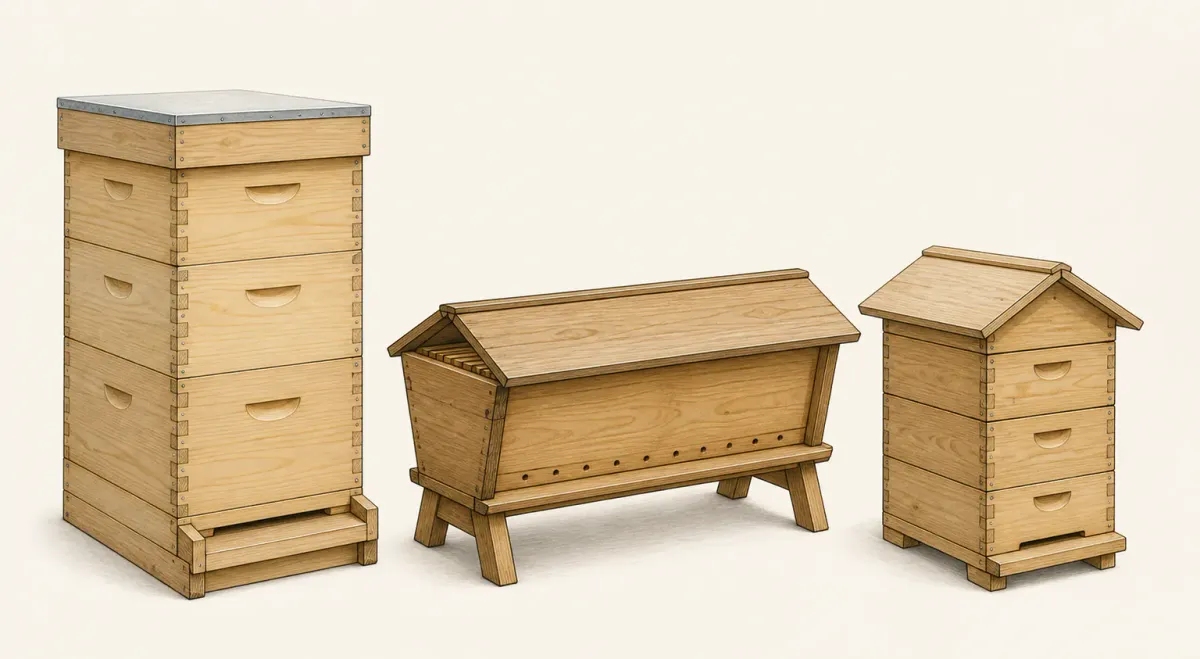
- Equipment fit: packages fit any hive style; standard nucs assume Langstroth deep frames - check compatibility if you chose something else in our hive comparison.
- Disease risk: nucs come with comb, and comb can carry problems. Buy from inspected, reputable suppliers; a state apiary registration/inspection system (see your state and city rules) exists exactly for this.
The urban angle
City beekeepers should weight two factors more heavily than rural ones. First, temperament: you’re choosing genetics that will live 15 feet from a neighbor - order early from suppliers who breed for gentleness, whichever format you buy (and know what to do if a colony turns hot). Second, margin for error: an urban colony that fails in June often can’t be replaced that season, and an empty hive on a roof invites wasps and robbers. The nuc’s head start and lower failure rate are worth more in a city than the price difference suggests.
Our take: for most urban beginners, buy a nuc from a local, inspected supplier - and if the budget allows, start with two rather than one.
Ordering and installing
- Order in winter (December–February). Good suppliers sell out; late buyers get leftover genetics.
- Ask three questions: Is the queen marked? What stock/temperament? Was the apiary state-inspected?
- Install promptly: packages within a day of arrival (evening is calmest); nuc frames go into the center of your hive box in the same order they came.
- Assess feed needs: a new colony may need 1:1 syrup by weight while drawing comb, but local forage, weather, feeder safety, and harvest timing control the decision. Follow the sugar-water safety guide.
- Check the queen at day 3–7 for a package (released and accepted?) and just verify eggs by week one for a nuc.
Keep reading
Bees ordered? Line up the rest: the beginner setup plan, the first-year budget, and the month-by-month calendar that turns your new colony’s first season into a schedule instead of a mystery.