Best Beehives for Small Rooftops & Balconies (2026)
Disclosure: UrbanBee is reader-supported. When you buy through links on our site, we may earn an affiliate commission at no extra cost to you. Learn more.
Choosing a hive for a rooftop or balcony is a different decision than choosing one for a farm. Weight per box matters, because you will carry everything up stairs. Footprint matters, because you may only have a few square meters. Harvest disruption matters, because a cloud of agitated bees on harvest day is a neighbor event, not just a chore.
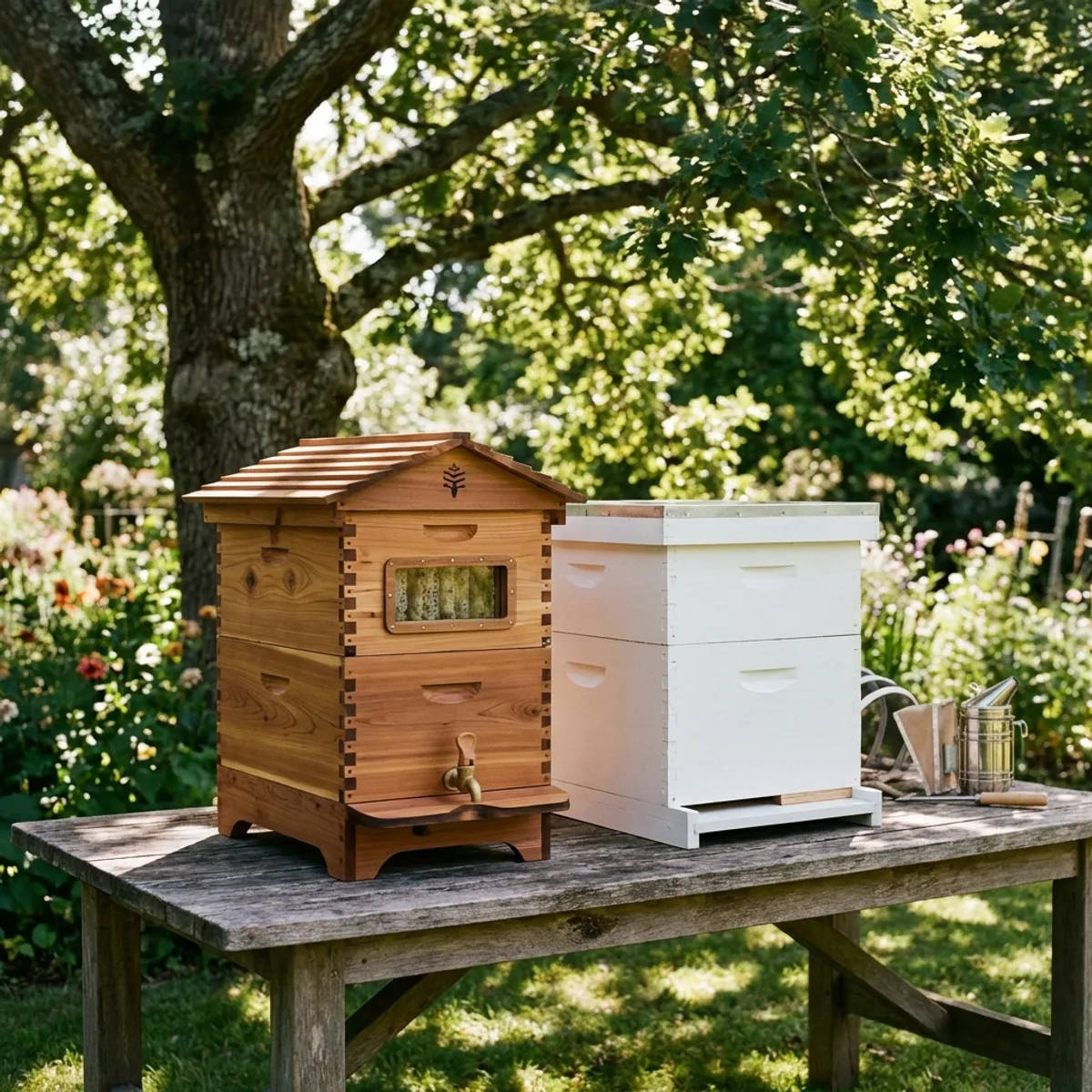
This guide compares three hives that consistently make sense for city keepers: the Flow Hive 2, Hoover Hives 8-frame (wax-dipped), and the budget NuBee 8-frame.
How we chose (and what we didn’t do)
Buying your first equipment bundle? Our urban beekeeping starter kit comparison checks current kit contents, prices, and the extras to budget for before bees arrive.
We are a small editorial team, not a testing lab. These picks are based on our own urban beekeeping experience with Langstroth-format equipment, manufacturer specifications, owner feedback across retailer and TrustPilot reviews, and the specific constraints of rooftop keeping - weight, wind exposure, and neighbor proximity. Prices are checked at the time of the last update but change often; treat the ranges as guidance. Links are affiliate links (see the disclosure above), which never affects the ranking.
If you have not confirmed you can legally keep a hive at your address yet, do that first - start with your city’s beekeeping laws.
Top Picks for Rooftops
Commission Earned on Links
| Features | Best Overall Flow Hive 2 | Hoover Hives | NuBee 8-Frame |
|---|---|---|---|
| Aesthetics | Premium | Classic | Basic |
| Harvest | Tap | Frame | Frame |
| Price | $$$ | $$ | $ |
| Check Price | Check Price | Check Price |
1. Flow Hive 2 - best harvest experience in tight spaces
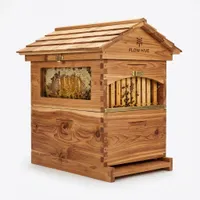
Flow Hive 2+
★ 4.8- ✓ No heavy lifting for harvest
- ✓ Observation windows
- ✓ Built-in level bubble
The Flow Hive’s tap-harvest system solves the two hardest parts of a rooftop harvest at once: no lifting 40 lb honey supers down a ladder, and no open-hive chaos on harvest day. You insert the key, turn, and drain honey through a tube - bees stay largely undisturbed, which your neighbors will appreciate.
Pros
- Harvest without opening the hive or carrying supers downstairs
- Observation windows let you check activity without a full inspection - useful for balcony setups where every opening is an event
- Excellent build quality (cedar), leveling bubble built in
Cons
- Expensive - roughly the cost of five budget hives
- The Flow super is for harvest only; you still do normal brood inspections and Varroa checks
- Tap harvesting only works well when honey is fully capped and warm
Best for: urban keepers with the budget who prioritize low-disruption harvests and a hive that looks intentional on a visible roof deck.
2. Hoover Hives 8-Frame Langstroth - best all-round value
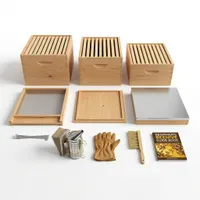
Hoover Hives 8-Frame Kit
★ 4.7- ✓ Wax-dipped for weatherproofing
- ✓ Lighter 8-frame boxes
- ✓ Includes frames
An 8-frame box is roughly 20% lighter than the standard 10-frame - the difference between a manageable and a dangerous lift on a ladder or stairwell. Hoover’s wax-dipped finish also removes the painting step and stands up well to exposed rooftop weather.
Pros
- 8-frame format is meaningfully safer to lift solo at height
- Wax-dipped wood weathers well without repainting
- Standard Langstroth parts - every accessory and mentor’s advice fits
Cons
- Traditional harvest: you still lift supers and extract (see harvesting without an extractor)
- Quality control on bundled frames varies by batch, per owner reviews
Best for: most urban beekeepers. It is the pick we would hand a beginner following our getting-started plan.
3. NuBee 8-Frame Kit - best on a tight budget
NuBee 8-Frame Kit
★ 4.5- ✓ Budget friendly
- ✓ Lightweight fir/pine
- ✓ Requires painting
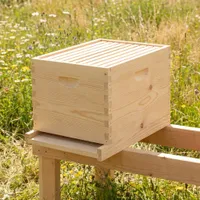
The NuBee kit gets you into a real 8-frame Langstroth for close to $139. The wood is thinner and arrives unfinished, so budget a weekend for paint - which is also an opportunity: neutral colors help a hive disappear from neighbors’ sightlines.
Pros
- Lowest cost of entry; lightweight boxes
- Standard dimensions - upgrade piece by piece later
- Paint it yourself to match its surroundings (a real advantage in cities)
Cons
- Needs painting/sealing before bees arrive
- Thinner wood means more attention to winter insulation in cold climates
Best for: budget-conscious beginners who want to learn traditional methods - pair it with our full startup budget to see the total picture.
Comparison summary
| Criteria | Flow Hive 2 | Hoover Hives | NuBee 8-Frame |
|---|---|---|---|
| Aesthetics | Premium, modern cedar/pine | Classic Langstroth, wax-coated wood | Plain pine, user-painted |
| Weight | Medium-heavy; less lifting needed | Moderate; easier than 10-frame | Lightweight and beginner-friendly |
| Ease of Harvest | Outstanding; no disassembly | Traditional; requires gear | Traditional; requires extra effort |
| Price (USD) | $779–$929 | ~$149 (sale) | ~$139 |
| Best For | Urban hobbyists with budget | Value-conscious, mid-range keepers | Beginners, experimenters |
Before you buy: three rooftop checks
- Confirm the law and the lease. City rules plus landlord/HOA permission come before any purchase.
- Check your roof’s access and load path. Every box you buy will one day weigh 40+ lbs full - our rooftop setup guide covers weight spreading and wind straps.
- Plan for two hives if you can. Shared gear makes the second colony cheap, and two colonies give you resources to rescue a struggling one.
Bottom line: with budget, get the Flow Hive 2 for the calmest harvests a city roof can have. For the best value-per-dollar, the Hoover 8-frame is the workhorse. On a tight budget, the NuBee gets real bees in a real hive for the price of a nice dinner out - spend the savings on protective gear that fits.