How Much Honey Per Hive? USDA Yield & Harvest Limits
A hive can produce no harvestable surplus or many pounds of honey, depending on the colony and season. USDA’s March 2026 report puts 2025 U.S. yield at 48 pounds per honey-producing colony, excluding colonies without a harvest. Use that as context, then inspect your own colony’s stores before planning a harvest.
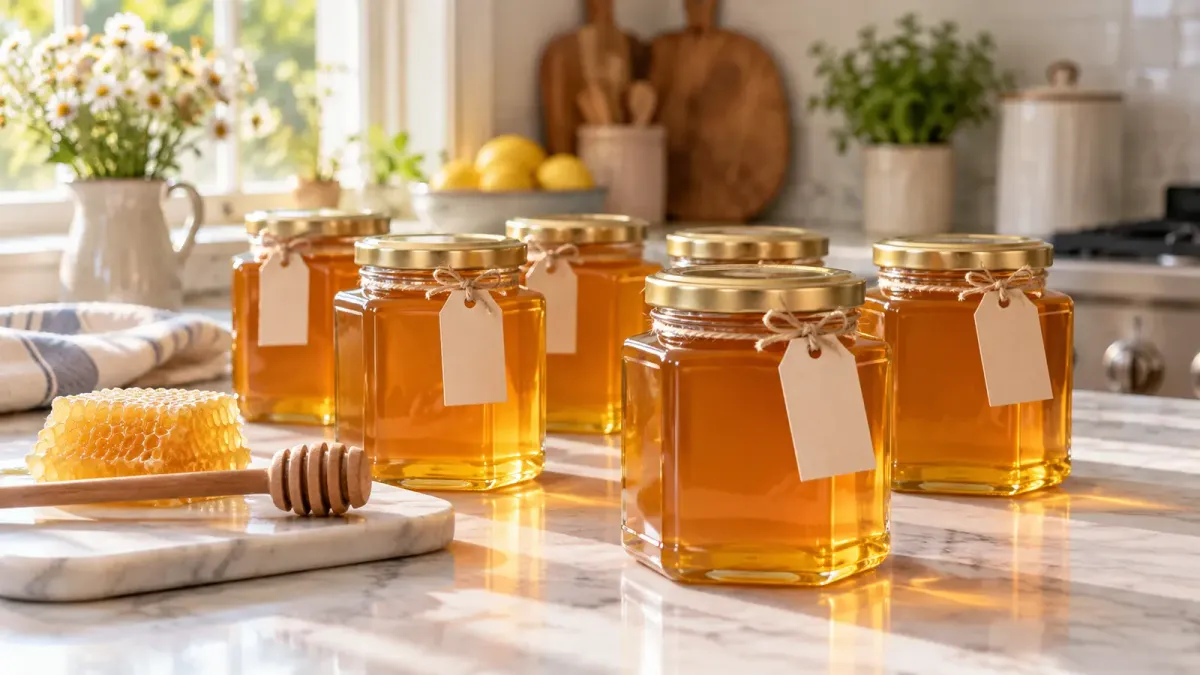
For a different sense of scale, see how much honey one bee makes in its lifetime. Once you have a harvest weight, our jars of honey per hive conversion guide translates pounds into containers without confusing weight ounces and fluid ounces, or you can calculate exact jar counts and remainders using the honey bottling batch calculator.
What the USDA Average Measures
The USDA March 2026 Honey report reports 48.0 pounds per honey-producing colony in 2025. Colonies with no harvested honey are excluded, and colonies producing in multiple states can be counted more than once. This is a national production measure, not a target for a first-year or rooftop hive.
The headline numbers
- Typical established hive: 20–60 lbs of surplus honey per year - that’s the honey beyond what the colony needs for itself.
- Great hive, great year: 100 lbs+ happens, and it’s what beekeepers remember and quote.
- First-year colony: often zero harvestable - new colonies spend their first season building comb (which costs roughly 8 lbs of honey per 1 lb of wax) and winter stores. Taking honey in year one is a classic beginner mistake.
- Bad year: drought, a cold wet spring, or a long dearth can zero out even strong hives.
The colony itself consumes 50–90+ lbs annually; “surplus” is whatever exceeds colony needs plus winter reserves. That’s why the same hive can yield 60 lbs one year and nothing the next.
What actually moves the number
Forage is the biggest lever - and cities are better than their reputation. Urban landscapes bloom in overlapping waves (street trees, parks, gardens, weeds) and get watered through droughts, which is why urban apiaries regularly match or beat farmland monoculture. The ceiling is hive density: a neighborhood already dotted with hives divides the same flowers. Planting bee-friendly forage helps at the margins.
Colony strength compounds: a hive that comes out of winter strong catches the spring flow; a weak one rebuilds through it. Strength is mostly Varroa management and swarm prevention - a hive that swarms in May typically forfeits most of its surplus.
Your calendar discipline - supers on before the flow, harvest at the right ripeness, feeding at the right times - is worth more pounds than any equipment upgrade. It’s all in the month-by-month calendar.
What that honey is worth
At farmers-market prices of $10–15/lb, an average year’s 30 lbs is a few hundred dollars retail - nice, but see the honest math in what beekeeping costs and what selling legally involves before planning income. Most city beekeepers land in the same place: the honey pays for the hobby, the neighbors get jars, and nobody quits their job.
Harvest right, whatever the yield
Take only capped, ripe honey; leave winter stores untouched; and use crush-and-strain or a borrowed extractor rather than buying one in year one. The full walkthrough: how to harvest honey.