Swarm Cells and Hive Splits: What to Do
A queen cup is not automatically a swarm warning. An active queen cell contains an egg, larva, royal jelly, or a developing queen, and its meaning depends on the whole colony. Before cutting cells or moving brood, determine the cell stage, whether the existing queen is present, the age of the youngest brood, adult population, stores, disease status, and whether a second colony has a legal, safe home.
This is an assessment guide, not a frame-by-frame split recipe. A poorly timed split can leave both units too weak, queenless, short of food, or unable to control pests. Make a first split with an experienced local mentor.
Queen cup, swarm cell, supersedure cell, or emergency cell?
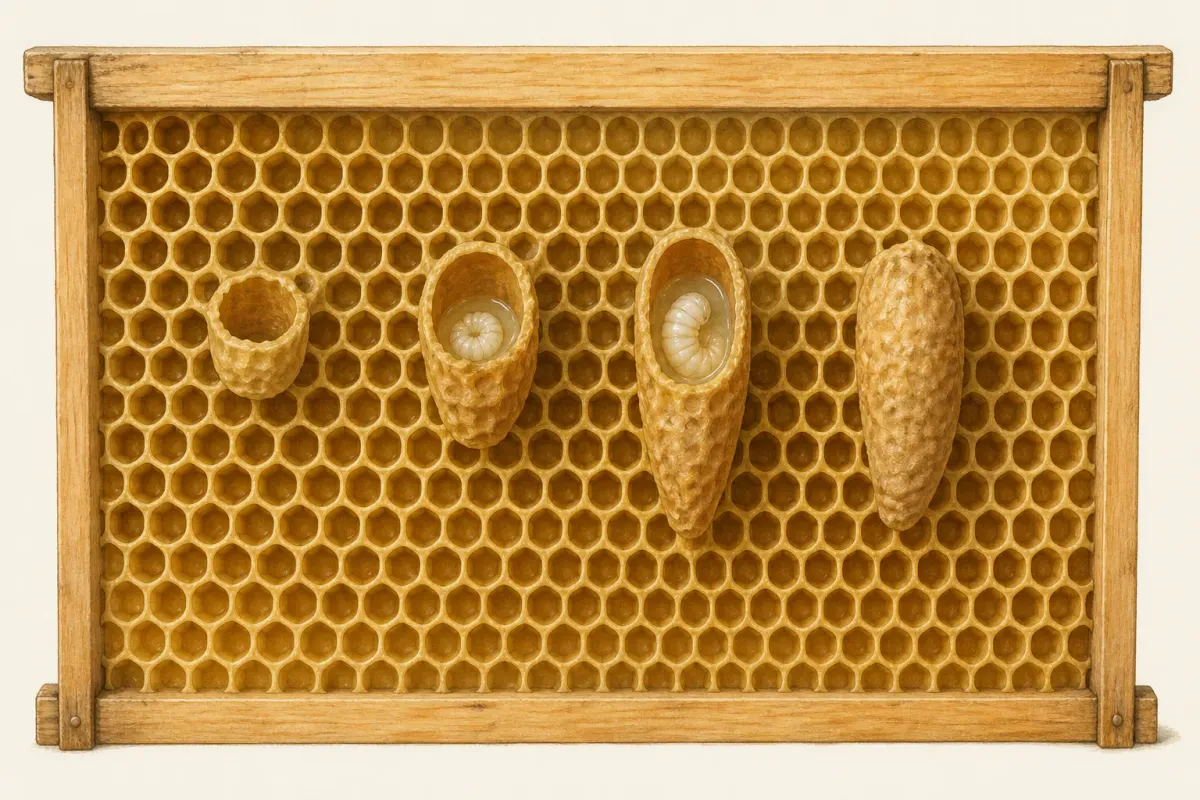
Use the queen-cell stage and purpose comparison to record what you find before deciding whether a split is appropriate.
| What you see | What it can mean | What it does not prove |
|---|---|---|
| Empty, downward-facing cup | A routine queen cup that the colony may never use | That the colony will swarm |
| Cup with an egg or larva and royal jelly | Active queen rearing; swarm preparation is one possibility | The purpose based only on frame location |
| Several active cells with a strong, crowded, queenright colony | Swarm preparation becomes more likely | That cutting all cells will stop it |
| A few cells with a failing queen or irregular brood | Supersedure may be underway | That the old queen is already gone |
| Cells raised from worker cells after sudden queen loss | Emergency queen rearing may be underway | That the colony can raise a well-mated replacement under current conditions |
| Opened or torn-down cell | A queen may have emerged, a cell may have been destroyed, or workers may be removing it | Which queen is alive without further inspection |
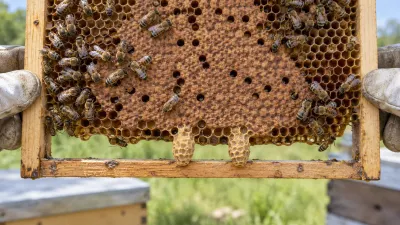
Extension publications describe common patterns - swarm cells often occur in numbers around comb edges, while supersedure or emergency cells may occur on the comb face - but they also warn about exceptions. Location alone is not a diagnosis.
Assess the colony before acting
Record answers to these questions:
- Is the marked or known queen present?
- Are fresh eggs present, showing that a laying queen was in the colony recently?
- What is inside each queen cell: nothing, an egg, an open larva, a capped cell, or evidence of emergence?
- Is the brood pattern compact or failing?
- Is nectar backfilling cells the queen would normally use?
- Is the colony strong enough in adult bees, brood, and stores to divide?
- Are there disease signs or an uncontrolled Varroa problem?
- Has the adult population dropped suddenly, suggesting a swarm already left?
- What weather and drone availability will a virgin queen face?
- Where could an additional colony legally and safely remain?
Photograph the frame, note the date, and mark the cell locations on the inspection record. Avoid leaving frames exposed while searching online from the apiary.
Queen-cell stage changes the decision
Empty queen cups
Continue normal swarm-season inspections and track changes. Empty cups alone are common. Improve usable space and relieve congestion only when the colony assessment calls for it.
Eggs or young larvae in queen cells
The decision window is narrowing. If the colony is queenright, strong, crowded, and building multiple active cells, seek experienced help promptly. Simply placing an empty box above the colony may not reverse established swarm preparation.
Open cells with developing larvae
Confirm the existing queen before moving frames. Choose a complete, locally appropriate control method rather than combining fragments of several methods.
Capped queen cells
A swarm may be imminent or may already have departed. Do not destroy every cell until queen status and colony history are understood. Leaving a queenless colony with no viable replacement can create a larger problem than the swarm risk.
The city swarm-prevention guide explains season-long prevention and the signs that preparation is already advanced.
What a hive split is
A split divides one colony’s bees, brood, food, equipment, and queen-rearing pathway into two managed units. Beekeepers may split a strong colony to control swarming, increase colony numbers, replace a queen, or create a nucleus colony.
Every successful split needs, in some combination:
- enough adult workers - especially nurse bees - to cover the brood;
- appropriate brood and food;
- a laying queen, a purchased queen, or viable young brood/queen cells and suitable mating conditions;
- drawn comb or appropriate equipment;
- warmth, forage, and time to build population;
- a plan for Varroa and disease; and
- a legal site with ongoing inspection capacity.
The exact frame arrangement, queen placement, timing, and movement depend on hive type, local season, colony strength, and the chosen method. That is why this guide stops at the decision level.
When not to split
Do not divide a colony merely because you found one cup. Pause when:
- the colony is weak or declining;
- brood cannot be safely covered in forecast weather;
- the queen and youngest brood status are unknown;
- disease is suspected;
- Varroa is uncontrolled;
- stores are inadequate and feeding is not safe or practical;
- drones or mating weather are unlikely;
- you lack equipment, a mentor, or follow-up time; or
- the second hive would violate a colony limit, lease, roof rule, or neighbor agreement.
A split doubles management obligations before it increases resilience. Each unit may need feeding, queen checks, mite monitoring, space adjustments, and winter preparation on a different schedule.
Urban constraints before making a second colony
Use the laws-by-address process to check whether a temporary nuc, split, or captured swarm counts toward the local colony limit. Do not assume a “temporary” box is exempt.
Also confirm:
- owner, landlord, HOA, condo, garden, or roof approval;
- a safe inspection route for another set of boxes;
- working space and structural capacity;
- water and flight-path management for both entrances;
- equipment security and emergency access;
- a backup location if one unit becomes defensive; and
- a local beekeeper who can accept a colony if you cannot keep both.
The urban placement scorecard should pass for the new location, not only the original hive.
Common mistakes after finding queen cells
Cutting every cell automatically
Cells can be missed or rebuilt, and the old queen may already be gone. Removing all viable cells can leave a queenless colony without a recovery path.
Treating frame position as proof
Edge cells can be supersedure cells; face cells can occur during swarm preparation. Use cell contents and colony context.
Adding a super after cells are capped
Storage space may still be useful, but it is not a complete response to advanced swarm preparation.
Moving brood without a disease check
Comb movement can spread American foulbrood, European foulbrood, mites, and other problems. Use only healthy material from known colonies.
Making a split with no follow-up dates
A split needs scheduled checks that respect queen emergence and mating timing. Repeatedly opening a unit too soon can disrupt the process; waiting too long can miss queen failure or starvation.
After the split: what must be monitored
With a mentor-informed schedule, track:
- queen status in each unit;
- adult bee coverage and brood temperature risk;
- food stores and safe feeding conditions;
- signs of robbing;
- Varroa levels and any treatment restrictions;
- disease symptoms;
- usable space; and
- whether either unit is still producing swarm cells.
Do not transfer comb back and forth to correct every concern before understanding the cause. If a unit is queenless, dwindling, or diseased, get local help.
Queen-cell decision checklist
- Cell contents and stage recorded
- Existing queen or recent eggs assessed
- Adult population, brood pattern, and stores assessed
- Swarm departure signs checked
- Disease and Varroa risk considered before moving comb
- Local weather, forage, drones, and season considered
- Complete control method selected with a mentor
- Second colony’s legal location and equipment confirmed
- Follow-up dates placed in the inspection record
- Backup plan for a failed queen or excess colony confirmed
Queen cells are information. Read them in context, then make one coherent plan. For ongoing prevention, return to the swarm management guide; if a swarm has already landed nearby, use the yard-swarm safety guide.