Bee Swarm in Your Yard? What to Do (and Not Do)
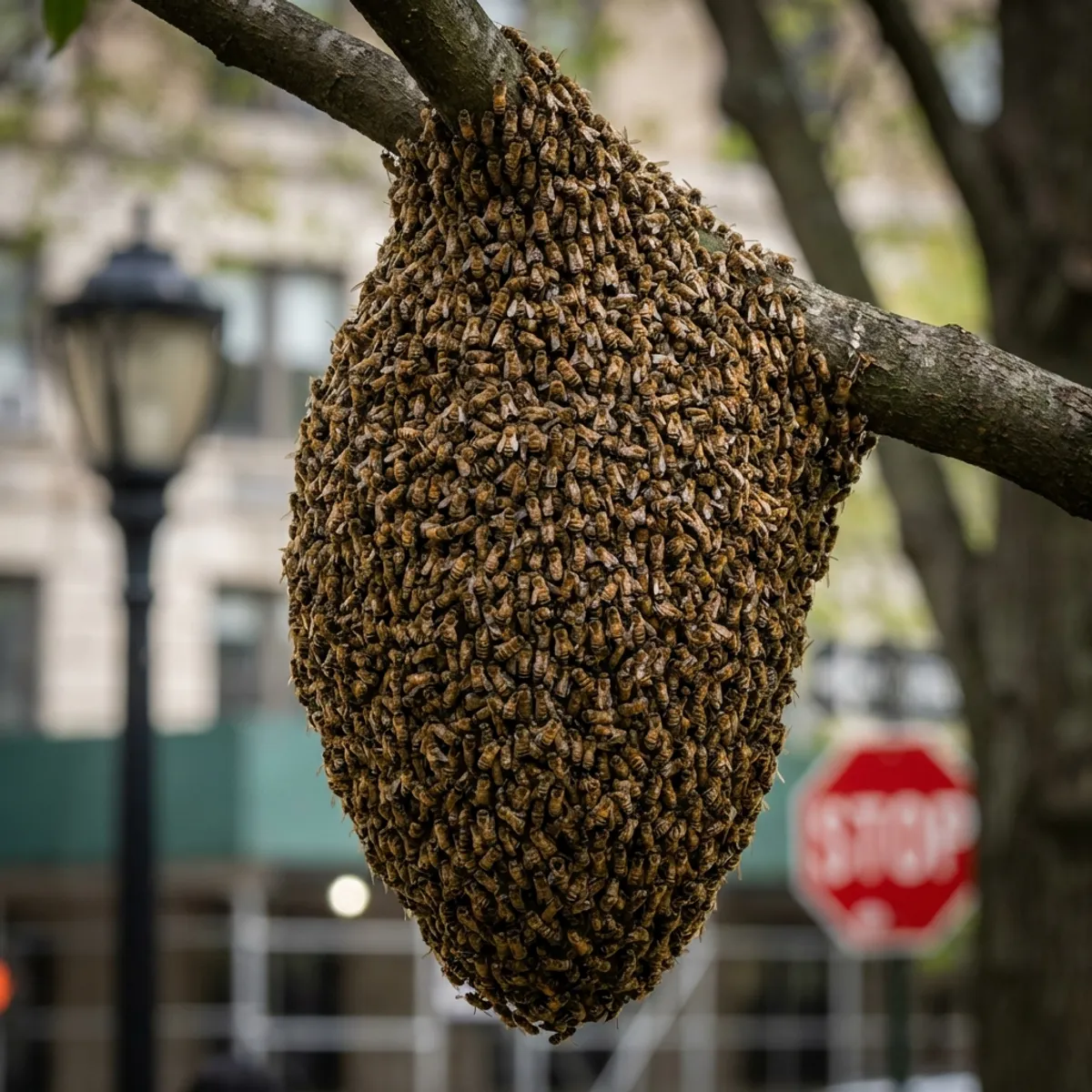
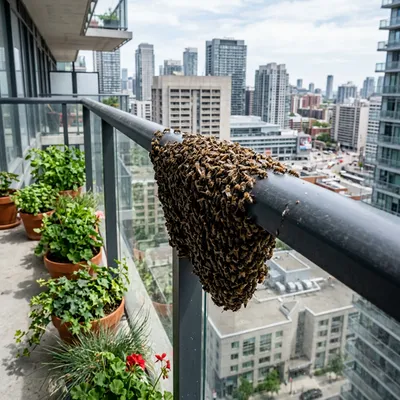
You walked outside and there’s a beach-ball-sized clump of bees hanging from your tree, fence, or balcony railing. Take a breath: you are looking at the most misunderstood - and least dangerous - form of honey bees. Here’s what’s happening, how long it lasts, and how to make it someone else’s happy problem for free.
What a swarm actually is
Swarming is honey bee reproduction at the colony level. When a healthy hive gets crowded in spring, the old queen leaves with roughly half the bees to found a new colony. The cloud settles into a tight cluster on a branch or railing - a rest stop, not a residence - while scout bees search for a permanent cavity and, quite literally, vote on the best one. Most clusters move on within a few hours to two days.
Two facts explain why swarms are calm: they have no home, brood, or honey stores to defend (defensiveness is about defending something), and every bee tanked up on honey before leaving - a full bee is a docile bee.
What to do
- Keep people and pets at a relaxed distance - 10–15 feet is plenty. Watching from a window is ideal.
- Photograph it from a safe distance. A photo helps the beekeeper you’re about to call judge size and access.
- Call a local beekeeper - not an exterminator. Nearly every city’s beekeeping club runs a free swarm-collection list; a swarm is valuable livestock, and collectors are usually thrilled to come. Search “your city beekeepers association swarm” or call 311.
- Wait it out if it’s inaccessible. A cluster 40 feet up a tree will very likely leave on its own within a day or two.
The two things you should never do
- Don’t spray it - water, insecticide, or smoke. You’ll turn the calmest bees in nature into a defensive cloud, and killing honey bees is both a waste and, for managed colonies, potentially someone’s protected property.
- Don’t seal or knock the cluster. If bees are entering a cavity - a wall void, chimney, or soffit - that’s no longer a swarm, it’s a move-in. Sealing the entrance traps a colony in your wall. That situation needs a professional live removal, covered in our guide to getting bees out humanely.
Not sure they’re honey bees?
Honey bee swarms are fuzzy, brown-and-amber, and hang in a single quiet cluster. Wasps and hornets don’t cluster like this - if you’re seeing a papery nest or bright yellow insects patrolling, you’re in wasp and hornet territory, which is a different playbook entirely.
If swarms keep landing on your property
Before the next swarm arrives, review how to discourage bees from nesting in your house. Repair access to unoccupied cavities; do not seal an opening that bees are actively using.
You may live near a beekeeper or a feral colony. A conversation usually beats a complaint - beekeepers are legally and socially motivated to prevent their swarms, and most will happily add flyway or water fixes. If you’re curious what responsible city beekeeping looks like from the other side of the fence, our urban beekeeping guide is the whole picture - some swarm-callers end up becoming beekeepers themselves.