Why Are My Bees Suddenly Aggressive? 7 Causes
If a normally manageable hive suddenly becomes aggressive, stop the inspection and check what changed before opening it again. Scarce nectar, queen problems, predators, weather, robbing, handling, and genetics are all possibilities. Close the hive only if you can do so safely; repeated head-butting or pursuit is a reason to leave, not finish one more frame.
If several insects are attacking, run to an enclosed building or vehicle and keep other people away. Do not stop to retrieve equipment or jump into water. This follows CDC/NIOSH guidance for stinging-insect attacks. Once sheltered, arrange experienced help before returning to the colony.
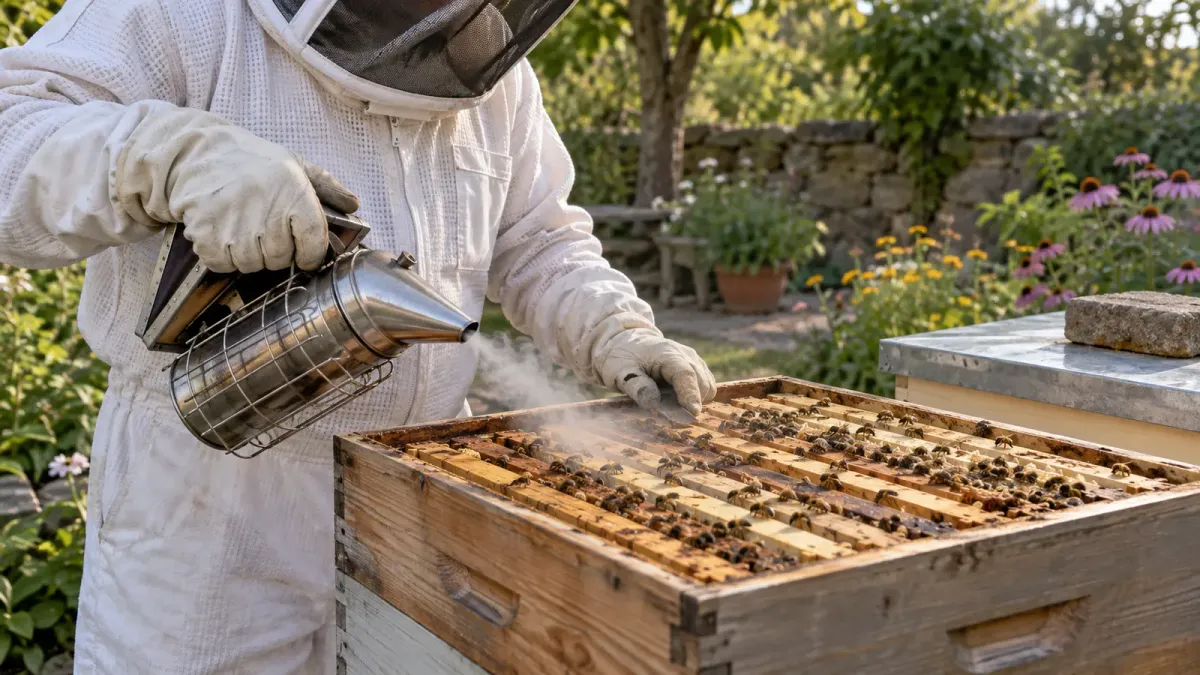
The hero is a generated illustration of routine smoke use, not proof that a defensive colony is safe to handle.
Seven Causes to Check Before Your Next Inspection
Defensiveness means the colony is responding to a perceived threat. The task is to work out why that response changed, while keeping people outside its reach.
1. A nectar dearth has changed the colony’s priorities
Flowers can remain visible while providing little usable nectar. Check recent hive-weight or food-store records and local forage conditions rather than assuming a green garden means abundant food. Penn State’s seasonal management guide describes increased resource defense and robbing during scarcity.
Low stores may justify feeding. Irritability by itself does not. If feed is needed, use an appropriate internal feeder without leaks, and keep syrup out of honey intended for harvest. Open feeding can draw competing insects into the yard.
2. The queen is missing or not laying normally
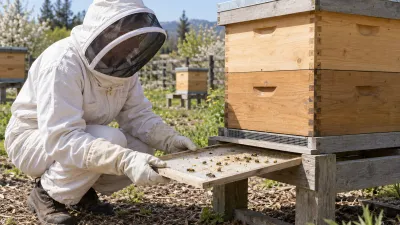
A change in temperament can accompany queen trouble, but sound and behavior are not enough to diagnose queenlessness. When an inspection can be done safely, look for eggs, young larvae, queen cells, and the colony’s recent brood history.
Not seeing the queen is not the same as proving she is absent. Before ordering a replacement, use the assessment principles in UF/IFAS’s queen management guide with a mentor. Introducing another queen into a colony that already has one can fail.
3. Something has been disturbing the entrance
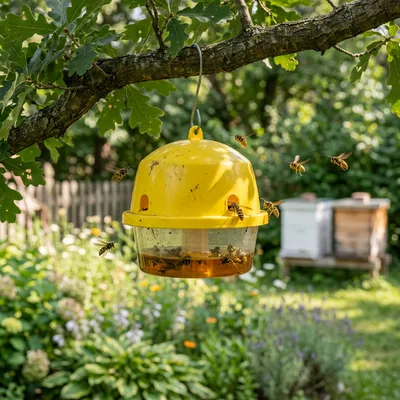
Look from outside for fresh scratches, disturbed soil, or repeated nighttime visits on an existing wildlife camera. Skunks are a documented source of persistent disturbance in Oregon State’s residential beekeeping guidance.
Match the response to evidence. An appropriate stand or wildlife-exclusion measure may help; scattering poison or fitting sharp barriers where people and pets walk creates another hazard. Ask local wildlife services about lawful exclusion if necessary.
4. The weather or timing makes the inspection harder
Hot, humid, or stormy conditions can affect colony temperament, as UC Davis’s defensiveness guide explains. A rushed dusk inspection also leaves less time to finish safely.
Choose suitable weather and a time when bees are normally flying. Record the conditions rather than treating falling air pressure as a proven explanation for every bad inspection.
5. Robbing is underway
Fighting at the entrance, bees searching seams, and exposed spilled syrup deserve attention. Busy entrance traffic alone is not proof of robbing.
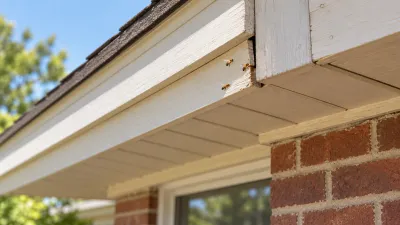
Cover exposed honey and repair leaking feeders. An appropriately sized entrance reducer or robbing screen may help a colony defend its entrance; preserve ventilation and normal access. Oregon State’s yellowjacket guidance helps distinguish wasp pressure from other hive problems. Do not seal live bees inside as a quick calming measure.
6. The inspection itself is escalating the response
A dropped frame, crushed bees, prolonged manipulation, vibration, or strongly scented clothing can make work harder. Prepare your equipment before opening the hive, wear suitable protective clothing, and avoid unnecessary disturbance.
The University of Arizona’s Working the Hive guide covers inspection preparation and handling. Smoke is a tool, not permission to continue when conditions have become unsafe. Use small amounts of cool smoke and pause to assess the response; smoke color alone does not establish its temperature.
For the equipment considerations, see using a cool-smoke smoker to calm hives.
7. The colony’s genetics have changed
A supersedure or other queen replacement can change the temperament of later worker generations. It does not instantly change the genetics of workers already present. A gradual shift following queen turnover deserves a different investigation from a single difficult afternoon.
Persistent defensiveness may justify requeening with locally suitable stock selected for manageable behavior. Italian or Carniolan labels alone are not guarantees. African ancestry cannot be established from aggression alone; the UC Davis guide distinguishes behavior from laboratory ancestry assessment.
Match the Response to the Pattern
| What changed? | First thing to check | Sensible next step |
|---|---|---|
| One inspection went badly after rough handling | Timing, weather, manipulation | Stop and review the handling sequence |
| Several colonies changed during a forage gap | Food records and robbing activity | Assess stores; remove exposed attractants |
| One colony changed after queen turnover | Brood history and replacement status | Arrange a mentor-assisted assessment |
| Entrance disturbance appears overnight | Scratches, tracks, camera evidence | Investigate wildlife access safely |
| Bees pursue people who are not working the hive | Immediate public exposure | Restrict access and seek qualified help promptly |
Keep the step-by-step instructions to calm defensive bees alongside your inspection notes. A short record of the date, weather, trigger, and response makes comparisons more useful than a label such as “angry again.”
When to Requeen—and When Not to Wait
There is no universal three-strike rule. A colony that targets neighbors does not get two more opportunities simply because you have only recorded one incident. Use our guide to what to do if bees sting neighbors to organize the immediate response.
Have an experienced beekeeper assess queen status, arrange a suitable mated replacement if needed, and follow the supplier’s introduction method. Do not remove the existing queen before you have a workable plan. Acceptance can fail, and a new queen does not replace the adult workforce overnight. Public safety cannot depend on waiting for future workers to emerge.
Legal and fire alert: Check local nuisance rules, apiary requirements, property permissions, and fire restrictions. Requeening or relocation requirements vary. Do not move a dangerous colony to another unsuspecting neighbor or light a smoker where prohibited; seek help from the apiary authority or a qualified service.
Medical safety alert: After a sting, trouble breathing, throat or tongue swelling, or faintness requires emergency help. Call your local emergency number and use prescribed epinephrine as directed. Seek urgent medical advice after numerous stings even without a known allergy. MedlinePlus explains sting emergencies.
Frequently Asked Questions
Why are my bees suddenly aggressive?
Possible causes include scarce forage, queen problems, predators, poor inspection weather, robbing, rough handling, or a change in colony genetics. Record what changed before the behavior began; defensiveness alone does not identify the cause.
Should I feed an aggressive hive?
Only if an assessment shows the colony needs food. Feeding is not a general calming treatment. Use a suitable internal feeder, prevent leaks, and avoid contaminating honey intended for harvest with syrup.
How many aggressive inspections should I allow before requeening?
There is no universal three-inspection rule. Persistent defensiveness warrants expert assessment, and bees targeting bystanders require prompt action without waiting for more incidents. Requeening is one possible intervention, not an immediate public-safety fix.
Does an aggressive hive mean Africanized bees?
No. Highly defensive behavior can occur without African ancestry. Ask your apiary authority or extension specialist about assessment; behavior alone cannot confirm ancestry.