What Do Dead Bees Smell Like? Causes & What to Check
A pile of decomposing bees can give off a strong, unpleasant decay odor, but there is no reliable smell that identifies dead bees or tells you why they died. The BeeMD’s colony-odor guide identifies dead winter clusters and accumulated bodies on bottom boards as possible sources. Smell alone cannot separate those losses from a brood disease or an unusual nectar flow.
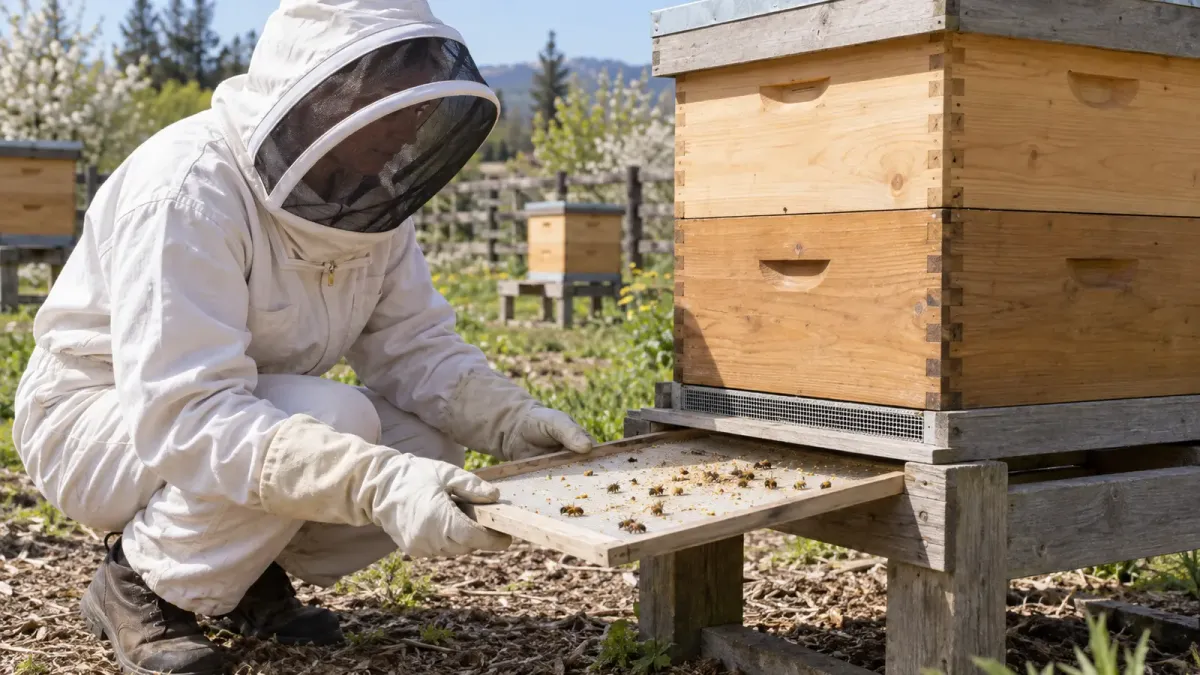
Start by looking at the entrance and any accessible inspection tray without dismantling the hive. Note activity, dead-bee accumulation, wet debris, and when the smell began. If the colony appears to have died or you find abnormal brood, pause cleanup and contact your state apiary inspector or extension service before moving comb, sharing equipment, or collecting samples.
Why a Smell Description Is Not a Diagnosis
“Fishy,” “rotten,” and “ammonia-like” are comparisons people use, not diagnostic categories. An odor coming from a hive can involve dead insects, damp debris, nectar, feeders, or more than one source at once. Nor can you identify a particular decomposition chemical simply by sniffing it.
The useful questions are concrete: Where is the odor strongest? Are the bees alive? Is brood affected? Has anything changed? A smell that appeared during a fall nectar flow calls for different checks from a foul odor beside a silent spring colony.
Keep the broader guide to diagnosing common beehive odors handy, but treat every odor comparison as a prompt to inspect, not a verdict.
Compare the Smell With What You Can See
| Observation | Possibilities to check | Useful next step |
|---|---|---|
| Decay odor with many dead adult bees on the floor | Accumulated mortality or a colony that has died; cause still unknown | Photograph the distribution of bees and check colony status before cleanup |
| Strong fall odor while nectar is coming in | Ripening goldenrod or another nectar source | Check the local bloom and brood condition; do not dismiss other warning signs |
| Foul odor with sunken or perforated brood cappings | A brood disease, including possible American foulbrood | Stop sharing equipment and contact the apiary inspector |
| Sour odor with bubbling stores or spoiled feeder contents | Fermentation or other spoilage | Keep suspect material out of the harvest; assess its source and condition |
| Musty odor with visible mold and wet debris | Moisture and material no longer being maintained by bees | Check leaks, drainage, colony strength, and the winter setup |
| Persistent odor from a wall or ceiling | A hidden nest, dead animal, moisture damage, or another building issue | Arrange a structural inspection; do not diagnose a wall cavity by smell |
This table is a triage checklist, not a disease test. For example, a “dirty socks” description does not belong exclusively to goldenrod: Delaware’s agriculture department also uses that comparison for infected brood.
Dead Adult Bees Are Not the Same as Dead Brood
Adult bees on a bottom board and larvae inside comb cells tell different parts of the story. American foulbrood, or AFB, affects developing brood. Adult workers can carry its spores without being infected in the same way, as the USDA APHIS case definition explains.
Watch for a combination of irregular brood, sunken or punctured cappings, discolored larval remains, and dark scales adhering inside cells. These deserve expert assessment whether or not the hive smells bad. A patchy brood pattern on its own is not confirmation.
Agriculture Victoria’s diagnostic guidance explicitly warns that some AFB cases have no discernible odor. Its biological guidance is useful here; reporting and disposal rules must come from your own jurisdiction.
For the visual differences and next steps, use our guide to identifying foulbrood bacterial infections. Do not decide to medicate or destroy a hive from a smell chart.
If the brood itself looks suspicious, follow the American foulbrood signs and testing guide for field-test limitations and inspector-led laboratory sampling.
Legal and biosecurity alert: If foulbrood is suspected, promptly contact your state apiary authority for reporting, sampling, movement, and disposal instructions. Keep suspect comb, honey, and equipment from other colonies. Do not burn a hive, give its frames away, or move it to another property on the strength of an online diagnosis.
A Practical Inspection Order
1. Record the scene before changing it
Write down the date, weather, recent feeding and treatments, and the last time the colony looked healthy. Photograph the entrance, debris, and any affected frames when conditions allow safe inspection. A sudden pile of dead bees after recent activity deserves investigation even without an odor.
Do not assume silence on a cold day means the colony is dead. Ask an experienced local beekeeper to help assess it if you cannot safely establish whether bees remain alive.
2. Check the entrance and tray
Look for an entrance obstructed by bodies or debris. If an accessible obstruction needs clearing, work gently from outside without pushing it deeper or disturbing the cluster. A removable debris tray is not the same part as the load-bearing bottom board; do not pull the support out from under a stack of boxes.
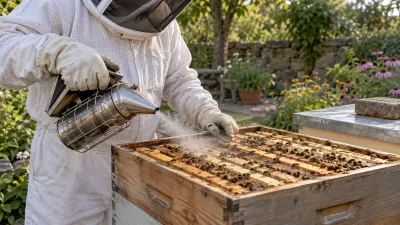
Safety alert: Wear a veil and suitable protective clothing even if the hive appears quiet. Do not put your face against the entrance to identify an odor, shake out a live winter cluster, or lift a heavy stack alone. Keep a rooftop inspection away from unprotected edges and use safe access.
3. Look for moisture without assuming it caused the loss
Check for a leaking lid, pooled water, damp debris, or wet insulating material. Washington State University Extension’s winter-loss guide considers moisture alongside cluster size, dead-bee distribution, and food access. A damp dead hive needs investigation; dampness alone does not establish the original cause of death.
Review managing winter hive moisture and bottom boards with your local climate and hive design in mind. Do not remove all insulation or leave a screened floor open simply to make an odor disappear.
4. Decide whether cleanup can wait
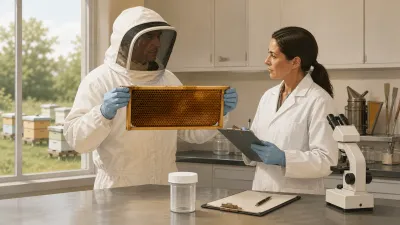
If brood looks abnormal, mortality is sudden, or the cause of a dead colony is unclear, preserve the evidence and ask the inspector what is needed. Follow the receiving laboratory’s directions if samples are requested; improvised storage or treatment can make them less useful.
Do not leave exposed honey or deadout comb available for other bees to rob. Prevent access to a confirmed dead hive, while taking care not to seal live bees inside a colony you have not assessed. Ask for help if its status is uncertain.
Cleaning After the Colony Has Been Assessed
For routine debris with no unresolved disease concern, collect accessible dead bees and loose material into a closable container instead of scattering them around the apiary. Follow local disposal guidance, clean removable parts as appropriate for their materials, and let washed components dry before returning them to use.
Keep that work separate from food extraction. Do not blow debris toward neighboring hives or mix equipment from a suspect colony into your clean equipment pile.
Ordinary cleaning is not proof that equipment is free of AFB. USDA APHIS notes that its spores resist heat and chemical agents and can persist on hive products and equipment for years. Freezing frames or giving them a quick bleach wash should not be treated as clearance to reuse them; get inspector-directed advice.
After routine cleanup, record whether the odor returns and whether mortality continues. Removing the smell does not repair an unresolved colony problem.
If the Smell Is Inside a House
A bad smell behind drywall does not establish that bees are the source. Even where a colony was previously present, an inspection may find remaining nest material or a different problem altogether.
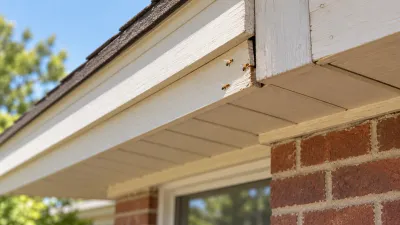
Do not drill into a cavity, spray deodorizer into an entrance, or seal active bees inside. A qualified removal specialist can assess the nest and access needs; our house-wall bee removal guide explains the cleanup and repair questions to ask. There is no dependable number of days after which a hidden nest will stop smelling.
Frequently Asked Questions
What do dead bees smell like?
An accumulation of decomposing bees can produce a strong, unpleasant decay odor. There is no dependable fishy, ammonia-like, or rotten-meat smell that identifies dead bees or explains why they died. Locate the source and assess the colony rather than diagnosing by scent.
Does a bad-smelling beehive mean American foulbrood?
No. Dead adult bees, ripening nectar, and spoiled stores can also cause unpleasant odors. American foulbrood affects brood and can occur without a noticeable smell. Suspect brood signs need an apiary inspector’s assessment and appropriate testing.
Can goldenrod make a healthy hive smell bad?
Yes. Ripening goldenrod nectar can produce a strong, unpleasant odor during a nectar flow. Bloom timing is a clue, not proof that the colony is healthy; check for unusual mortality or abnormal brood before dismissing the smell.
Should I clean dead bees out of the hive immediately?
Check and photograph the colony first. If disease or poisoning is possible, ask about sampling before removing evidence or reusing equipment. Routine accessible debris can be cleared after assessment, but suspected foulbrood needs inspector-directed handling rather than ordinary cleaning.