American vs. European Foulbrood: Signs and Next Steps
American foulbrood (AFB) and European foulbrood (EFB) can look similar in the field. Neither odor nor a single home test is enough for a reliable diagnosis. If brood looks abnormal, avoid moving frames, tools, honey, or bees between colonies and contact your state or provincial apiary inspector, local extension office, or a recognized bee diagnostic laboratory.
This guide helps you describe what you see and choose a safe next step. It does not replace laboratory confirmation or local disease-control instructions.
AFB vs. EFB comparison
| Feature | American foulbrood (AFB) | European foulbrood (EFB) |
|---|---|---|
| Cause | Paenibacillus larvae, a spore-forming bacterium | Melissococcus plutonius, a bacterium that does not form the same persistent spores |
| Brood most often noticed | Larvae commonly die after cells are capped, although signs can span stages | Larvae commonly die before capping, so signs are often in open brood |
| Larval position and color | Brown remains may become sticky before drying into a dark scale attached to the lower cell wall | Larvae may look twisted, displaced, yellowish, brown, or melted in open cells |
| Cappings | May be sunken, dark, greasy-looking, or perforated | Often a patchy pattern because workers remove affected open brood; some capped brood may also be present |
| Scale | Dark scale can adhere tightly to the cell | Scale is usually less tightly attached and may be rubbery |
| Odor | May have an odor, but odor can be faint or absent | May smell sour, but odor can be faint or absent |
| Field clues | A sticky or “ropy” larval remnant can support suspicion, but it is not definitive | A field test cannot reliably rule EFB in or out |
| Confirmation | Inspector assessment and/or diagnostic testing | Inspector assessment and/or diagnostic testing |
| Response | Follow the responsible authority’s containment and destruction or decontamination directions | Management depends on severity, local rules, colony condition, and professional guidance |
The table describes common patterns, not a guarantee. Mixed infections, chilled brood, sacbrood, parasitic mite syndrome, pesticide injury, and queen problems can also create patchy brood or discolored larvae.
What American foulbrood can look like
AFB is the higher-consequence suspicion because its spores can persist in contaminated equipment and food stores and spread through robbing, drifting, reused comb, and beekeeper tools. Common field observations include:
- an irregular brood pattern with empty cells among capped brood;
- cappings that appear sunken, dark, wet, or perforated;
- brown larval or pupal remains inside a capped cell;
- a sticky remnant that may draw into a thread when examined by a trained inspector; and
- a hard, dark scale attached to the lower side of the cell.
Do not assume AFB is absent because there is no bad smell. Do not assume it is present because a hive smells unusual. Goldenrod nectar, fermentation, dead animals, moisture, and other brood disorders can all affect odor. Our guide to a bad-smelling beehive covers those non-diagnostic possibilities.
What European foulbrood can look like
EFB is often noticed in open brood. Affected larvae may lose their normal pearly-white, C-shaped appearance, sit twisted in the cell, or change from yellow to brown. The brood pattern can become uneven as nurse bees remove sick larvae.
EFB sometimes appears when colony nutrition or brood rearing is under stress, but that does not make it harmless or prove the cause. Strong and weak colonies can both be affected, and visual signs overlap with other conditions. A qualified diagnosis matters before changing feeding, replacing queens, or seeking veterinary medication.
Why smell and the rope test are not a diagnosis
Odor is inconsistent. AFB can be present without a noticeable smell, while a sour or foul odor can come from other causes.
The so-called rope test is also only a field clue. A viscous brown remnant may increase suspicion of AFB, but consistency changes over the course of disease and other decaying brood can confuse the result. Repeatedly probing cells can contaminate the tool and spread material around the apiary. If an inspector wants a sample or field test, follow their collection and cleaning directions.
Our American foulbrood testing guide covers rope-test limits, the Holst milk test, and USDA brood-comb sample instructions so you can prepare for that conversation.
USDA APHIS publishes a formal AFB case definition, while state and provincial programs decide how suspected or confirmed cases are handled locally. Diagnostic methods can include microscopy, culture, immunoassays, or molecular testing depending on the program and laboratory.
For visual-sign and diagnostic-method training, use the Michigan State University Extension diagnostic tools module. Training material can improve observation, but it still does not confirm disease in a particular colony.
What to do when you suspect foulbrood
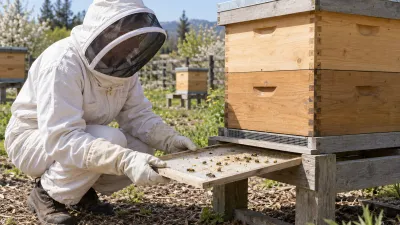
- Pause equipment movement. Do not swap frames, combine colonies, sell nucs, extract suspect honey with shared equipment, or move the colony to another location.
- Limit cross-contamination. Keep the suspect colony’s tools and gloves separate. Do not place exposed comb where other bees can rob it.
- Document, do not over-manipulate. Photograph both sides of affected frames, note the date and colony history, and record whether signs are in capped or open brood.
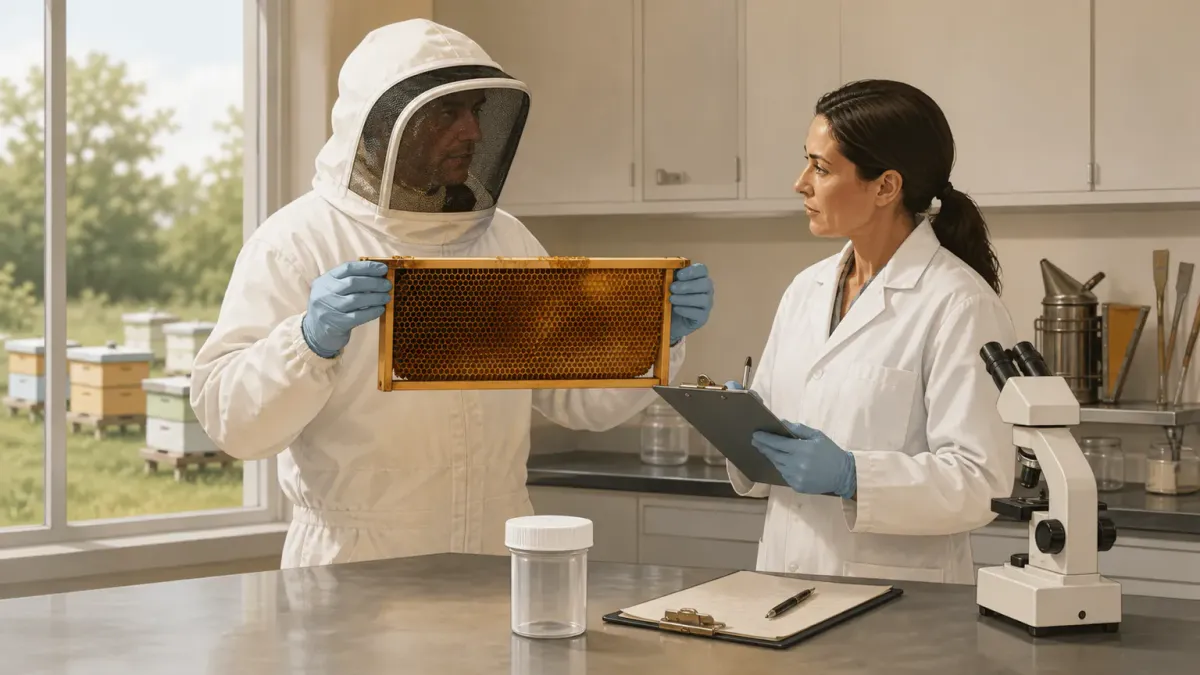
- Contact the right authority. Search for your state apiary inspector or department of agriculture. If no inspection program is available, contact a land-grant extension apiculture specialist or recognized bee diagnostic laboratory.
- Use current laboratory instructions. For U.S. samples, the USDA ARS Bee Research Laboratory submission page provides current eligibility, sample, packing, and contact instructions. Ask the responsible inspector whether to sample before cutting comb or mailing material.
- Follow local instructions. Rules for reporting, sampling, movement restrictions, treatment, equipment decontamination, and destruction differ by jurisdiction.
Do not burn a colony or equipment on your own based on an internet diagnosis. Open burning may be illegal, and the correct response depends on confirmation, local law, material type, and the authority supervising the case. Likewise, antibiotics require veterinary oversight in the United States and do not make contaminated AFB equipment spore-free.
Reporting and legal obligations
AFB appears in USDA APHIS’s national framework for monitored animal diseases, but a website cannot translate that framework into one universal instruction for every beekeeper. State and territorial laws vary: some require notification, some authorize inspection or quarantine, and some prescribe particular disposal or treatment pathways.
Use our beekeeping law lookup workflow to find the responsible agriculture agency, then ask that agency what applies to your location. When in doubt, report the suspicion promptly rather than moving the hive or distributing equipment.
Reduce the chance of spread
- Buy colonies and used equipment from traceable sources and ask about inspection history.
- Avoid feeding unknown honey to bees.
- Keep apiary tools clean and do not share brood comb casually.
- Control robbing and repair boxes that expose stores.
- Learn what healthy brood looks like so changes are noticed early.
- Include brood-disease checks in routine urban hive health management.
A careful pause and a professional diagnosis protect your own apiary and nearby colonies. The goal is not to identify a disease from one photograph; it is to avoid spreading a potentially serious one while the evidence is checked.