Can I Sell Honey from Home? Cottage Food Laws
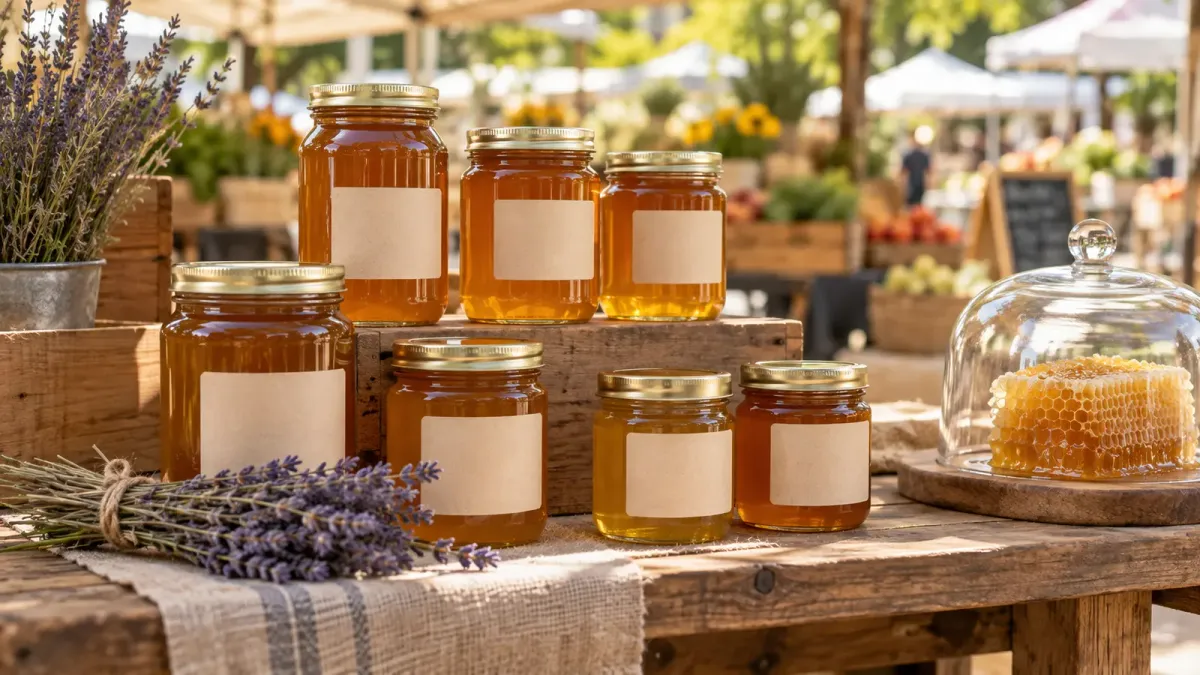
You may be able to sell honey from home without a commercial food-manufacturing license, but the exemption depends on your state and what you actually do with the honey. Cottage-food rules are one route; farm and honey-specific exemptions are others. Do not assume that “raw,” “local,” or “only a few jars” makes every sale exempt.
Before taking an order, send your state food-safety agency a short description: where the honey comes from, how you process it, where you bottle it, your expected sales, and how customers will receive it. Ask which exemption or license applies and request the current label checklist. Those details matter more than whether you call the operation a hobby.
Legal alert: Permission to keep bees, permission to process food, and permission to sell from a property are separate checks. A food-permit exemption does not by itself settle taxes, market requirements, property restrictions, or applicable home-business rules. This guide provides a U.S. research checklist, not approval for a particular business.
Which Rules Apply to Your Honey?
The first question is not “What is my state’s cottage-food sales cap?” It is “Does this operation belong under cottage-food rules at all?”
| Possible route | What you need to establish | Common assumption to avoid |
|---|---|---|
| Cottage-food operation | Honey is an allowed product; you meet preparation, sales, labeling, and any revenue conditions | Every state uses the same cap or allows the same delivery methods |
| Farm or honey-specific exemption | Your source of honey and processing activities meet that route’s definition | Repacking purchased honey is always treated like bottling your own crop |
| Licensed food processor or manufacturer | Your products or activities require a license, inspection, or approved facility | A rule allowing plain honey also covers every flavored or processed product |
For example, Florida’s official cottage-food page lists honey as an allowed product, sets a $250,000 annual gross-sales ceiling, and prohibits wholesale sales under that route. The ceiling is gross sales, not profit after subtracting jars and equipment.
Texas DSHS takes a different approach for qualifying farms: extracting and bottling raw honey from the beekeeper’s own hives can be allowable farm activities, including retail or wholesale sales, without a food-manufacturer license. Its FAQ distinguishes pasteurizing and whipping honey as manufacturing activities. Ask DSHS about your exact process before relying on that exemption.
Texas also amended its honey-production provisions in 2025. The current statute, §§437.0197–437.0199, addresses the exemption and points to the Agriculture Code for labeling. An old association handout may describe an earlier version of the law.
These examples show why a single national dollar limit is misleading. Save the agency’s answer and the rule it cites in your business records.
Where Can You Sell the Jars?
Describe the transaction, not just the venue. Selling a jar directly to a shopper at a market is different from selling a case to a shop that will resell it.
- Porch pickup: Confirm direct sales are allowed and whether customer visits create an additional property or home-business issue.
- Farmers markets and craft fairs: Check both the applicable food rules and the organizer’s vendor, sampling, and insurance requirements.
- Online orders and shipping: Ask separately about taking payment online, personal delivery, mailing, and out-of-state customers. Permission for one does not automatically establish the others.
- Retail shops and restaurants: Identify whether the transaction is wholesale and whether your exemption permits it. The buyer may also need supplier records.
Florida’s cottage-food page allows website, mail-order, and in-person direct sales, but that should not be read as universal permission to ship anywhere. Check the destination’s rules before accepting interstate orders.
Once the permitted sales channels are clear, our guide to backyard honey marketing and sales covers the practical side of finding customers and planning small batches.
Check the Label Before You Order Hundreds
Start with a draft on ordinary paper. Wrap it around the actual jar and check that every required item remains readable. A good-looking label can still be missing a required statement.
Product name and ingredients
For a product containing only honey, the FDA’s honey-labeling guidance identifies “honey” as the common name. “Pure” and “raw” are not mandatory additions. Use descriptions you can support; a flower-specific name also needs a factual basis.
FDA says single-ingredient honey does not need a separate ingredient statement under its general rule. Still check your state’s exemption checklist. Added flavorings or other ingredients change the labeling questions and may also change the processing permission.
Net quantity: honey only, not the glass
Use the honey’s net weight, with U.S. customary and metric declarations as applicable under the FDA Food Labeling Guide. For a twelve-ounce fill, a familiar example is Net Wt. 12 oz (340 g). This is an example of the quantity statement, not a complete compliant label.
Under 21 CFR 101.7, the net-quantity statement generally belongs in the bottom 30% of the principal display panel - the main face customers see. There is a placement exception for panels of five square inches or less, but other requirements still apply. Type size and spacing also depend on the rules; a decorative tag does not automatically satisfy them.
Weigh filled jars after subtracting the container weight. A jar advertised by its fluid-ounce capacity does not tell you the net weight of the honey inside. Our honey jar conversion guide explains the distinction, and our free honey container calculator helps determine jar counts and net allocations for your batch.
Business details, disclosures, and nutrition labeling
Use the responsible business name and address information required for your route. Ask whether your state offers a lawful address alternative rather than replacing the address with a social-media handle on your own.
Get the exact state disclosure, if one is required. Do not copy another seller’s “uninspected kitchen” wording: they may be using a different exemption or an outdated label.
Finally, establish whether you qualify for a Nutrition Facts exemption and whether any filing is needed. A small operation is not automatically exempt from every labeling rule. Avoid adding nutrition or health claims casually; ask the regulator how proposed claims affect your obligations.
Food-safety alert: Do not give honey to children younger than 12 months because of infant botulism risk, as the CDC advises. That feeding advice is not itself a federal label mandate. Ask whether a warning is required on your particular product, and keep any voluntary safety message separate from the state’s required exemption wording.
A Permit Exemption Does Not Replace Clean Handling
Set up bottling so food-contact equipment stays clean, jars are dry, and pets and insects cannot reach exposed honey. Keep a batch record showing the harvest or supplier, packing date, and where jars went. That makes a complaint or recall much easier to investigate.
Plain honey and honey with fresh fruit, garlic, or herbs are not interchangeable food-safety projects. Do not use permission for plain honey as permission to sell an unassessed infusion. Describe the full recipe and process to your food-safety agency first.
Use our guidance on clean sanitation during honey harvesting when organizing the extraction and packing area. Prepare the product before worrying about gift wrap.
Ask About Insurance Before the First Pickup
The National Association of Insurance Commissioners warns that traditional homeowners policies typically exclude business-related liability exposures. That does not mean every seller needs the same policy; it means you should disclose the activity and check the wording.
Ask a licensed insurance professional about three separate situations: a claim involving the honey itself, a customer injured during pickup, and a loss of business inventory or equipment. Explain any markets, deliveries, or off-site storage too.
If a market requires a certificate of insurance or additional-insured status, send its written requirements to the insurer. Do not assume a basic vendor policy covers food products, or that a certificate changes the underlying coverage. Our guide to insurance requirements for selling honey has questions to take into that conversation.
Frequently Asked Questions
Can I sell honey from home without a license?
You may qualify for a cottage-food, farm, or honey-specific exemption, but there is no nationwide exemption for every home seller. Confirm your state’s rules for the honey’s source, processing, sales channel, and required labeling before accepting orders.
Can cottage-food honey be sold to grocery stores?
Not automatically. Florida prohibits wholesale sales under its cottage-food route, while Texas DSHS describes retail and wholesale sales as allowable activities for qualifying raw-honey farms. Confirm the route that applies to your business before supplying a retailer.
What information should I check on a honey label?
Check the product name, net honey weight in U.S. and metric units, responsible business details, any required ingredients or allergen declarations, and the state’s exact exemption disclosure. Also establish whether a Nutrition Facts exemption applies. A website or phone number is not automatically a substitute for required address information.
Does homeowners insurance cover honey sales?
Do not assume it does. Personal policies may exclude or limit business-related liability and inventory. Disclose honey production, sales, markets, and customer pickups, then ask a licensed insurance professional about product liability and other coverage for those activities.