Victoria Beekeeping Laws: Agriculture Vic & Permits
By UrbanBee Editorial TeamSources checked Oct 14, 2026
⚠️ Not Legal Advice: Summaries for educational purposes only. Verify with official Victoria authorities.
Victoria requires owners of honey bee hives to register with Agriculture Victoria and follow bee-health and planning requirements. Registration fees are currently waived, but registration and the Apiary Code still apply. A small residential lot is not automatically allowed two hives.
Register through BeeMAX and check the lot against the May 2011 Apiary Code of Practice before acquiring bees. If its requirements cannot be met, ask the local council about a planning permit before starting the apiary.
Victorian registration and planning duties
| Topic | Current position | Before installing bees |
|---|---|---|
| Registration | Required through Agriculture Victoria | Use BeeMAX and retain the registration |
| Period | Generally 2 years | Follow the expiry and renewal instructions |
| Registration fee | Waived from 1 October 2025 for 2 years | Recheck after the temporary waiver |
| Planning permit | Exemption depends on meeting the Apiary Code | Ask council if any condition cannot be met |
| Hive limit and setbacks | Code provisions depend on land category and site | Review density, boundary and flight-path rules |
The Agriculture Victoria registration page confirms the temporary fee waiver extends beyond one-to-five-hive hobby operations. It does not waive planning-permit fees or the costs of inspections, equipment and hive care.
Apiary Code hive allowances for urban land
The Code’s urban section covers residential, industrial, business and special-purpose zones. Its Schedule 1 lists the following maximum hive numbers per tenement, subject to the other requirements for operating without a planning permit.
| Tenement size as listed in the Code | Hive number |
|---|---|
| 500 m² or less | 1 |
| 501–1,000 m² | 2 |
| 1,001–2,000 m² | 5 |
| 2,001 m² to less than 4,000 m² | 10 |
| 4,000 m² to less than 1 hectare | 60 |
| 1–2 hectares | 100 |
| Larger than 2 hectares | No density limit in this schedule |
Use the published Apiary Code and ask council how the tenement and land category apply to your site. An apartment terrace is not automatically assessed using the total building parcel area. The table also does not guarantee that a site can support the listed number safely.
Boundaries, barriers and Melbourne gardens
The Code allows close-boundary positions under specified circumstances. Examples include a solid fence more than two metres high, a qualifying adjoining building, unimproved adjoining land, or an impenetrable boundary hedge at least two metres high. If the listed conditions cannot be met, the provision specifies a three-metre minimum distance from the fence.
A fence exactly two metres high should not be assumed to meet wording that says more than two metres. If flight traffic interferes with use of neighboring land, the Code also addresses a bee-proof barrier.
Melbourne metropolitan councils administer local planning and laws for their own areas. Confirm fences, rooftop access, landowner consent and nuisance conditions with the actual council. An allowance in another suburb does not settle the proposed address.
Livestock Disease Control Act and registration
Agriculture Victoria’s beginner guidance identifies the Livestock Disease Control Act 1994, its regulations and the Apiary Code as the legal framework. Bees must be managed in a healthy condition and without creating a nuisance.
Keep registration information current and check the required notifications when selling, giving away or disposing of hives. Ask an apiary officer about imports or a temporary interstate arrangement rather than assuming every visiting beekeeper uses the same registration process.
Our National Biosecurity Code guidelines overview explains the broader inspection and record framework. Follow the applicable Victorian requirements and current pest notices for the actual apiary.
Water, inspection access and interstate movement
Plan maintaining dedicated apiary waterers before installation. Put entrances away from shared paths and leave space to work without blocking access or damaging neighboring property.
Schedule brood inspections and Varroa monitoring, retain treatment and movement records, and use authorized treatments according to the label or permit. A legal hive count does not reduce disease-control responsibilities.
For incoming bees, queens, equipment or relevant products, use Agriculture Victoria’s current interstate movement guidance. Requirements depend on what is moving and its origin. Complete any declarations or notifications before dispatch.
A Victorian first-hive decision
For a small yard, first establish whether one suitable colony position fits the Code and property conditions. If it does not, ask council about the available approval route or learn at a club apiary while finding another location.
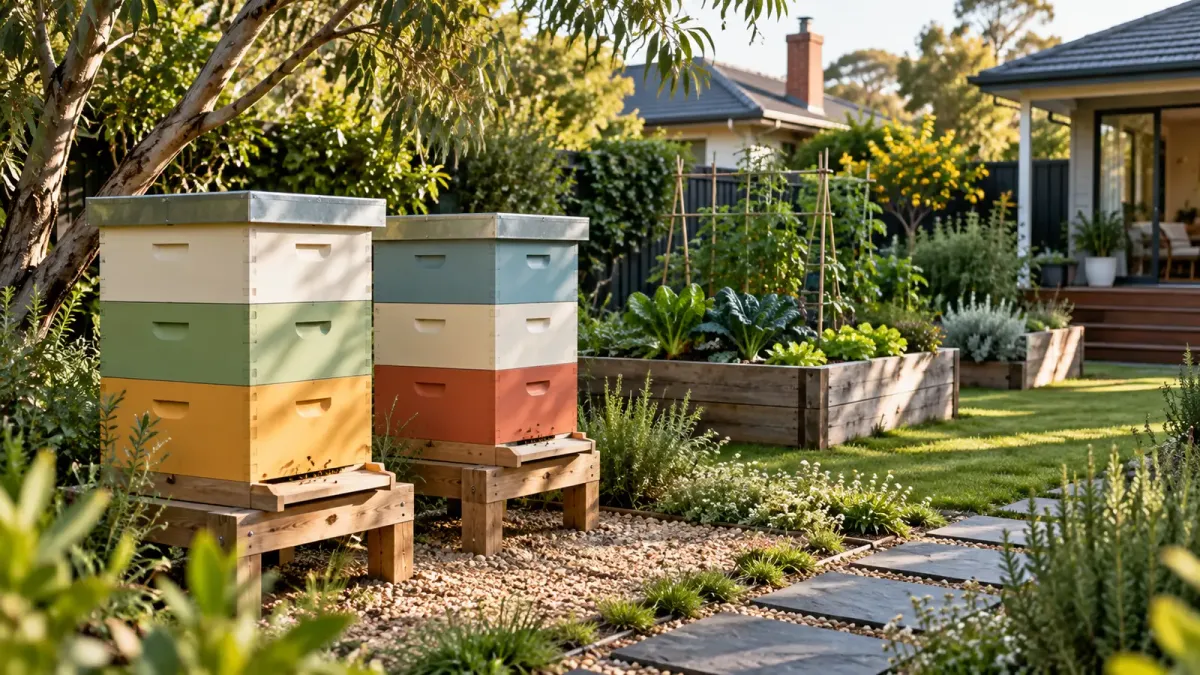
The hero is an AI-generated illustration, not a measured Melbourne lot or a permit-exemption diagram.
Melbourne courtyards and shared roofs
Use the Melbourne planning and property guide when assessing a small urban lot, common courtyard or apartment roof. It connects the Apiary Code review to the relevant council and owners-corporation decision.
Frequently asked questions
Is beekeeper registration free in Victoria?
Agriculture Victoria says registration fees are waived from October 1, 2025 for two years, including operations above five hives. Registration is still required. Check the fee position again when that temporary waiver ends.
How many hives can I keep on a 500-square-metre Victorian lot?
Schedule 1 of the May 2011 Apiary Code lists one hive for a tenement of 500 square metres or less. Its other conditions must also be met for the planning-permit exemption.
Do I always need a planning permit for Victorian beekeeping?
Beekeeping can proceed without a planning permit when the applicable Apiary Code requirements are satisfied. If those requirements cannot be met, Agriculture Victoria directs beekeepers to obtain a council planning permit before starting.
Can a 2-metre fence cancel every boundary restriction?
No. The Code’s close-boundary provisions contain specific conditions, including a solid fence more than two metres high or other listed arrangements. Check the full provision and the council’s interpretation for the site.