Melbourne Beekeeping Rules: Victoria & Council Checks
By UrbanBee Editorial TeamSources checked Oct 14, 2026
⚠️ Not Legal Advice: Summaries for educational purposes only. Verify with official Melbourne, Victoria authorities.
Melbourne beekeeping involves Victorian registration, the Apiary Code’s planning conditions and permission to use the property. A small-lot hive allowance is not automatic authorization for an apartment roof or shared courtyard.
Identify the council governing the address and compare your site with the full code before buying bees. Ask the property owner or owners corporation to authorize common-space use and any proposed screening or roof works.
Compare common Melbourne sites
| Proposed site | Main planning check | Additional property question |
|---|---|---|
| Small private garden | Lot-size density and placement conditions | Does the owner authorize the hive? |
| Courtyard on a shared title | Applicable land area and permitted use | Who controls the courtyard? |
| Apartment roof | Code application and any building works | Does the owners corporation approve use and access? |
| Commercial roof | Apiary use and proposed structures | Who manages inspections and removal? |
The Agriculture Victoria beginner guidance explains the relationship between planning permission and the Apiary Code. Metropolitan Melbourne includes many councils; the City of Melbourne’s boundary does not cover the entire metropolitan area.
Use the code’s density schedule carefully
The Apiary Code of Practice, May 2011 includes these small-lot allowances.
| Land area in the code schedule | Hive allowance |
|---|---|
| Up to 500 m² | 1 |
| 501–1,000 m² | 2 |
| 1,001–2,000 m² | 5 |
The count is only one condition. Do not substitute your courtyard’s usable floor area or the whole apartment building’s parcel area without asking how the planning provisions apply to that property.
The code also addresses boundary separation and flight barriers. Follow the exact conditions rather than assuming any hedge or a nominal two-metre fence establishes an exemption. Our Victoria guide explains the broader schedule and state requirements.
Common-property approval is its own decision
Consumer Affairs Victoria’s guidance explains owners-corporation responsibilities and authorization of changes to common property.
For a hive proposal, identify the roof or courtyard’s legal status and the decision required under the property’s documents. Explain the colony count, water source, inspection route, insurance questions and removal arrangements.
Building a platform, changing a roof-access route or adding a substantial wind screen can introduce separate works questions. Submit those details with the proposal rather than requesting approval of “one hive” while leaving the associated alterations unexplained.
Registration remains necessary when fees are waived
Use Agriculture Victoria’s current registration page. The temporary fee waiver does not remove the registration duty.
Keep the registered details, colony origin and inspection records together. If moving bees or acquiring used equipment, check current biosecurity instructions before arranging transport.
Make the urban site manageable
Allow inspection space and a route for removing heavy supers. Locate entrance traffic away from building doors and neighboring outdoor living areas, and provide water from installation.
Our rooftop beehive guide helps assess working access and loading. A roof with attractive forage nearby can still be unsuitable if access requires an unsafe ladder or crosses an occupied terrace.
Retain the council response and property authorization with registration. Recheck them before increasing colonies or modifying the installation. The Australia overview and international laws hub link the wider framework.
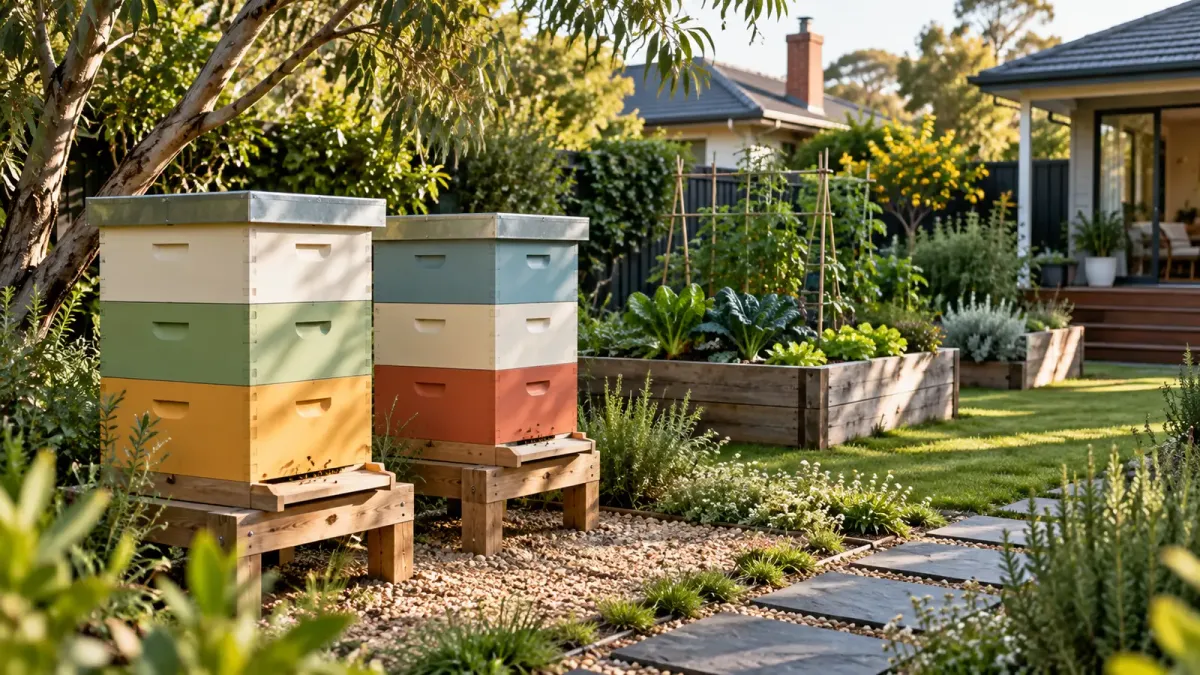
The hero image is an AI-generated illustration; it does not document an approved apiary or measured legal distances.
Frequently asked questions
Do Melbourne hobby beekeepers need registration?
Yes. Victoria’s registration requirement applies to honey-bee keepers even where the registration fee is waived. Use the current Agriculture Victoria process.
How many hives does Victoria’s code allow on a small lot?
The Apiary Code’s density schedule specifies one hive up to 500 square metres, two on 501–1,000 square metres and five on 1,001–2,000 square metres. Other code and planning conditions also need to be met.
Does complying with the hive-count table guarantee no planning permit?
No. Assess the full Apiary Code and the applicable planning provisions, including placement conditions. Ask the council how they apply to the specific property and intended use.
Can a Melbourne apartment owner keep bees on the shared roof?
Owning an apartment does not by itself authorize use of common property. Obtain the applicable owners-corporation and property permissions, then check access, structure and any proposed works.