Texas Beekeeping Laws: Registration & Bee Removal
By UrbanBee Editorial TeamSources checked Aug 9, 2026
⚠️ Not Legal Advice: Summaries for educational purposes only. Verify with official Texas authorities.
Texas separates bee-health and movement rules from local land-use controls. The Texas Apiary Inspection Service (TAIS) administers Agriculture Code Chapter 131, but ordinary backyard siting is also affected by city ordinances, private deed restrictions, leases, HOA rules, and nuisance law.
Current state requirements
TAIS’s current guidance says:
- Ordinary registration is optional. Texas does not require every beekeeper to register. A voluntary beekeeper registration currently costs $35 and expires August 31 of the same fiscal year.
- Bee removal is different. A beekeeper relying on the statutory exemption from structural-pest-control regulation for honeybee removal must maintain the registration and meet the applicable requirements; TAIS does not license or endorse removal providers.
- Interstate movement requires documents. Bees entering Texas from another state require a health certificate and a Texas interstate permit. TAIS currently lists the permit at $200, valid for state-line movements from September 1 through August 31.
- Suspected reportable pests or diseases must be reported. TAIS currently lists American foulbrood, Tropilaelaps mites, and yellow-legged hornet.
- Equipment away from the primary residence needs identification. TAIS allows permanent identifying marks on hive bodies or a weatherproof apiary-manager contact sign. Hives must have movable frames.
Fees and program details can change, so use the current TAIS regulations and forms pages before filing or moving bees.
Rules that decide a backyard site
State registration does not approve a specific yard. Check:
- the city’s zoning, animal, and nuisance code;
- county rules where the property is outside a municipality;
- deed restrictions, HOA or condominium rules, and lease terms;
- rooftop, fire-access, building, and insurance requirements; and
- parcel-specific permits or approvals.
Austin, Dallas, and Houston illustrate why address-level research matters: the applicable legal and private-property layers differ substantially.
Agricultural appraisal is a separate property-tax question. Eligibility and evidence are determined by the local appraisal district; a voluntary TAIS registration does not by itself guarantee an appraisal.
Compare the City Layer Before Choosing a Site
| Location | Local guide | Verification task |
|---|---|---|
| Austin | Austin beekeeping rules | Confirm the parcel jurisdiction and nuisance requirements |
| Dallas | Dallas beekeeping rules | Check current city standards against your site plan |
| Houston | Houston beekeeping rules | Check local requirements alongside deed and association restrictions |
For each address, save the planning office’s written response and the property owner’s permission. A state registration record is not a substitute for either. The TAIS regulations page, checked September 29, 2026, still distinguishes ordinary optional registration from registration for qualifying bee-removal activity.
Is It Illegal to Kill Honey Bees in Texas?
Texas does not have a blanket statewide ban on killing every honey bee. A particular removal can still be unlawful because of pesticide-label restrictions, provider requirements, local rules or property rights. Do not spray or seal an active entrance; ask a qualified professional to assess whether safe live removal is practical.
The TAIS regulations page distinguishes ordinary optional registration from registration for qualifying honeybee-removal activity. Registration does not approve pesticide use or establish competence. For the federal, species and state distinctions, read whether it is illegal to kill honey bees; use the removal cost and scope checklist when comparing providers.
Before installing or moving a Texas hive
- Identify the city or unincorporated county jurisdiction for the full address.
- Read the current local code and all private property restrictions.
- Check TAIS requirements if bees will cross the Texas border, if you plan paid bee removal, or if disease is suspected.
- Add the required equipment identification where the hives are not at the primary residence.
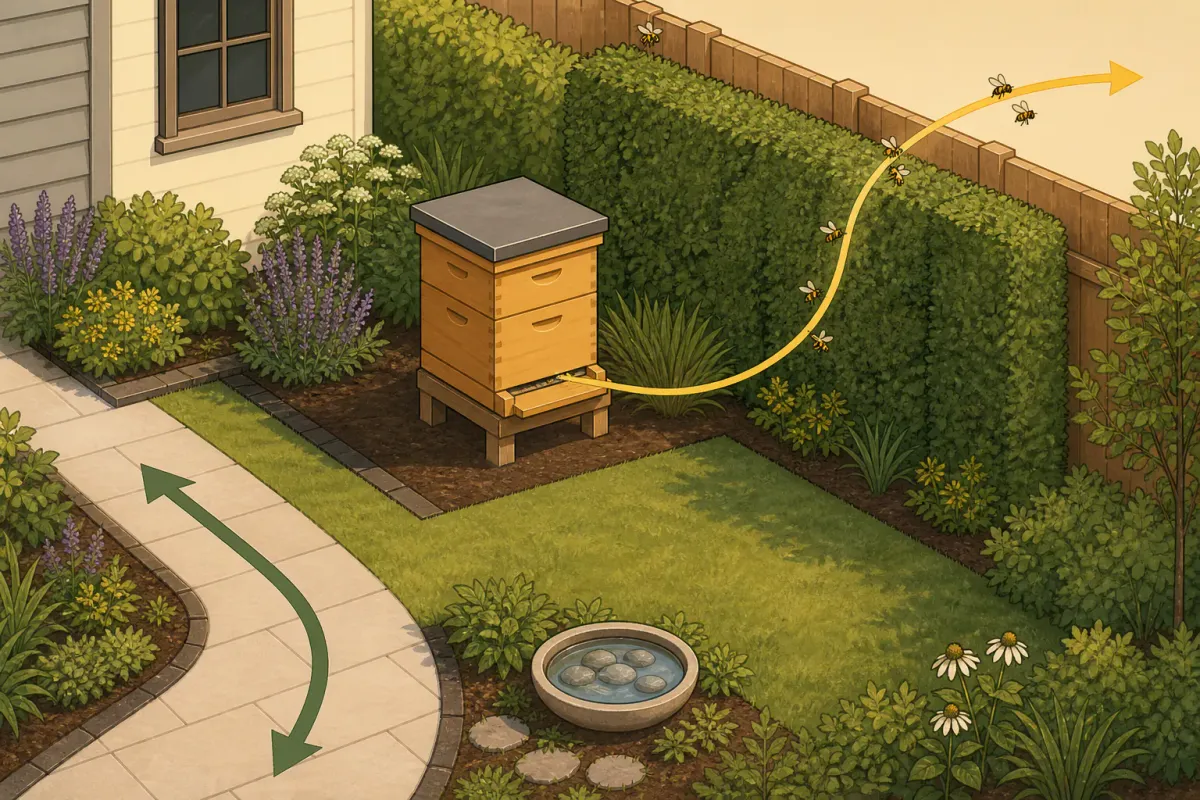
- Plan permanent water, afternoon shade, storm restraint, safe access, and a managed flight path.
- Recheck the linked primary sources immediately before taking action.
Use the address-level legal-check workflow for the local layer and the urban placement guide for site planning.
Not legal advice. Sources and current TAIS fees were checked August 9, 2026. Verify the latest requirements with TAIS, the relevant local government, and the applicable property documents.