Scotland Beekeeping Laws: BeeBase & Disease Reporting
By UrbanBee Editorial TeamSources checked Oct 14, 2026
⚠️ Not Legal Advice: Summaries for educational purposes only. Verify with official Scotland authorities.
Scotland beekeeping laws distinguish voluntary BeeBase registration from mandatory disease and pest reporting. Garden suitability, council requirements and permission to use the land must also be checked.
Before obtaining bees, register the apiary voluntarily, save the Scottish bee-health contact route and obtain the site’s agreement. Check the current movement requirements before accepting colonies from outside Scotland.
Scottish responsibilities compared
| Topic | Scottish position | What to do |
|---|---|---|
| BeeBase | Voluntary and encouraged | Keep locations and contact details accurate |
| Suspect notifiable disease or pest | Reporting is mandatory | Contact the Scottish bee-health authority promptly |
| Varroa | Reportable under the 2021 amendment | Follow the current reporting process |
| Imported bees | Health certification and movement rules apply | Check origin and shipment type before dispatch |
| Garden or allotment | Property and local requirements are separate | Obtain the site’s permission |
The Scottish Government legislation guidance identifies the Bee Diseases and Pests Control (Scotland) Order 2007 and subsequent amendments.
Use the Scottish authority and keep BeeBase current
The Scottish bee-health introduction explains the responsible service and encourages BeeBase registration. Accurate locations help surveillance and communication when disease is found nearby.
Record each apiary separately and update an address when colonies move. A second borrowed garden should not remain invisible simply because the beekeeper already has an account.
Retain your own inspection notes as well. A registration system identifies the site; it does not replace routine observation of brood or authorize a property.
Reporting is different from routine mite management
The Scottish framework requires reporting suspected notifiable diseases and pests. The current Varroa guidance separately describes the mite as reportable.
For suspicious brood, stop distributing bees, comb or used equipment while seeking the authority’s instructions. Our foulbrood comparison guide explains signs that warrant follow-up, without turning a photograph into a diagnosis.
Maintain dated mite observations and any treatment records. Reporting status and a colony-management plan serve different purposes: recording Varroa does not complete the seasonal monitoring work.
Check imports before committing to a supplier
Use the Scottish Government import guidance and its current linked requirements. Give the authority the origin, destination and whether the shipment consists of queens, packages, colonies or equipment.
Do not assume that a supplier elsewhere in the British Isles can send every format under the same conditions. Northern Ireland has a separate movement framework, explained in our Northern Ireland guide.
Keep supplier details and health documents with the colony record before introducing equipment into the yard.
Garden and allotment agreements need a practical plan
For an allotment, rented garden or shared site, ask the responsible operator to approve the location and management arrangements. Identify the backup keeper, inspection access, colony number and procedure for moving the apiary if permission ends.
Plan water and entrance traffic around paths, doors and occupied neighboring areas. A flyway barrier may help manage departures; its dimensions should not be presented as a universal Scottish statutory approval.
Ask the council about any applicable land-use or nuisance requirements for the address. The UK overview and international research hub explain the wider context.
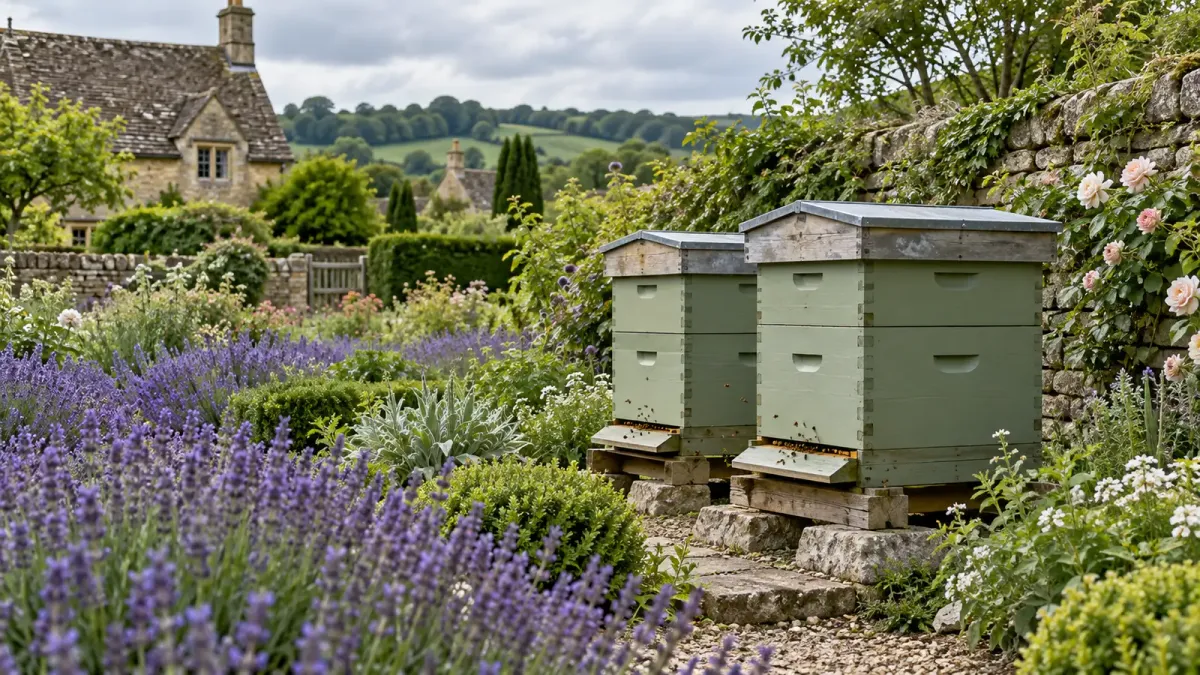
The hero image is an AI-generated illustration; it does not document an approved apiary or measured legal distances.
Frequently asked questions
Is BeeBase registration compulsory in Scotland?
Ordinary BeeBase registration is voluntary and encouraged. Mandatory disease and pest reporting still applies, whether or not the beekeeper has registered.
Who handles bee-health concerns in Scotland?
Use the Scottish Government bee-health service and its current bee-inspector contacts. Scotland has its own bee-health framework and works with other specialist services.
Is Varroa reportable in Scotland?
Yes. The 2021 Scottish amendment made Varroa reportable. Use the current Scottish Government and BeeBase instructions to record or report its presence.
Can I keep bees on a Scottish allotment without asking?
Obtain the allotment operator’s permission and conditions. BeeBase registration does not grant use of land, and a garden or allotment agreement may impose separate restrictions.