Does Homeowners Insurance Cover Beehives?

Disclosure: UrbanBee is reader-supported. When you buy through links on our site, we may earn an affiliate commission at no extra cost to you. Learn more.
As an urban beekeeper, you are placing thousands of stinging insects near property lines, sidewalks, and nosy neighbors. Aside from mastering Hive Management and Health, understanding your legal and financial liability is your most critical responsibility.
A common question for beginners is: “If my neighbor gets stung and sues, or if a storm blows my expensive Flow Hive off the roof, does my standard homeowners insurance cover it?”
The answer is rarely a straightforward ‘yes.’ Here is a detailed breakdown of how insurance handles apiaries, what exclusions to watch out for, and when you need a specialized policy.
1. Personal Liability (The Sting Factor)
If your bees swarm a neighbor’s yard, attack a dog, or severely sting a delivery driver, you can be sued for medical bills, property damage, and distress.
Your standard homeowners (or renters) insurance policy includes Personal Liability Coverage (typically starting at $100,000 to $300,000).
- The Good News: In theory, this liability coverage automatically extends to unintentional bodily injury or property damage caused by activities on your property—including keeping bees as a hobby.
- The Bad News (Exclusions): Many insurance carriers are quietly tightening their rules. You must read your policy’s fine print. Look for exclusions regarding “livestock,” “exotic pets,” or “inherently dangerous/vicious animals.” If your carrier classifies honey bees under any of these categories, your claim will be denied.
Action Item: Call your insurance agent anonymously to ask “Does my current policy cover personal liability claims arising from a hobbyist beehive kept on the property?” Do not assume you have coverage.
The Umbrella Policy
If your carrier does not exclude bees, a single stinging incident resulting in anaphylactic shock could easily exceed a standard $100k liability limit. Serious urban beekeepers should strongly consider purchasing an Umbrella Insurance Policy. This adds an extra $1M to $2M in liability coverage over your standard limits and usually costs less than $300 a year.
Need advice on dealing with angry neighbors? Read our guide on Neighbors Complaining About Bees.
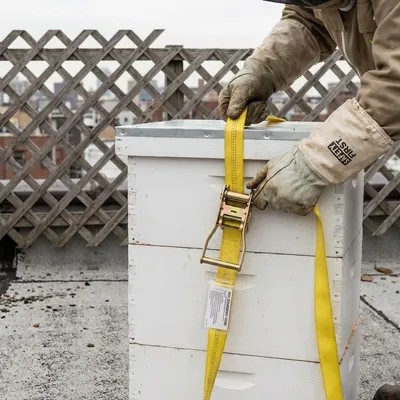
2. Property Damage (The Wind Factor)
A fully operational wooden beehive can cost between $400 and $700. (Read our Ultimate Guide to Urban Beekeeping Costs). If a hurricane blows your hive off a roof, or a fire destroys it, is the property loss covered?
- The Physical Woodenware (Boxes, Frames): This is usually covered under “Coverage B - Other Structures” on your homeowners policy, just like a shed or a fence. It protects the physical property against covered perils like fire, windstorms, or vandalism.
- The Bees and the Honey: The living livestock (the bees themselves, the queen) and the agricultural product (the honey) are almost universally excluded from standard property protection. If your hive blows over, insurance might buy you a new wooden box, but they will not refund you the $150 you spent on the packaged bees or the lost honey crop.
3. The Shift to Commercial Insurance (Selling Honey)
Standard homeowners insurance only covers hobbyist activities.
The moment you bottle your honey, slap a label on it, and sell it at a local farmers market or out of your garage, you are now operating a commercial business.
If someone breaks a tooth on a piece of propolis in your honey jar, or gets botulism, your personal homeowners liability will immediately deny the claim because it is a business liability.
If you sell honey or wax products, you absolutely must purchase a standalone Product Liability Policy or a Commercial General Liability (CGL) farm policy.
The Bottom Line
Before installing that first package of bees on your patio, clarify your liability. Secure an umbrella policy for peace of mind, maintain gentle genetics, and adhere strictly to city ordinances. A responsible beekeeper is a legally protected beekeeper.