Balcony Beekeeping: Can Your Space Safely Hold a Hive?
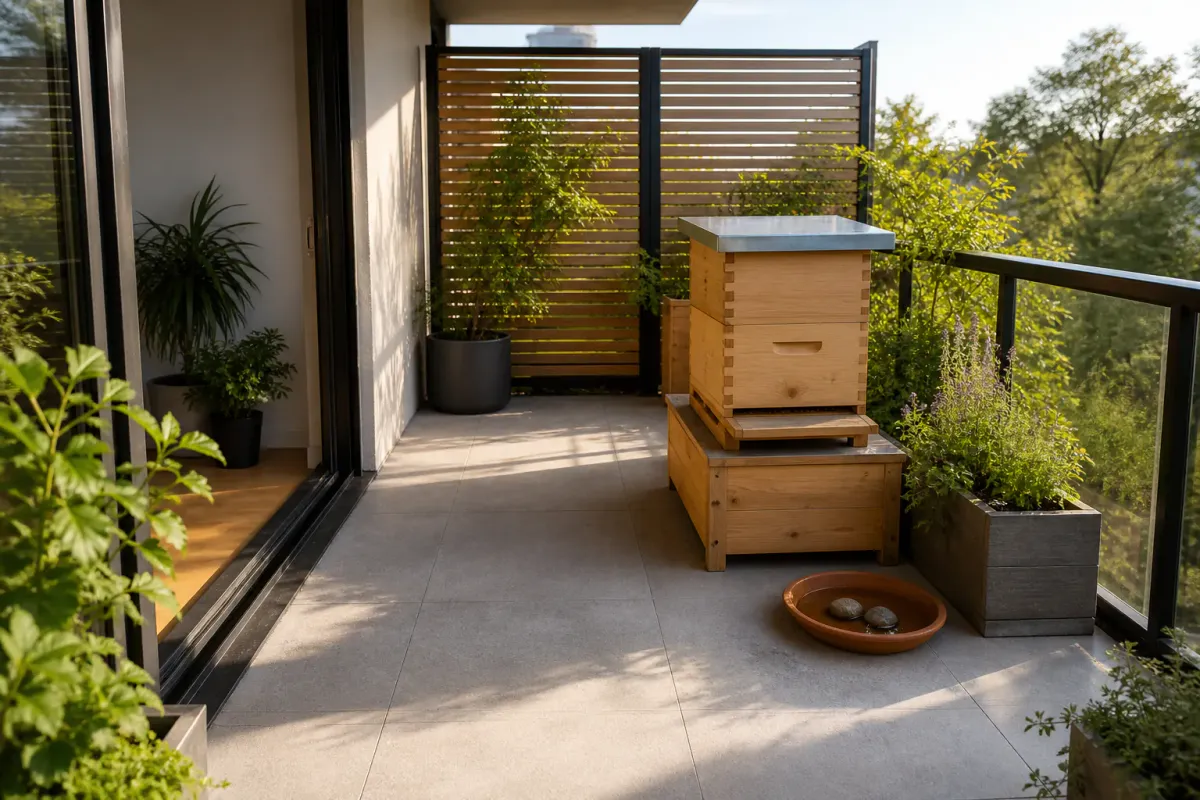
Not every balcony is a suitable place for honey bees. A balcony hive can affect neighbors above, below, and beside it; emergency access; the building envelope; and people who never agreed to share a flight path. Treat a balcony as an advanced, exception-case apiary location, not a shortcut around having a yard.
Before buying equipment or bees, obtain written permission, verify local rules, and have a qualified person assess any structural or access concern. If one of those checks cannot be completed, use a community apiary, host yard, or pollinator garden instead. The siting and neighbor-risk framework draws on Oregon State University Extension residential guidance and UC Agriculture and Natural Resources apiary-location guidance. Neither source can certify a particular balcony’s structure, access, or legal permission.
Compare a balcony proposal with the broader urban beehive placement guide and reject the balcony if a safer, serviceable ground-level or community-apiary option is available.
Balcony suitability: stop, investigate, or proceed
If the site remains feasible after these checks, use the apartment balcony setup checklist to prepare a load inventory, rehearse the layout, and plan inspections and removal.
| Question | Stop if… | Investigate further if… | A workable plan should show… |
|---|---|---|---|
| Permission | The owner, lease, condo board, or HOA prohibits hives | The documents are silent or verbal approval is vague | Written approval identifies the exact location and access terms |
| Local rules | Hives are not allowed at the address | Rules refer to setbacks, colony limits, registration, or nuisance standards that are unclear | The responsible authority confirms the site and any registration or permit steps |
| Structure | There is visible damage, movement, corrosion, leakage, or no reliable assessment | Capacity, waterproofing, anchorage, or wind exposure is uncertain | A qualified building professional accepts the intended location and loading plan |
| Access | The hive would block an exit or require climbing over railings or furniture | Inspections would conflict with residents, maintenance, or emergency work | The beekeeper can reach, open, and remove equipment while keeping the route clear |
| Flight path | Bees would launch through doors, windows, shared balconies, or a public walkway | A barrier may redirect traffic but could violate building rules or worsen wind | Bees can rise away from people without trapping them under an overhang |
| Neighbors | A nearby resident has a serious concern that cannot be mitigated | Windows, pets, play areas, pools, or outdoor workspaces are close | Communication, water, monitoring, and a relocation plan address foreseeable conflict |
| Operations | There is nowhere to store supers or isolate leaking honey and wax | Honey handling or swarm response would require shared indoor areas | Clean storage, transport, spill control, and removal routes are planned |
Passing one column does not override a failure in another. A legal hive can still be unsuitable for a specific balcony.
1. Get permission in writing
Check every layer that can control the property:
- city, county, and state or provincial bee rules;
- the lease and building policies;
- condominium declaration and board rules;
- HOA covenants;
- insurer requirements; and
- roof, facade, fire-safety, or maintenance restrictions.
Do not conceal a hive from a landlord or neighbors. Concealment makes routine access and emergency response harder and can turn a manageable concern into a trust problem. Start with the beekeeping law lookup guide and request a written answer when an ordinance is ambiguous.
Property permission and public law are separate. A city may allow bees while a lease or condominium rule still prohibits them. Conversely, landlord approval does not waive registration, setback, nuisance, or colony-limit rules.
2. Do not guess about structural capacity
A working hive is not a fixed load. Its weight changes with boxes, honey, rain, covers, stands, and handling. Inspections can also concentrate the weight of people and removed equipment in one small area.
This site does not provide a universal balcony load limit. Construction, age, deterioration, fasteners, cantilever design, waterproofing, and local code all matter. Ask the building owner or a qualified structural professional to assess the exact placement and operating scenario. Do not drill, anchor, or attach screens to a building without authorization.
Also plan how the hive could be removed at its heaviest practical condition. If boxes cannot be transported through the approved route without unsafe lifting or dripping honey through shared areas, the location is not operationally sound.
3. Protect access and the building
Keep doors, drains, scuppers, utility equipment, fire escapes, and maintenance paths clear. A hive must not delay firefighters, building staff, window cleaners, HVAC technicians, or facade work.
Use a stable, level stand and a system for catching debris without blocking drainage or damaging waterproofing. Secure loose covers and tools against wind using building-approved methods. Never place equipment where it could fall over a railing.
Write a relocation plan before installation. It should name who can move the colony if the beekeeper is unavailable and where the bees can legally go during building work or an emergency.
4. Design the flight path around people
Honey bees normally orient from the entrance toward open sky and forage. On a balcony, the wrong entrance direction can send traffic across a neighbor’s door, open window, laundry area, or seating.
A flyway barrier may encourage bees to rise, but it is not magic. An overhang can trap traffic, a reflective facade can confuse orientation, and a wind tunnel can push bees toward adjacent units. Screens must be stable, permitted, and positioned without restricting the beekeeper’s escape route.
Walk the path at different times of day. Check windows and doors above and below, shared walkways, exterior lights, pools, and neighboring plants. Review the flyway barrier guide and score the full site with the urban hive placement guide.
5. Provide water before the bees arrive
A dependable water source can reduce visits to neighboring birdbaths, condensate drains, pet bowls, and pools. Introduce it before installing bees and keep it available through the active season.
Use a stable container with landing surfaces that reduce drowning. Place it where a spill cannot damage the facade, create a slip hazard, or drain onto another unit. Clean and refill it often enough to avoid stagnant water and mosquito breeding. Avoid unverified additives or attractants that could harm bees, pets, or the building.
Water management is a neighbor issue as much as a colony issue. If the intended balcony cannot accommodate a safe, serviceable water station, reconsider the site. The bee-water station guide covers shallow designs, mosquito prevention, overflow, and seasonal maintenance.
6. Plan for heat, wind, storms, and winter
Upper-floor and exposed balconies can have stronger gusts, reflected heat, less shade, and more abrupt weather than a yard at street level. The facade can amplify afternoon sun, while an overhang can reduce winter solar gain.
The plan should cover:
- wind exposure and building-approved securing methods;
- shade that does not block ventilation or access;
- a water supply during hot periods;
- storm preparation and loose equipment;
- winter wind protection appropriate to the local climate; and
- safe monitoring when snow, ice, or rain makes the balcony hazardous.
Do not use a story count as proof of suitability. Local wind, facade shape, exposure, and access matter more than a universal floor-number rule. See heat-wave management for exposed hives and wintering bees on a balcony for seasonal planning.
7. Prepare for swarms and defensive behavior
A balcony offers little room to step back from a defensive colony. Before installation, identify an experienced beekeeper who can help requeen, relocate, or remove a colony. Keep protective gear accessible without passing directly in front of the entrance.
Active swarm management is essential, but no technique offers a guarantee. A swarm may cluster on another unit, a facade, or a location that cannot be reached safely. Never climb over railings, lean from windows, or enter a neighbor’s balcony to retrieve bees. Maintain a local swarm collector contact and follow the urban swarm-prevention guide.
If temperament creates repeated risk for residents or workers, the correct response may be prompt relocation, not another screen.
8. Plan neighbor communication and complaints
Speak with directly affected neighbors before installation when possible. Explain the location, flight path, water source, inspection schedule, swarm contact, and how to reach you quickly. Do not promise that no one will ever see a bee or be stung.
Keep a simple incident log. If bees begin using a neighbor’s water, entering windows, or interfering with a shared area, investigate promptly. Our guide to responding when neighbors complain provides a practical de-escalation process.
9. Account for storage and honey handling
Empty boxes, full supers, feeders, tools, wax, and sticky frames all need secure storage. Leaving exposed comb outside can trigger robbing and attract pests. Extracting honey can create spills and bee traffic through shared corridors.
Decide where equipment will be stored and cleaned, how boxes will move through the building, and how food-contact work will comply with local rules. If the only answer is a shared hallway or an unprotected balcony corner, choose another apiary location.
Safer alternatives to a balcony hive
For a comparison with rooftop, backyard and hosted sites, use the urban beekeeping site comparison. A suitable hosted apiary is a practical next step when a balcony cannot meet the access, permission or neighbor checks.
You can keep learning and support pollinators without placing a colony at home:
- join a local association with a teaching apiary;
- place a hive in a permitted host yard under a written agreement;
- volunteer at a community garden or urban farm;
- plant a pesticide-conscious balcony garden for native bees and other pollinators; or
- take a season of hands-on classes before choosing a site.
A community apiary often provides mentoring, safer access, shared equipment, and more room for swarm control. For many apartment residents, it is the responsible first choice.
Balcony go/no-go checklist
- Written owner, lease, condo, or HOA permission is in hand.
- Current local bee rules and registration requirements are confirmed.
- Structural capacity and building-envelope concerns were reviewed by a qualified person.
- Emergency exits, drains, utilities, and maintenance access remain clear.
- Flight paths avoid neighboring windows, doors, balconies, and walkways.
- Water, heat, wind, winter, swarm, and relocation plans are documented.
- Equipment can be stored and moved without unsafe lifting or shared-area contamination.
- An experienced mentor and local swarm contact are available.
- A community-apiary alternative has been considered honestly.
If any safety-critical item remains unresolved, do not install the hive. A different site protects the bees, the building, and the people who share it.