The Ultimate Guide to Urban Beekeeping
Disclosure: UrbanBee is reader-supported. When you buy through links on our site, we may earn an affiliate commission at no extra cost to you. Learn more.
Introduction: The Concrete Jungle Bloom
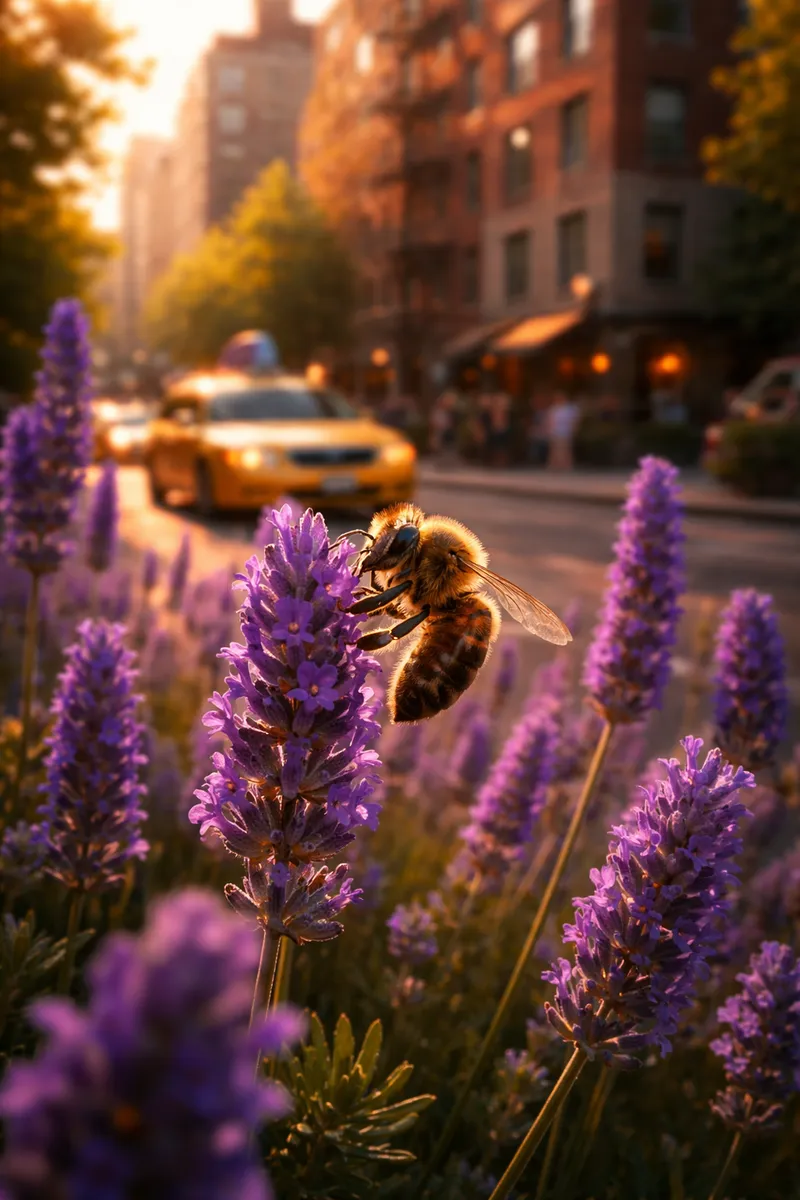
Beekeeping is no longer a rural-only pursuit. Over the last two decades, cities such as New York, London, and San Francisco have quietly become some of the best environments for honey bees. This surprises many beginners, but the data is clear: urban landscapes often provide more consistent and diverse forage than agricultural zones.
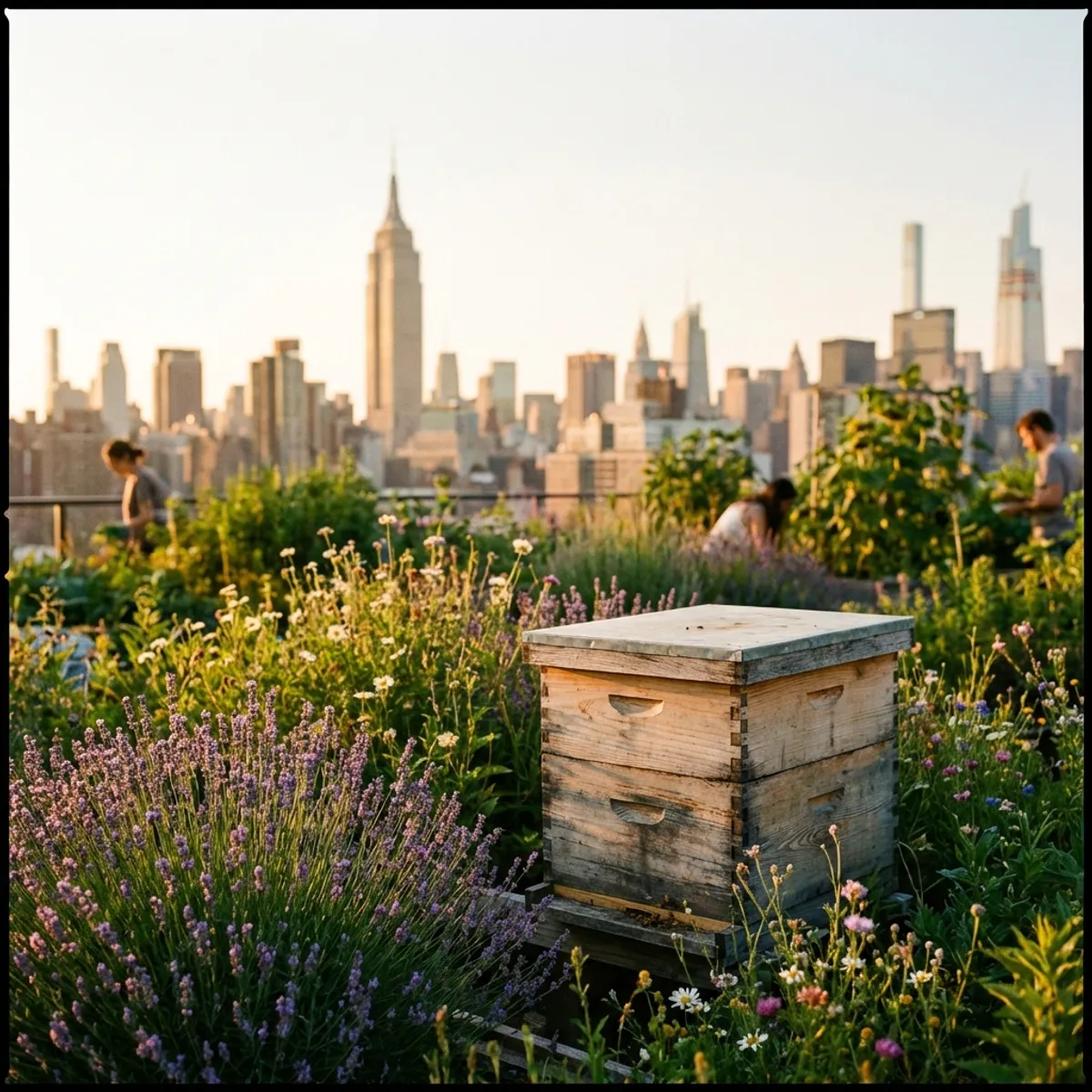
Unlike rural farmland dominated by monocultures, cities contain parks, community gardens, street trees, balconies, rooftop planters, and ornamental plantings that bloom sequentially from early spring through late fall. Studies cited by Cornell University show that urban bees forage on a wider range of plant species and often experience longer nectar flows than rural colonies. The result is healthier bees and distinctive, hyper-local honey that reflects a neighborhood’s unique floral fingerprint.
Urban beekeeping is not just possible—it is often exceptionally productive, provided it is done responsibly.
Prerequisites: Can YOU Keep Bees?
Urban beekeeping succeeds or fails before the first hive is ever placed. These are the three non-negotiable rules.
1. Legal: Zoning, Registration, and Setbacks
Most major cities now allow beekeeping, but almost all regulate it under nuisance, health, or animal control codes.
Typical requirements include:
- Registration with a city or state agriculture department
- Limits on hive numbers (often 2–5 colonies per property)
- Minimum setbacks from property lines
- Mandatory flyway barriers if hives are near neighbors
- Enforcement triggered by nuisance complaints
For example:
- New York City allows beekeeping under Health Code Article 161, with nuisance enforcement and water requirements.
- San Francisco permits beekeeping but regulates it through complaint-based enforcement and general health codes.
- London (UK) allows beekeeping with no permit, but nuisance and animal welfare laws apply under local councils.
Always verify local codes before acquiring bees. “Allowed” does not mean “unregulated.”
Check Local Beekeeping Laws
Before installing a hive, verify the specific zoning and permit rules for your city. We've compiled detailed guides for these major hubs:
2. Space: Sun, Wind, and Human Safety
Urban spaces work if they are designed intentionally.
Your hive location must provide:
- Morning sun for early foraging
- Protection from prevailing winds
- Clear flight paths away from people
- Stable, level footing (especially on rooftops)
Bees leave the hive in a straight horizontal line. If that line crosses walkways, doors, patios, or neighboring yards, you will have problems. The solution is elevation: fencing, hedges, or screens at least 6 feet tall placed several feet in front of the entrance force bees upward and safely over human activity.

3. Time: Management Is Mandatory
Urban beekeeping is not passive.
You must:
- Inspect regularly (especially in spring)
- Actively prevent swarming
- Monitor temperament
- Manage food availability
Neglected hives are the leading cause of neighbor complaints, swarms, and forced hive removal in cities. If you cannot commit consistent time, do not keep bees in dense neighborhoods.
Diplomacy: Handling Neighbors
Urban beekeeping fails more often from social friction than from bee health issues.
The Honey Bribe (Before Bees Arrive)
Speak to neighbors before installing hives. Explain what you are doing, reassure them, and offer a small jar of honey. This simple act builds goodwill and dramatically reduces conflict.
The Water Trick
Bees need water daily. Without a dedicated source, they will visit pools, pet bowls, and birdbaths.
Provide:
- A shallow container
- Floating corks, stones, or marbles
- Constant water supply from day one
This keeps bees on your property, where they belong.
The Fence Trick (Flyway Control)
Many cities explicitly require flyway barriers within certain distances. Even when not required, they are best practice.
Benefits:
- Bees fly above head height
- Reduced stings
- Visual screening
- Wind protection
Budgeting: How Much Does Urban Beekeeping Cost?
One of the most common questions beginners have is about start-up costs. While it varies depending on whether you buy new or used gear, a realistic budget for your first year is $400 to $650.
Here is a typical breakdown of first-year expenses:
- The Bees (Package or Nuc): $140 – $175
- Hive Components (Bottom board, boxes, frames, lid): $120 – $200
- Protective Gear (Jacket/Suit and Gloves): $50 – $160
- Essential Tools (Smoker, hive tool, bee brush): $40 – $60
- Feeding Supplies (Feeder and sugar/pollen): $30 – $50
- Misc (Pest treatments, books, minor hardware): $20 – $50
For an exhaustive list of what you actually need (and what you can skip), see our Essential Tools Checklist.
Equipment for the Urban Beekeeper
8-Frame Langstroth Hives
Urban keepers overwhelmingly prefer 8-frame Langstroth hives because:
- Lighter to carry upstairs or onto roofs
- Easier solo inspections
- Reduced physical strain
- Better thermal efficiency in winter
Ventilated Bee Suits (Non-Negotiable)
Rooftops amplify heat. Heavy cotton suits become unsafe quickly.
Ventilated suits:
- Reduce heat stress
- Improve calm handling
- Prevent rushed, sloppy inspections
- Reduce sting incidents
Smokers: Essential, Not Optional
In dense environments, smoke is a safety tool, not a tradition.
Benefits:
- Suppresses alarm pheromones
- Reduces defensive behavior
- Masks hive odors
- Minimizes escalation during inspections
Always use clean fuel and be mindful of wind direction.
The Urban Beekeeping Year
Spring: Swarm Prevention Is Critical
Swarming in cities is unacceptable.
Key actions:
- Weekly inspections during buildup
- Add space early
- Split colonies proactively
- Remove swarm cells if needed
A single unmanaged swarm can undo years of neighborhood trust. For a detailed breakdown on how to spot and stop a swarm before it happens, read our Urban Guide to Swarm Prevention.
Summer: Heat and Dearth Management
Urban heat islands intensify summer stress.
You must:
- Provide constant water
- Ensure ventilation
- Shade hives if needed
- Monitor for nectar dearth
- Avoid spilling honey
Fall: Clean Harvesting
Robbing is a serious urban risk.
Best practices:
- Never leave honey exposed
- Use sealed containers
- Extract indoors if possible
- Reduce entrances if needed
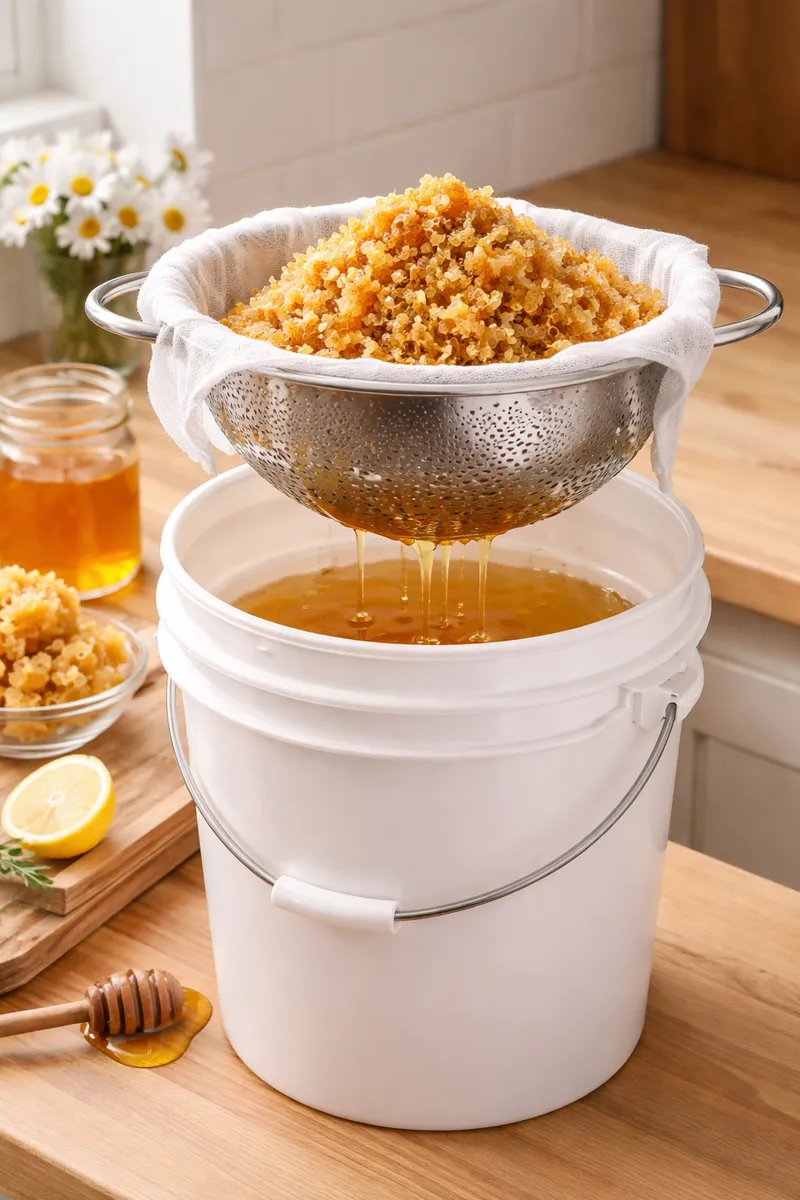
Leave sufficient honey for winter survival. If you are lucky enough to have excess honey your first year, check out our guide on How to Harvest Honey in Small Spaces.
Winter: Windbreaks and Insulation
Rooftop hives are exposed.
Recommended:
- Wind barriers
- Hive insulation
- Secure lids and weights
- Moisture management
Cities may be warmer, but wind kills colonies. Preparing for the cold is not optional; read our full step-by-step tutorial on Winterizing a Rooftop Hive.
Safety & Ethics
Do Not Overstock
Too many hives:
- Starve bees
- Stress colonies
- Harm native pollinators
Urban environments have limits. Respect them.
Allergy Preparedness
Maintain:
- First-aid kit
- Antihistamines
- Epinephrine auto-injector
Know emergency procedures. Inform close neighbors.
Gentle Genetics Are Mandatory
Aggressive bees have no place in cities.
If a colony becomes defensive:
- Requeen immediately
- Source gentle stock
- Do not delay
There is zero tolerance for aggressive colonies in urban settings.
Conclusion: Join a Community
Urban beekeeping is not a solo activity. Join a local beekeeping association, find a mentor, and learn your city’s specific patterns. Mentorship prevents mistakes, protects bees, and preserves public trust.
Done responsibly, urban beekeeping strengthens ecosystems, communities, and your connection to nature—right where you live.