How to Protect Hives from Heatwaves on Roofs
Disclosure: UrbanBee is reader-supported. When you buy through links on our site, we may earn an affiliate commission at no extra cost to you. Learn more.
Disclosure: UrbanBee is reader-supported. When you buy through links on our site, we may earn an affiliate commission at no extra cost to you. Learn more.
Keeping bees on a city rooftop offers great sunlight and keeps the flight path high above pedestrians. But in July and August, that same rooftop turns into an oven. Asphalt, tar paper, and concrete absorb the sun’s radiation, creating micro-climates that are 20 to 30 degrees hotter than the ambient air temperature.
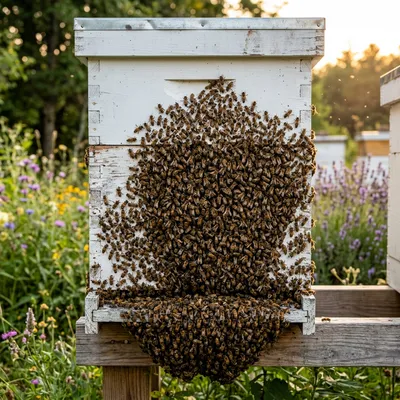
While honey bees are excellent at regulating their internal hive temperature (which you often see as bearding on the front porch), an extreme, prolonged urban heatwave can push the colony past its breaking point.
When a hive fails to cool itself, the worst-case scenario occurs: Comb Collapse. The beeswax structure literally melts, drowning thousands of bees in a sticky flood of their own honey and collapsing the brood nest.
Here is your emergency action plan to protect your rooftop hives during an extreme heat event.
1. Paint it Bright White (Preventative)
If your hive is located on a roof with zero shade, it must be painted gloss white or a very pale pastel color.
Dark colors (greens, browns, unpainted raw wood) absorb massive amounts of solar radiation. A white, glossy exterior reflects the UV rays and significantly lowers the internal temperature of the wood. (Note: Only paint the outside of the hive, never the inside).
2. Emergency Shade Structures
If a 100°F (38°C) heatwave is forecasted and your hive sits in direct sunlight, you must artificially shade it.
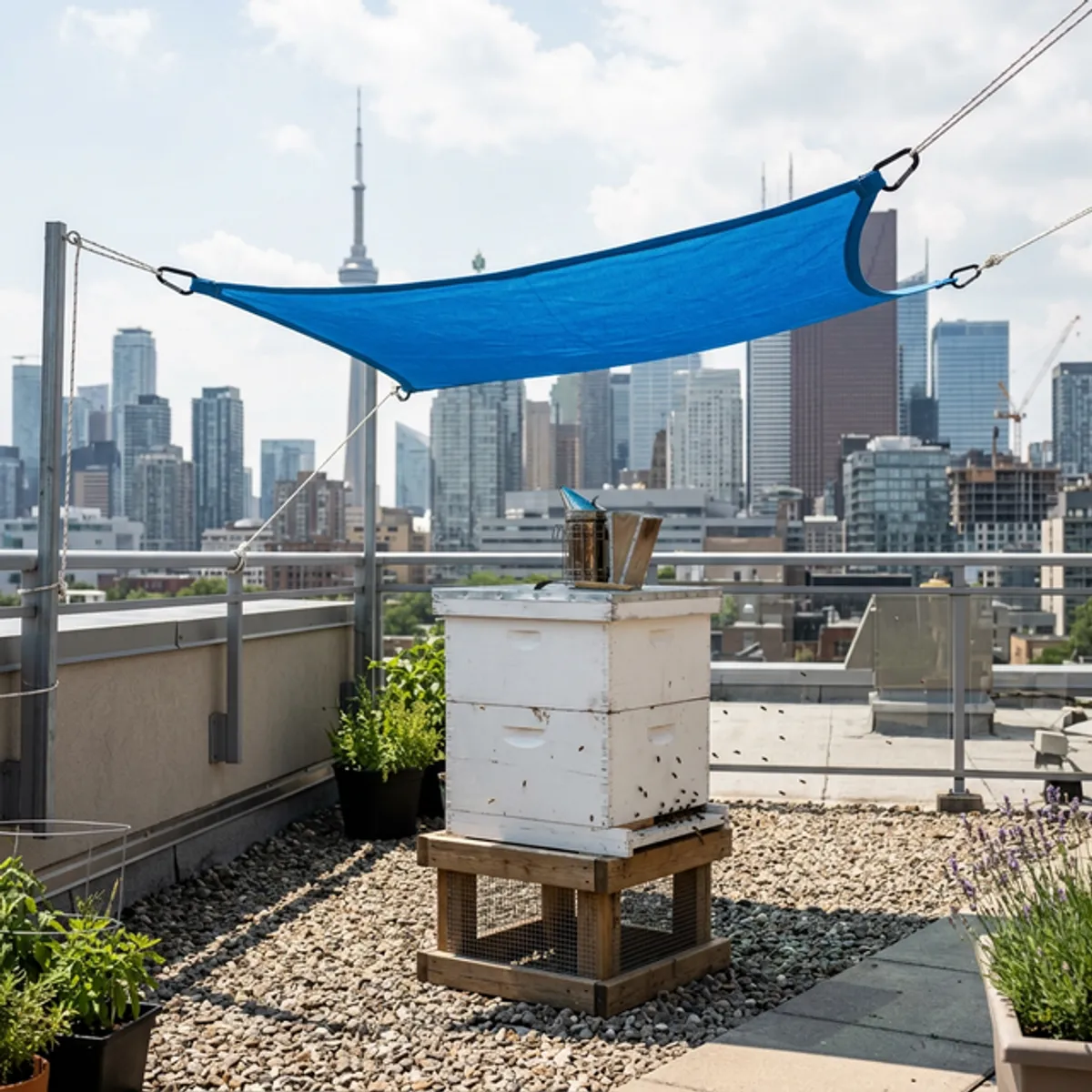
- Shade Sails: Erecting a temporary UV-blocking shade sail or a patio umbrella over the apiary is the most effective solution. Ensure it is heavily weighted down so sudden summer thunderstorms don’t blow it off the roof.
- The Plywood Roof: Place a large, flat sheet of 3/4-inch plywood on top of the hive cover, extending perfectly flat like a wide-brimmed hat. Place a heavy brick on top. This casts a large shadow over the sides of the hive body, cooling the walls.
3. Top Ventilation is Mandatory
Hot air rises. If your hive only has a bottom entrance, the hot air generated by 60,000 bee bodies gets trapped at the top of the box.
- Prop the Outer Cover: Slide a small stick, a popsicle stick, or a penny under the four corners of your outer telescopic cover. This creates a 1/8th-inch gap between the outer cover and the inner cover, creating a “chimney effect” that constantly drafts hot air out the top.
- Screened Inner Covers: Consider swapping out your solid wooden inner cover for a screened inner cover (or a Vented Super) during the hottest months.
4. The Water Source Requirement
Bees cool the hive through evaporative cooling (essentially a swamp cooler). They bring water back, spit it onto the wax combs, and fan their wings.
During a heatwave, a single hive can consume over a quart of water a day. If they cannot find water close by, they will expend too much energy flying to find it, or they will end up in a neighbor’s swimming pool (triggering complaints).
You must provide a constant, reliable water source within 20 feet of the roof apiary.
- Use a chicken waterer filled with clean pebbles so they do not drown.
- Ensure it never runs dry. If it goes empty for even a few hours, the bees will find a new source and never return to yours.
If your bees make it through the heatwave, they still need to survive the coming winter. Start planning now with our guide on Winterizing a Rooftop Hive.