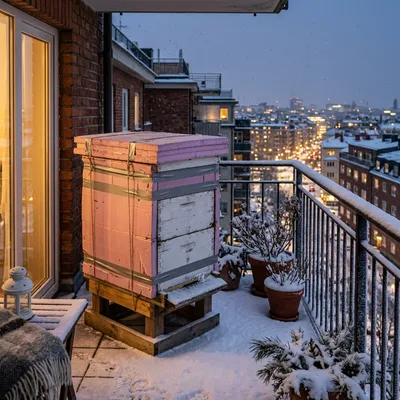
What to Do With a Small Swarm on My Balcony
Disclosure: UrbanBee is reader-supported. When you buy through links on our site, we may earn an affiliate commission at no extra cost to you. Learn more.
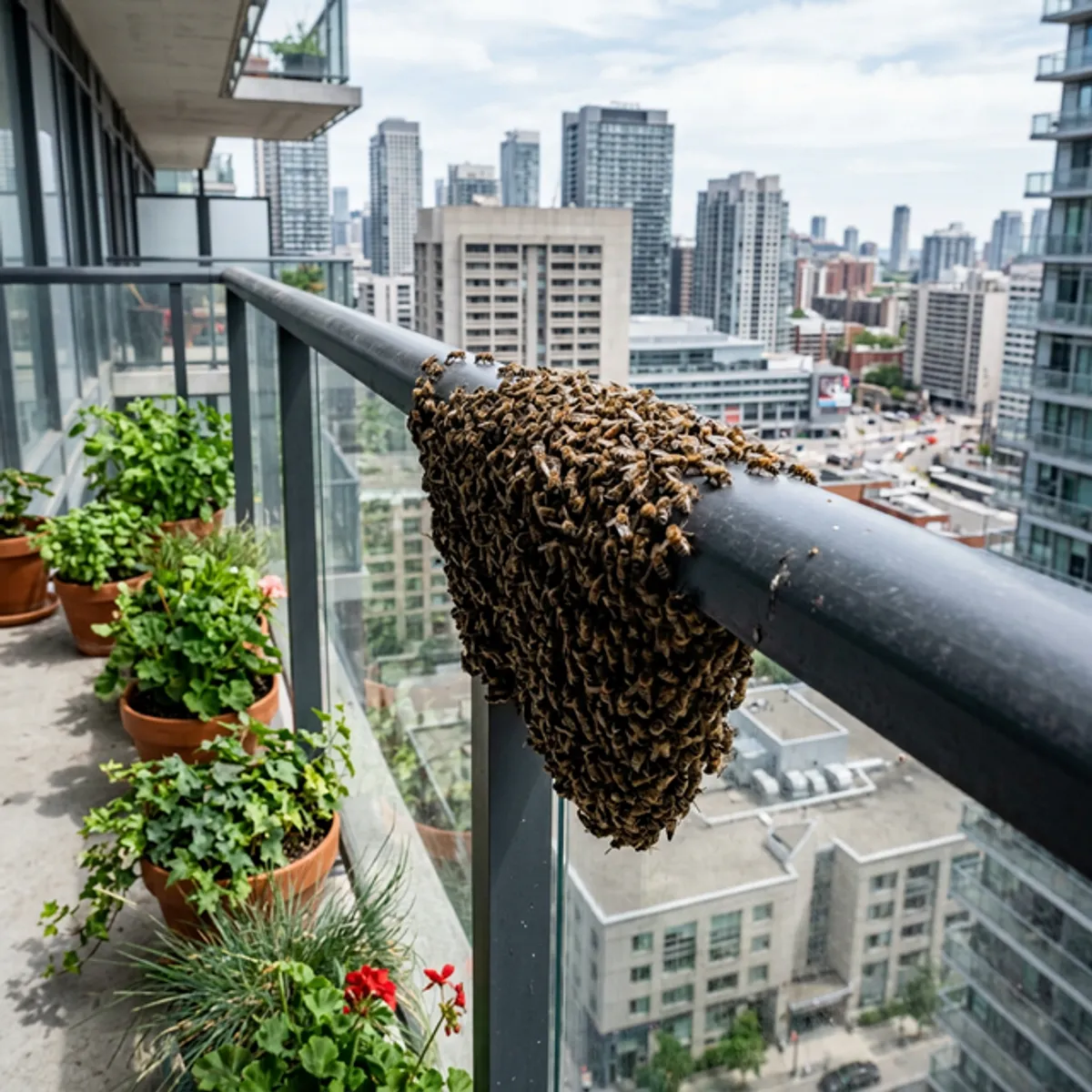
If you live in the city and suddenly find a massive, vibrating clump of bees hanging from your balcony railing, patio furniture, or a nearby shrub, don’t panic. You are witnessing a honey bee swarm.
Despite the terrifying loud buzzing and the sheer number of insects, a swarm is usually the safest state you will ever encounter a honey bee in.
Here is what you need to know about why they are there, whether they are dangerous, and exactly what to do to remove them safely.
Step 1: Confirm It Is Actually a Swarm (And Not a Nest)
Before you take any action, verify what you are looking at.
- A Swarm: Looks like a solid football or basketball-sized lump made entirely of thousands of crawling bees. There is no visible grey paper, no mud, and no wax comb. It is a temporary “resting stop” (called a bivouac).
- An Established Hive: If you see bees flying in and out of a crack in the wall, or if you see them building exposed wax comb, they have moved in permanently.
- A Wasp Nest: If you see grey, papery, football-shaped structures, those are wasps or yellowjackets, not swarming honey bees. Call exterminator pest control, not a beekeeper.
Step 2: Leave Them Alone. (They Might Just Leave)
When a colony outgrows its home, the old queen leaves with half the workers to find a new place to live. They land on a branch or railing temporarily while scout bees search the neighborhood for a permanent, dark cavity (like a hollow tree or wall void).
If you do nothing, the swarm will likely take off all at once within 24 to 72 hours and move to their new permanent home.
[!IMPORTANT] Because swarming bees do not have a hive, honey, or babies to protect, they are not defensive. Do not spray them with water, poison, or throw things at them. If left unprovoked, they will not attack you.
Step 3: Removing the Swarm
If the swarm is inconveniently located (e.g., right next to your sliding glass door) or hasn’t left after two days, it is time for removal.
If you are NOT a beekeeper: Call a Local Expert
Do not attempt to destroy or capture a swarm if you do not have protective gear.
- Google “Local Beekeeping Association [Your City]” or check local Facebook groups.
- Almost all associations maintain a “Swarm Catcher List.”
- An experienced beekeeper will usually come out for free (or a small fee) to capture the swarm. They want those free bees!
If you ARE a beekeeper (The Cardboard Box Method)
If you already keep bees and want to capture this feral swarm:
- Gear up: Put on your veil and gloves.
- Prepare a box: Get a sturdy cardboard box with a lid.
- Position the box: Hold the open box directly underneath the cluster of bees.
- The Shake: Give the branch or railing a single, very firm, sharp downward shake. The massive clump of bees will detach and fall heavily into the box.
- Seal and Move: Quickly close the box lid. You now have the queen and the vast majority of the workers. Move them into a prepared deep hive body with drawn comb that evening.
If the queen fell into the box, any bees left flying around the balcony will smell her pheromones and slowly march into the box via a small opening.
Preventing Your Own Hives from Swarming
If you are an urban beekeeper and the swarm came from your rooftop, you need to improve your spring management. Swarms terrify non-beekeeping neighbors and can lead to nuisance complaints.
Read our comprehensive guide: Swarm Prevention for Urban Beekeepers to learn why bees swarm and how to manipulate space in the hive to prevent it.