How to Calm an Aggressive Urban Beehive
Disclosure: UrbanBee is reader-supported. When you buy through links on our site, we may earn an affiliate commission at no extra cost to you. Learn more.
In an urban setting, a gentle colony of bees is a non-negotiable requirement. While rural beekeepers might tolerate a “hot” or defensive hive because it produces bumper crops of honey, city beekeepers do not have that luxury. A defensive hive on a balcony or rooftop is a liability and a fast-track to neighbour complaints.
If your previously docile bees are suddenly pinging off your veil, following you back to your door, or acting unusually aggressive, do not ignore it.
Here is how to identify the stressor and calm an aggressive urban beehive. (For a broader look at hive health, visit our Urban Hive Management & Health Hub).
1. Identify the Stressor (Why Are They Cranky?)
Bees rarely become defensive without cause. Sudden aggression is almost always a reaction to environmental stress.
- Nectar Dearth: When the seasonal nectar flow dries up (often in mid-to-late summer), bees become fiercely protective of their honey stores. Robber bees from other colonies or wasps testing the entrance will put the hive on high alert.
- Queenlessness: A colony that has lost its queen (or has a failing queen) feels vulnerable and will often become highly defensive.
- Predators and Pests: Skunks scratching at the entrance at night, Varroa mite infestations weakening the colony, or yellowjackets harassing the bottom board will result in angry bees the next morning.
- Weather: Inspecting a hive right before a thunderstorm (when barometric pressure drops) or on overcast, chilly days keeps the older, grumpier forager bees at home, making the hive much harder to handle.
2. Immediate Tactical Solutions
If you are mid-inspection and the bees erupt, you need to manage the situation safely.
Use Your Smoker Effectively
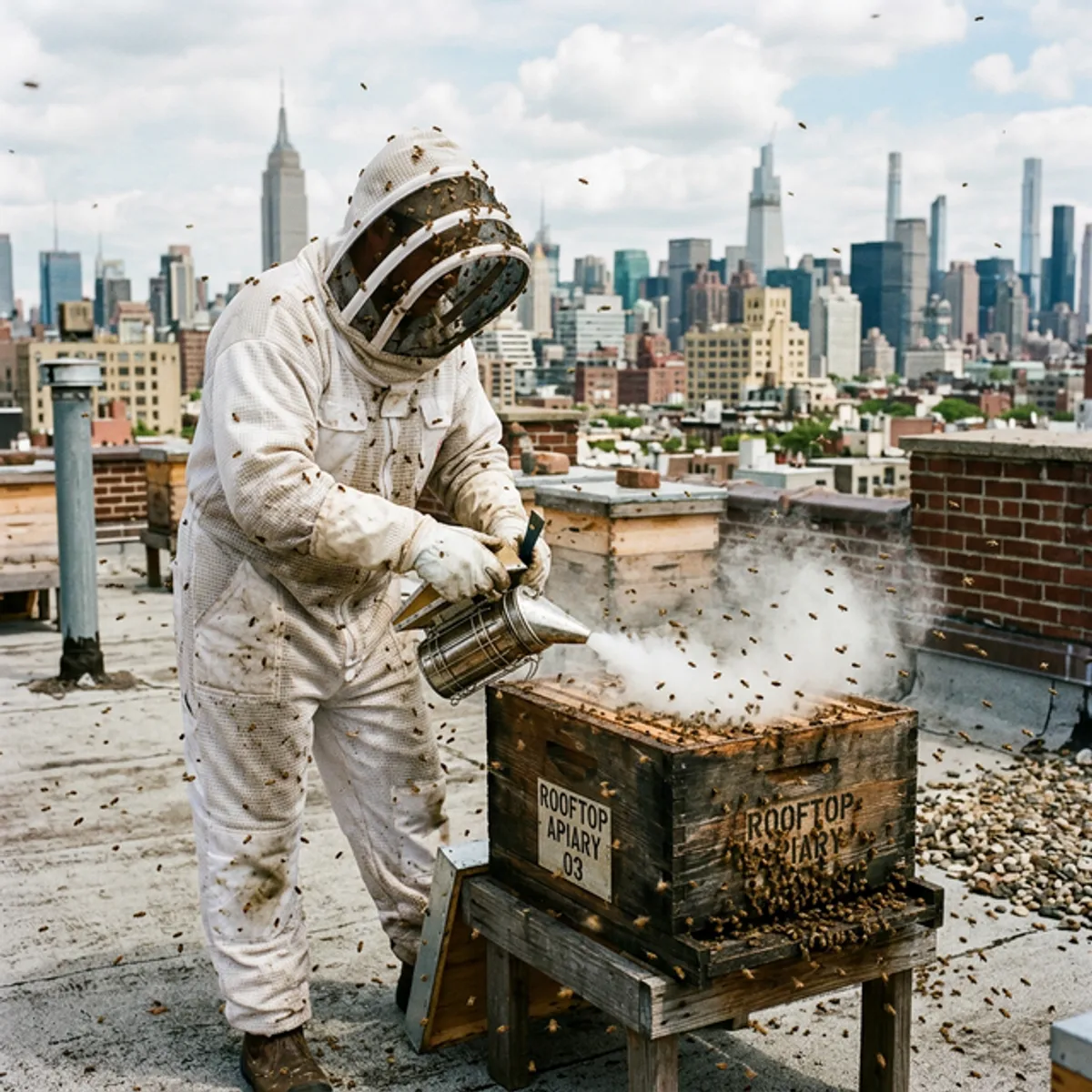
Smoke masks the alarm pheromones (which smell like bananas) that guard bees release. It also triggers a feeding response, causing bees to gorge on honey and become lethargic.
- Ensure your smoke is cool and white, not hot and gray.
- Puff lightly at the entrance before opening the lid.
- Puff across the top bars as soon as you remove the inner cover.
- Don’t have a good smoker? Check out our Essential Tools Checklist.
Slow and Deliberate Movements
Bees react aggressively to fast, jerky movements over the open hive. Move your hands slowly. Avoid bumping the boxes or dropping frames. If a bee bumps your veil, resist the urge to swat at it—swatting releases more alarm pheromones.
Retreat and Button Up
If the bees become unmanageable and are aggressively targeting you, simply close the hive. Put the inner and outer covers back on gently, and walk away. Return on a sunnier day or later in the afternoon when foragers are out.
3. Long-Term Fixes for an Aggressive Hive
If the aggression persists across multiple inspections, you must take structural action to fix the hive.
Requeen the Hive
If the colony is persistently defensive and you have ruled out weather and pests, the genetics are the problem. You must pinch (kill) the old queen and introduce a new, mated queen known for gentle genetics (such as a pure Italian or Carniolan line). In an urban environment, requeening a hot hive is mandatory.
Reduce the Entrance
If robbing during a nectar dearth is causing the aggression, install an entrance reducer. Giving the guard bees a smaller area to defend reduces their stress and allows them to stand down.
Feed the Bees
If a dearth is starving the bees, their panic will translate to aggression. Provide a 1:1 sugar syrup internally (using a top feeder to prevent robbing) to soothe the colony.
Be a Good Neighbor
An aggressive hive poses a risk not just to you, but to anyone sharing a fence line or an apartment wall. Address aggression the moment you see it to ensure the safety of your neighbours and the longevity of your urban apiary.
Want to make sure you have all the city-living basics covered? Review our Ultimate Guide to Urban Beekeeping.