Why Are Bees Bearding Outside the Hive?
Disclosure: UrbanBee is reader-supported. When you buy through links on our site, we may earn an affiliate commission at no extra cost to you. Learn more.
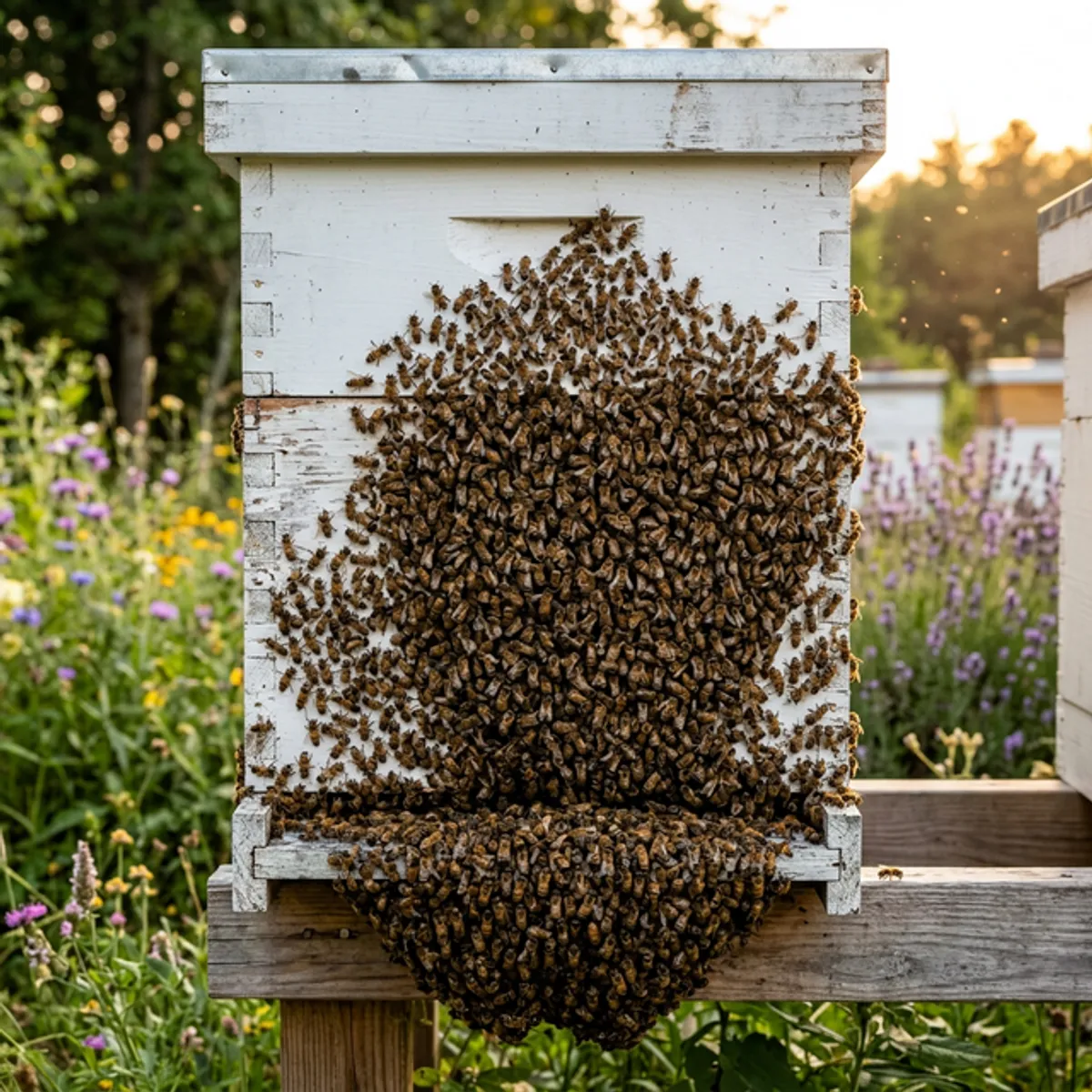
It’s late July, the city concrete has been baking all day, and you step onto your balcony to check your hive. To your horror, there is a massive sheet of thousands of bees clinging to the front of the wooden boxes. They look like a thick, buzzing beard.
Your first thought as a beginner is panic: Are they swarming? Are they leaving?
Take a deep breath. In almost all cases, bearding is completely normal, healthy behavior. Here is exactly what is happening, how to tell the difference between a beard and a swarm, and what minimal interventions you can take to help your colony.
The Biology of Bearding (The “A/C” System)
Honey bees keep the inside of their brood nest at a constant 93-95 degrees Fahrenheit (34-35 C) to properly incubate their developing pupae.
In late summer, the hive population is at its absolute peak (often 60,000+ bees). That is 60,000 tiny bodies generating body heat. If the outside urban temperature peaks at 100 degrees, the inside of that wooden box is in serious danger of overheating. If it gets too hot, the delicate wax combs will literally melt, drowning the bees in their own honey.
To prevent this, the bees do two things:
- Water Cooling: Field bees bring back water, spread it over the comb, and fan their wings to create evaporative cooling (swamp cooler effect).
- Evacuation (Bearding): Thousands of adult worker bees simply leave the house. By hanging out on the front porch, they instantly remove their body heat from the crowded living room, allowing better airflow inside the hive.
[!TIP] Bearding is most common in the late afternoon and early evening. The bees will usually retreat back inside the hive once the ambient air temperature drops overnight.
Bearding vs. Swarming
It’s easy to confuse the two if you are new to apiculture. Here is the difference:
- A Beard: Looks like a wide, relatively flat blanket or “apron” of bees draped down the front of the hive box, often starting at the entrance and hanging downward. The bees are relatively calm.
- A Swarm: Looks like a solid, three-dimensional football or basketball-sized lump, often hanging from a nearby branch, railing, or fence—rarely on the front of the hive itself. The air will also be thick with thousands of frantically buzzing bees circling the area.
If you suspect a swarm, immediately read our guide: What to Do With a Small Swarm on My Balcony.
When Should You Intervene?
Most of the time, the bees know exactly what they are doing. You do not need to do anything. However, if the bearding is extreme and lasts for several days straight, you can help them cool the hive:
- Remove the Entrance Reducer: If you still have the small winter/spring entrance reducer on, remove it entirely to maximize airflow.
- Prop the Lid (The Penny Trick): Place a small stick or a penny under the four corners of the outer telescopic cover. This creates a tiny gap that allows hot, humid air to escape out the top of the hive (like opening a chimney flue).
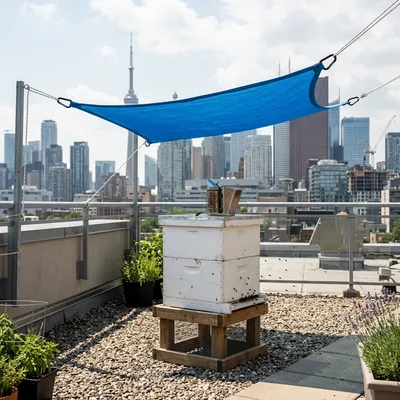
- Provide Shade: If your hive sits on a scorching asphalt roof with zero shade, consider installing a temporary shade cloth. Read our full guide on Protecting Hives from Heatwaves.
Whatever you do, never try to brush or smoke the bees back inside. They are outside for a reason. Let them chill on the porch.