Signs of American Foulbrood vs. European Foulbrood
Disclosure: UrbanBee is reader-supported. When you buy through links on our site, we may earn an affiliate commission at no extra cost to you. Learn more.
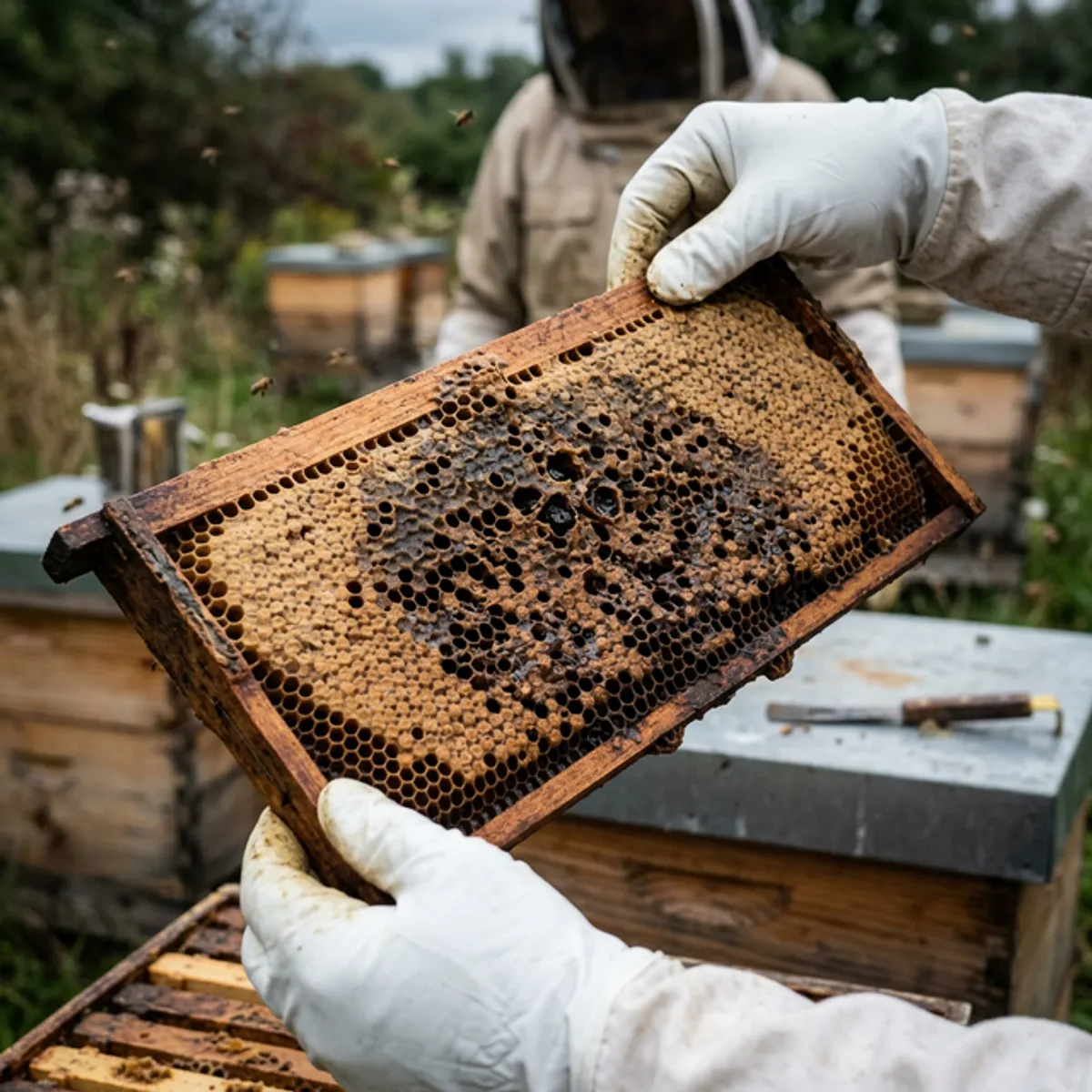
Hearing the word “foulbrood” strikes fear into the heart of any beekeeper. If you open your hive and notice a spotty brood pattern, dead larvae, and a foul smell, you need to urgently diagnose the issue.
There are two distinct types of foulbrood: European Foulbrood (EFB) and American Foulbrood (AFB). While both are bacterial diseases that kill developing bee larvae, they require vastly different responses.
Here is how to tell them apart, and when you are legally obligated to call in the authorities. (If you think your hive merely smells bad but the brood is healthy, read our guide on Why Does My Beehive Smell Bad? Goldenrod vs. Disease first).
European Foulbrood (EFB): Serious, but Treatable
European Foulbrood is caused by the bacterium Melissococcus plutonius. It infects the larvae before they are capped over with wax, starving them to death.
EFB is considered a “stress disease.” It often appears in the cold, wet, early spring when a colony is struggling to find enough nectar to feed a rapidly expanding brood nest.
Signs of EFB
- Timing: Usually spring or early summer.
- The Larvae: Instead of being pearly white and C-shaped, infected larvae twist unnaturally in their open cells. They turn yellow, then brown, and finally melt into a rubbery scale.
- The Look: The brood pattern is highly “spotty” (a mix of empty cells, capped cells, and dying larvae). The disease affects uncapped (open) brood primarily.
- The Smell: It can smell slightly sour or like a decaying animal, but often the smell is very faint or absent.
Treatment for EFB
EFB does not form long-lasting spores. A strong colony can often clear an EFB infection on its own if the weather improves and a heavy nectar flow begins. Beekeepers generally treat EFB by feeding the bees heavily (1:1 sugar syrup) to relieve the stress, or by administering an antibiotic (Terramycin) prescribed by a veterinarian.
American Foulbrood (AFB): The Apiary Killer
American Foulbrood is caused by the spore-forming bacterium Paenibacillus larvae. This is the most devastating disease in beekeeping.
Unlike EFB, AFB infects the larvae and kills them after the worker bees have capped the cell with wax. The bacteria consume the pupa and then form billions of microscopic spores. These spores can survive in honey, wax, and on wooden tools for over 50 years. They are immune to heat, cold, and most disinfectants.
If your bees rob honey from a dying AFB hive three blocks away, your hive will catch it next.
Signs of AFB
- The Look: The disease affects capped brood. The wax cappings over the brood cells look dark, greasy, sunken, and often have pinholes chewed in them by worker bees trying to remove the dead pupae.
- The Scale: The dead pupa dries into a hard, black scale that adheres tightly to the bottom of the cell. It cannot be removed cleanly.
- The Smell: A very distinct, putrid smell of rotting meat or sulfur.
The Matchstick Test (Ropiness)
If you see sunken, greasy cappings, find a twig, a toothpick, or a matchstick. Poke it through the capping into the rotted pupa, stir it slightly, and slowly draw the stick back out.
If the dead pupa draws out in a brown, snot-like, gooey string that stretches an inch (2.5 cm) or more before snapping back, you have American Foulbrood.
What to Do (Legal Obligations)
There is no cure for AFB. Because the spores are virtually indestructible and highly contagious to other urban apiaries, you cannot attempt to treat it.
- Close the hive immediately and seal the entrance so no other bees can rob the infected honey.
- Contact your State Apiary Inspector immediately. This is a legally reportable agriculture disease in almost all jurisdictions.
- The standard protocol for AFB is the complete destruction of the colony. The bees are euthanized, and all the woodenware (boxes, frames, bottom boards) must be thrown into a burn pit and completely incinerated.
Maintaining meticulous hygiene and never buying used, uninspected beehive equipment are your best defenses against AFB.
Return to the Urban Hive Management Hub for more troubleshooting guides.