Why Isn't My Bee Smoker Working? (Troubleshooting)
Disclosure: UrbanBee is reader-supported. When you buy through links on our site, we may earn an affiliate commission at no extra cost to you. Learn more.
Disclosure: UrbanBee is reader-supported. When you buy through links on our site, we may earn an affiliate commission at no extra cost to you. Learn more.
You are five minutes into a tense hive inspection. The bees are getting defensive, you reach down to grab your smoker for a calming puff of smoke, you squeeze the bellows… and nothing happens. It has gone out. Again.
There is nothing more frustrating (or dangerous) for a beginner beekeeper than a smoker that refuses to stay lit.
A properly lit smoker should burn for over an hour, outputting thick, cool, white smoke that smells like a campfire. If yours keeps dying, you are violating one of the three basic rules of fire: Heat, Fuel, and Oxygen.
Here is exactly how to troubleshoot a failing smoker. (If you think the equipment itself is broken, check out our review of the Best Bee Smokers of 2026).
The 3 Rules of the Perfect Smoker
To get good, thick smoke, you don’t actually want a roaring fire. You want a massive, slow-burning smolder.
Rule 1: The “Cherry” (Heat)
The Problem: The smoker goes out almost immediately after you pack it full of pine needles. The Cause: You smothered the fire. You put the fuel in before the heat source was established.
The Fix: You must establish a roaring “cherry” (a bed of hot red coals) at the very bottom of the canister before adding the main fuel.
- Crumple up a single sheet of newspaper or lighting cardboard.
- Drop it in the bottom, light it, and gently puff the bellows until it is completely engulfed in flames.
- Only then do you add a small handful of fuel. Puff the bellows until that catches fire.
- Now you can pack the rest of the fuel tightly to the rim.
Rule 2: The Packing Density (Fuel)
The Problem: The smoker blows hot blue smoke, sparks, or actual flames out the nozzle. The Cause: It is packed too loosely. The fire has too much oxygen, creating a hot, rapid burn. Hot smoke will severely burn the wings off your bees and enrage them.
The Fix: A smoker needs to be “choked” to produce cool, white smoke. Once the bottom is lit, you must pack the rest of the fuel into the canister very tightly. Use your hive tool to ram the pine needles or burlap down hard.
- The Green Grass Trick: The ultimate way to cool a hot smoker is to grab a massive handful of green, wet grass from your yard and stuff it into the very top of the smoker right before you close the lid. The moisture in the grass cools the smoke instantly before it exits the nozzle.
Rule 3: The Creosote Build-Up (Oxygen)
The Problem: You squeeze the bellows, but very little air puffs out the nozzle, and the bellows feel stiff. The Cause: The airways are clogged with creosote.
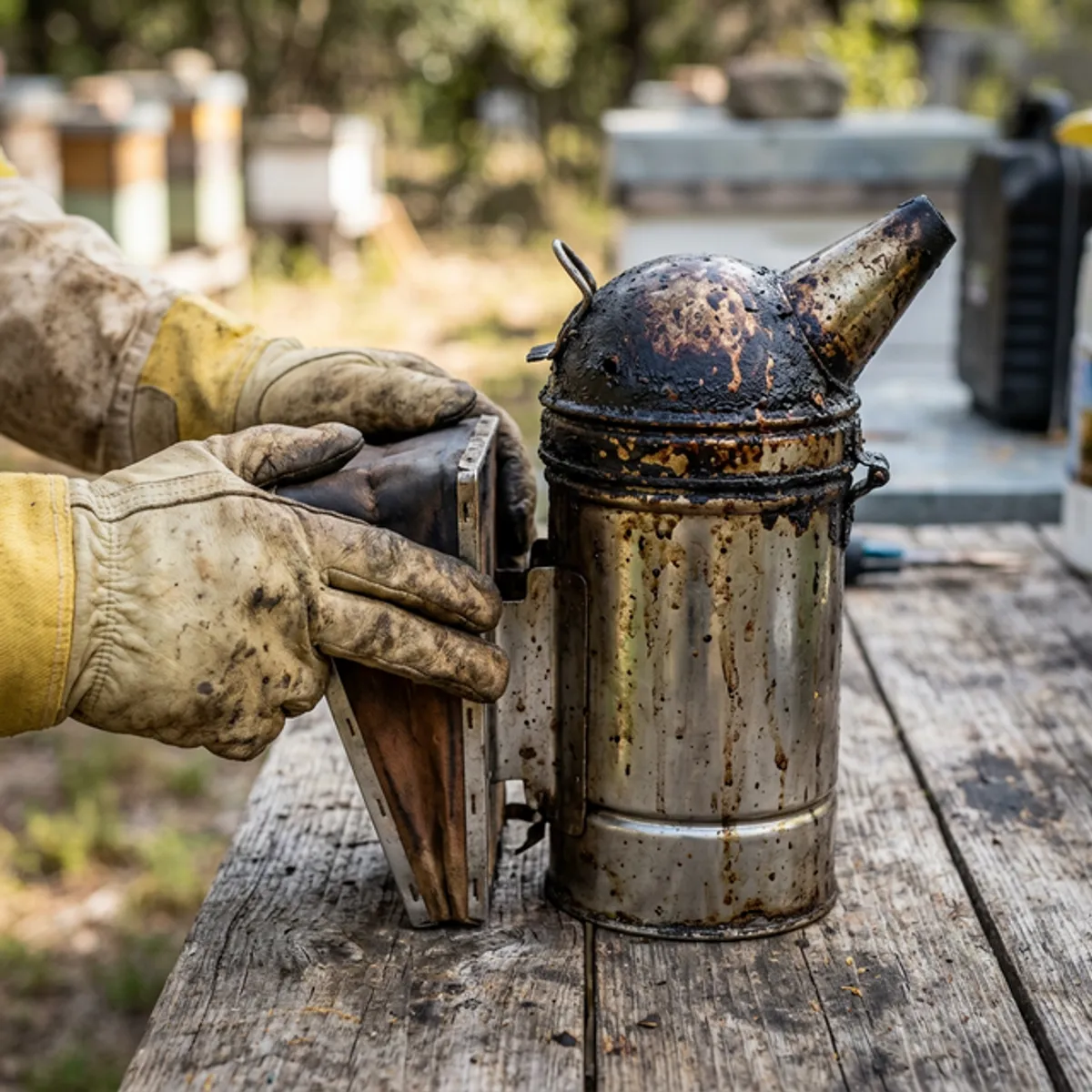
The Fix: As pine needles and wood pellets burn, they produce a thick, black, sticky tar called creosote. Over the season, this builds up inside the dome of the lid and blocks the tiny air hole at the bottom of the canister.
- Open the lid while the smoker is hot (wear thick leather gloves!).
- Take your metal hive tool and scrape the thick black tar out of the dome nozzle.
- Ensure the small hole at the bottom of the canister (where the bellows push air in) is clear of ash and tar.
The Best Smoker Fuels for the City
Urban beekeepers don’t always have access to a forest floor full of dry pine needles. Here are the best, readily available fuels:
- Commercial Wood Pellets (100% Cotton/Wood): These burn incredibly long and cool. They are the best choice for beginners, though they can be hard to light initially. (Use a propane torch).
- Untreated Burlap: Buy a cheap burlap sack from a coffee roaster or hardware store. Cut it into strips, roll it like a cigar, and light the end. Burlap produces incredibly thick, cool smoke very quickly.
- Hemp Rope or Cotton Denim: Old, 100% cotton blue jeans (no spandex/elastic!) or thick hemp twine burn very well and slowly.
Never use: Synthetic fabrics, glossy magazine paper, or anything that contains plastic. The toxic fumes will harm the bees and contaminate your wax.