How to Identify Varroa Mites in a City Hive
Disclosure: UrbanBee is reader-supported. When you buy through links on our site, we may earn an affiliate commission at no extra cost to you. Learn more.
Disclosure: UrbanBee is reader-supported. When you buy through links on our site, we may earn an affiliate commission at no extra cost to you. Learn more.
If you ask any Master Beekeeper what the greatest threat to a honey bee colony is, the answer is unanimous: Varroa destructor.
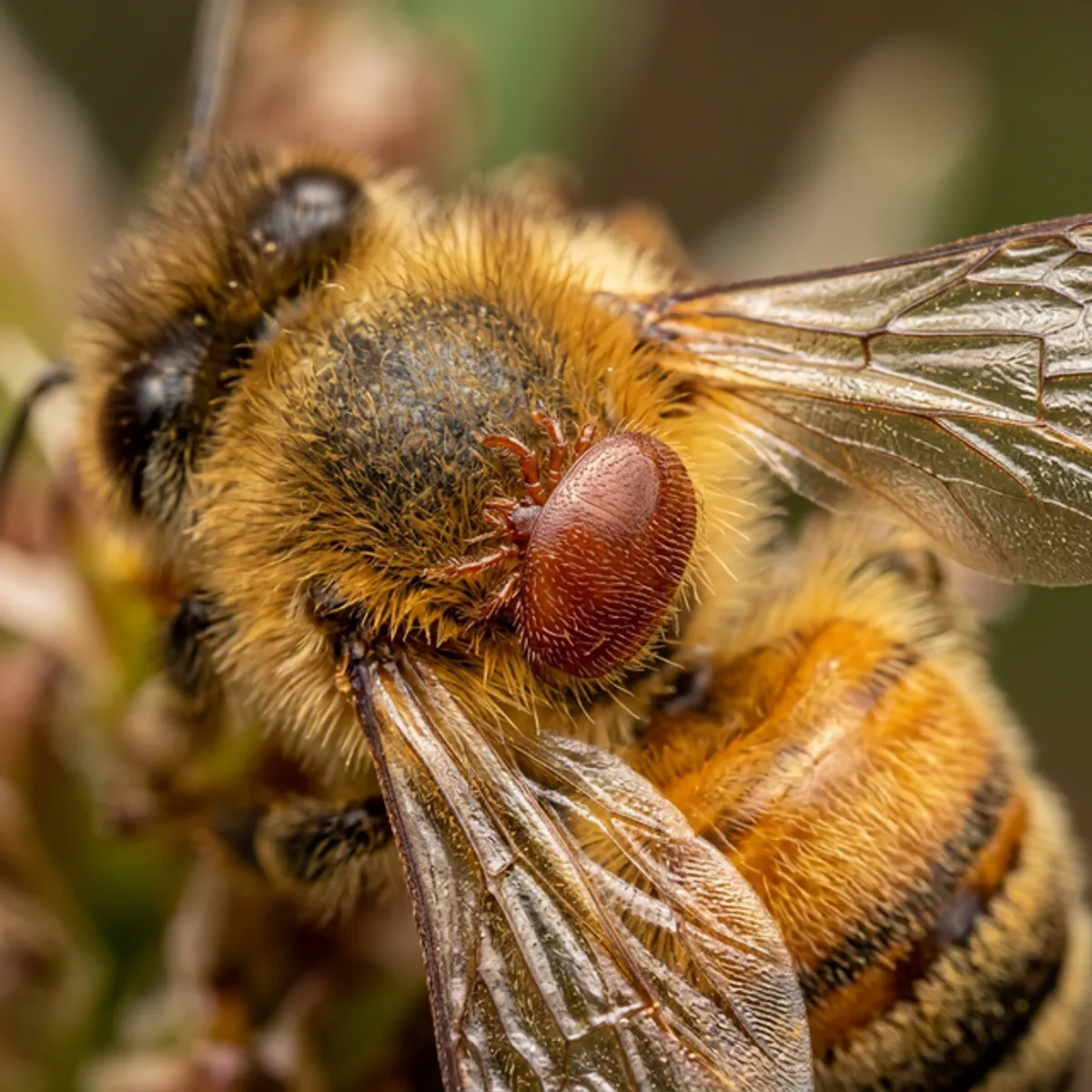
The Varroa mite is a tiny, parasitic arachnid that feeds on the fat bodies of honey bees and their developing pupae. Worse than the feeding itself, the mites vector deadly viruses (like Deformed Wing Virus) straight into the bees’ bloodstream.
In a dense urban environment, Varroa management is not optional. If you fail to treat your hive, it will die, and in its final weeks, it will become a “mite bomb” that infects every other hive in a 3-mile radius.
Here is how to identify, monitor, and manage Varroa mites in your city hive. (For a broader look at keeping your bees healthy, review our Urban Hive Management Hub).
1. Visual Identification (The Unreliable Method)
Many new beekeepers think, “I looked at my bees, and I didn’t see any mites, so I must be fine.” This is a fatal assumption.
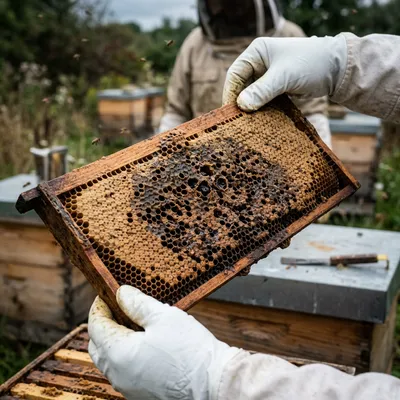
Varroa don’t like to ride on the backs of adult bees where you can easily see them. They prefer to slip into uncapped brood cells right before the worker bees seal them shut with wax. They reproduce underneath the wax capping, feeding on the developing baby bee.
- What they look like: A tiny, reddish-brown, oval speck about the size of a pinhead.
- Deformed Wing Virus (DWV): The most obvious visual sign of a severe mite infestation is seeing adult bees walking around with shriveled, stubby, useless wings. If you see DWV, the infestation is already critical.
2. Accurate Monitoring: The Alcohol Wash
To truly know your mite load, you must perform a mite wash. The industry standard is the alcohol wash. You should do this once a month from spring through fall.
- Gather Bees: Scoop exactly 300 nurse bees (about ½ cup) from a frame of open brood (ensure the queen is NOT on this frame!).
- The Wash Jar: Place the bees into a specialized mite wash jar fitted with a mesh screen. Add windshield washer fluid or rubbing alcohol. (This quickly and humanely kills the sample of 300 bees).
- Shake: Vigorously swirl the jar for 60 seconds. The alcohol dislodges the mites from the bees.
- Count: Strain the liquid through the mesh screen into a white bowl. The bees stay in the jar, and the tiny brown mites wash out. Count the mites.
The Threshold: If you find 3 or more mites per 100 bees (a total of 9 mites in a 300-bee sample), you have crossed the economic threshold and must apply a treatment immediately.
3. Urban “Mite Bombs”
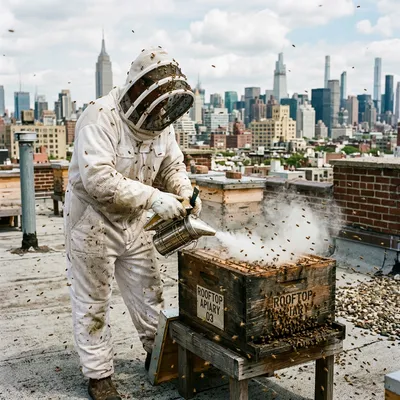
City beekeeping poses a unique challenge: high hive density.
In late summer or early fall, you might perform a wash and find 1 mite (great!). Two weeks later, you might do another wash and find 25 mites (critical!). Where did they come from?
This is called the “mite bomb” effect. When a nearby urban hobbyist fails to treat their hive, that hive becomes weak. Your strong, healthy bees will fly over and rob out the dying hive’s honey. While robbing the honey, your bees pick up the mites and bring them back home.
You must remain vigilant in late summer and fall, even if your spring mite counts were low.
4. Integrated Pest Management (IPM)
Responsible urban beekeeping requires an IPM approach. This means combining physical techniques with chemical treatments when necessary.
- Drone Brood Trapping: Mites prefer to reproduce in drone (male) brood because the gestation period is longer. You can place a frame of green drone foundation in the hive. Once the bees cap the drone brood, you remove the frame and freeze it, killing thousands of trapped mites without chemical treatments.
- Organic Acids: Formic acid (Formic Pro) and Oxalic Acid vapor are highly effective treatments that are safe to use and do not leave harmful residues in the wax.
[!WARNING] Never apply a temperature-sensitive treatment (like Formic Acid) during a city heatwave. High temperatures will cause the acid to flash-vaporize, which can kill your queen or your entire colony. Always read the label!
Treating your bees keeps them healthy and prevents them from swarming out of stress. Review our guide on Swarm Prevention to ensure your neighbors stay happy.