How to Keep Wasps Away from Beehive
Disclosure: UrbanBee is reader-supported. When you buy through links on our site, we may earn an affiliate commission at no extra cost to you. Learn more.
Disclosure: UrbanBee is reader-supported. When you buy through links on our site, we may earn an affiliate commission at no extra cost to you. Learn more.
August and September are the most dangerous months for an urban apiary. The spring nectar flow is over, a “dearth” sets in, and thousands of hungry insects are desperately searching for sugar.
This is when Yellowjackets and European Hornets become highly aggressive. Unlike honey bees, wasps are carnivorous. A heavy wasp assault can decimate a weak colony in a matter of days. They will bypass the guard bees, rip open the capped honey, kill the adult bees, and carry the bee larvae away to feed their own nests.
When your neighbors complain about Bees Attacking Them, it is almost always hungry wasps, not your bees.
Here is how to defend your hive from wasp robbing.
1. Shrink the Entrance (Immediately)
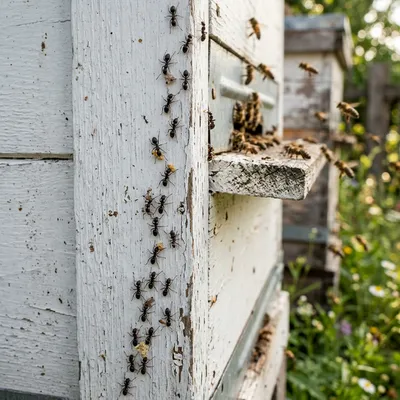
The moment you see a wasp hovering back and forth in front of the hive in a zigzag pattern, they are testing the defenses.
Your first action must be to install an entrance reducer on the smallest setting. A wide-open entrance is impossible for guard bees to defend against a fast-moving, aggressive wasp. By shrinking the doorway to an inch across, the guard bees can bunch together and fiercely defend the single entryway.
2. Remove All External Feeding
Never use a Boardman entrance feeder (a jar of sugar water stuck in the front door) during late summer. The smell of the raw sugar syrup wafts straight into the air and acts as a dinner bell for every wasp in the neighborhood.
If you must feed a starving colony in August, use an internal top feeder enclosed inside an empty hive body, where robbers cannot smell or access it.
3. Set Up Wasp Traps (At a Distance!)
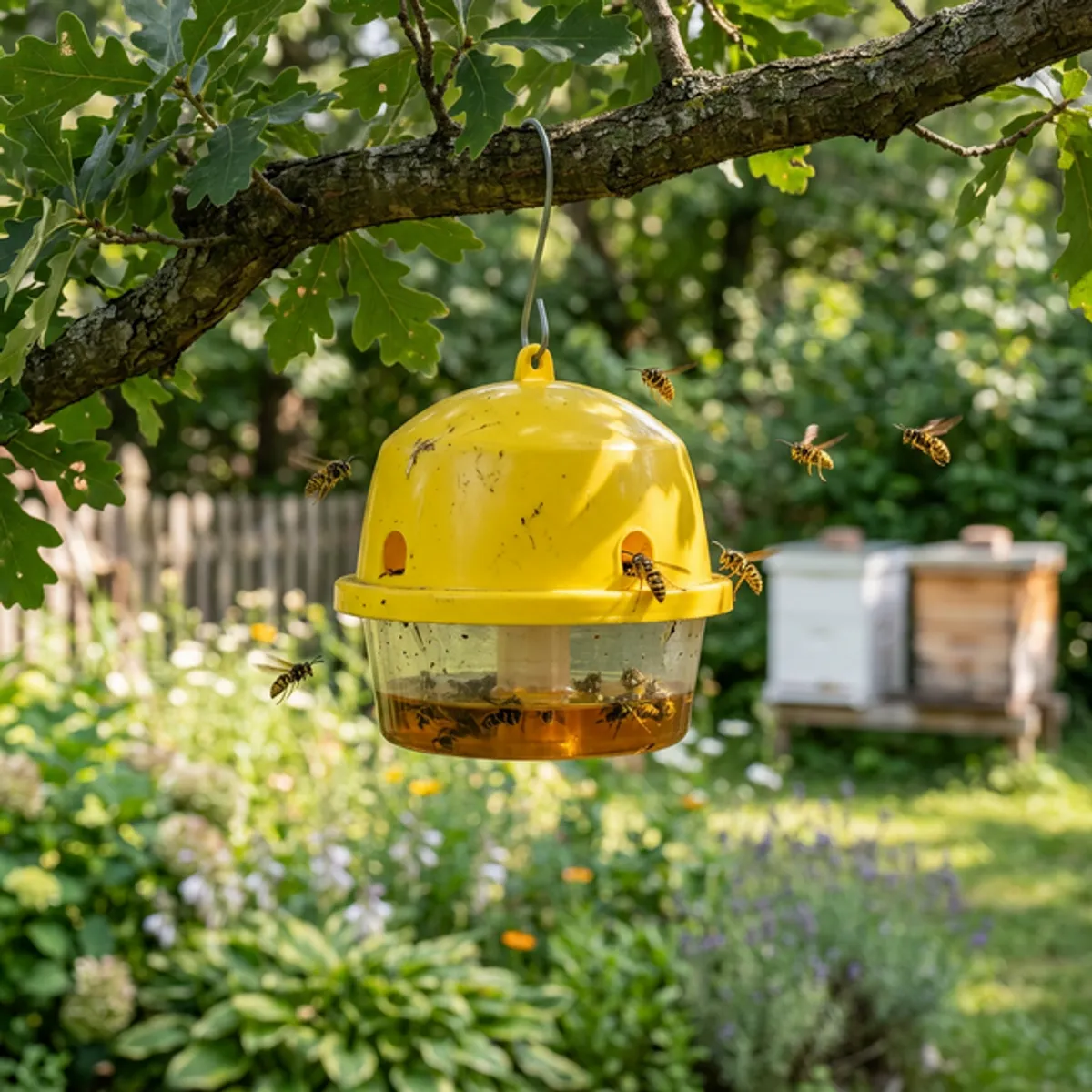
Trapping is highly effective if done correctly. Commercial wasp traps use a pheromone or sweet attractant that honey bees generally ignore.
- The Golden Rule: Never hang a wasp trap on or right next to your beehive. The bait will draw hundreds of wasps from the surrounding area straight into your apiary.
- The Strategy: Hang 2 or 3 traps around the perimeter of your yard, at least 20 to 30 feet away from the hives. You want to intercept the wasps long before they find the bees.
You can also make a DIY trap using a 2-liter soda bottle with the top inverted, baited with a piece of lunchmeat or cat food (wasps want protein in late summer; honey bees have zero interest in meat).
4. Install a Robbing Screen
If the wasp assault is relentless and the guard bees are losing the battle on the landing board, you need a physical barrier.
A robbing screen is a mesh box that fits over the front of the hive. It features a complex, upper exit hole.
- How it works: Your bees quickly learn to crawl up the screen and exit out the top hole. Robber wasps and strange bees follow the scent of honey directly to the bottom mesh, where they bash their heads against the wire, unable to figure out the maze.
If you live in an urban area with a high wasp population, a robbing screen is a mandatory piece of late-summer equipment.
Need help identifying other issues? Bookmark our Urban Hive Management Hub for a complete list of diagnostics.