New Zealand Beekeeping Laws: HiveHub & AFB Rules
By UrbanBee Editorial TeamSources checked Oct 14, 2026
⚠️ Not Legal Advice: Summaries for educational purposes only. Verify with official New Zealand authorities.
New Zealand beekeeping regulations require registration under the American Foulbrood National Pest Management Plan (AFB NPMP), even for small hobby operations. Registration is now handled by NZ Bee Health & Biosecurity (NZBB), usually through HiveHub; AsureQuality says it no longer administers the Apiary Register.
Register yourself and the apiary promptly, arrange the required inspection pathway and check local property rules before installing bees. For an Auckland address, also read the Auckland Council local bylaws guide.
New Zealand requirements at a glance
| Duty | National requirement | What to organize |
|---|---|---|
| Beekeeper and apiary registration | Required under the AFB plan | NZBB/HiveHub registration and accurate locations |
| Fees | Initial beekeeper registration free; annual AFB levies apply | Budget for levies and any inspection charges |
| Local permits and hive limits | Depend on council, land use and property | Confirm the actual address |
| Boundary setback | No single national residential distance | Check local placement and nuisance rules |
| Annual inspection pathway | COI where no current DECA applies | Book an eligible inspector in time |
| Honey supply | Food-safety duties can apply beyond hive registration | Check MPI rules, including tutin controls |
Registration under the AFB plan is distinct from MPI listing for some export activities or food-business registration.
Apiary registration and the 30-day rule
The AFB plan order requires notification of a site used for a beekeeper’s hives for more than 30 consecutive days, subject to relevant exemptions. Register promptly rather than treating day 30 as a target.
The NZBB new-beekeeper page explains HiveHub registration and the alternative form. It also confirms that registration itself is free, while registered beekeepers pay an annual AFB levy.
Maintain the beekeeper code, apiary identification, coordinates, colony information and accessible contact details. Registering an apiary does not grant ownership of the land or exclusive use of the location.
If older instructions send you to AsureQuality, use its current register notice to reach the current administrator.
Certificate of Inspection and DECA are different pathways
A Disease Elimination Conformity Agreement (DECA) is an approved, signed agreement covering the beekeeper’s AFB practices. Passing an AFB recognition course does not automatically create that agreement.
Beekeepers without a current DECA must arrange a Certificate of Inspection (COI), with inspection of their colonies by an eligible DECA holder during the annual 1 August–30 November window. The current NZBB guidance also specifies prompt submission and administrative deadlines. Book early and confirm the submission instructions for your form or HiveHub workflow.
Annual Disease Returns, colony returns and levies are separate duties. Completing a COI does not automatically complete those records. Keep them together in HiveHub and retain confirmation of submission.
American foulbrood: notification and destruction
Learn the signs before opening a colony. Our guide to identifying American Foulbrood symptoms explains why patchy brood or a suspicious cell needs follow-up rather than a confident diagnosis from smell alone.
For a suspected case, contact NZBB promptly and stop transferring suspect bees, comb or equipment. Confirmed clinical AFB brings notification and destruction duties within seven days, including infected materials as required by the plan. Antibiotics must not be used to mask or prevent AFB contrary to the plan.
Do not burn a hive where a fire restriction or the location makes it unsafe. Contact NZBB for the permitted process if on-site destruction is not possible. Do not move infected equipment to another apiary or leave it open to robbing while arranging disposal.
Tutin contamination and giving honey away
Tutin is a natural toxin that can enter honey when bees collect contaminated honeydew associated with passion vine hoppers feeding on tutu. Honey safety needs a separate harvest-risk assessment.
MPI’s processing guidance explains that selling, donating or bartering honey can trigger food-safety duties. A small harvest or a gift label is not an automatic exemption from supply requirements.
Use MPI’s current compliance options and retain the relevant harvest and testing records. Do not use tasting as a safety test. If contamination is suspected, keep that batch out of consumption and distribution while obtaining advice.
A practical NZ beekeeper calendar
- Register the beekeeper and each qualifying apiary; display the required identification.
- Confirm council and landowner permission and provide water and safe flight routes.
- Complete annual returns and pay the applicable levies.
- Arrange the COI if no current DECA applies; follow its inspection and submission deadlines.
- Record hive inspections, movements, disease responses and honey harvest decisions.
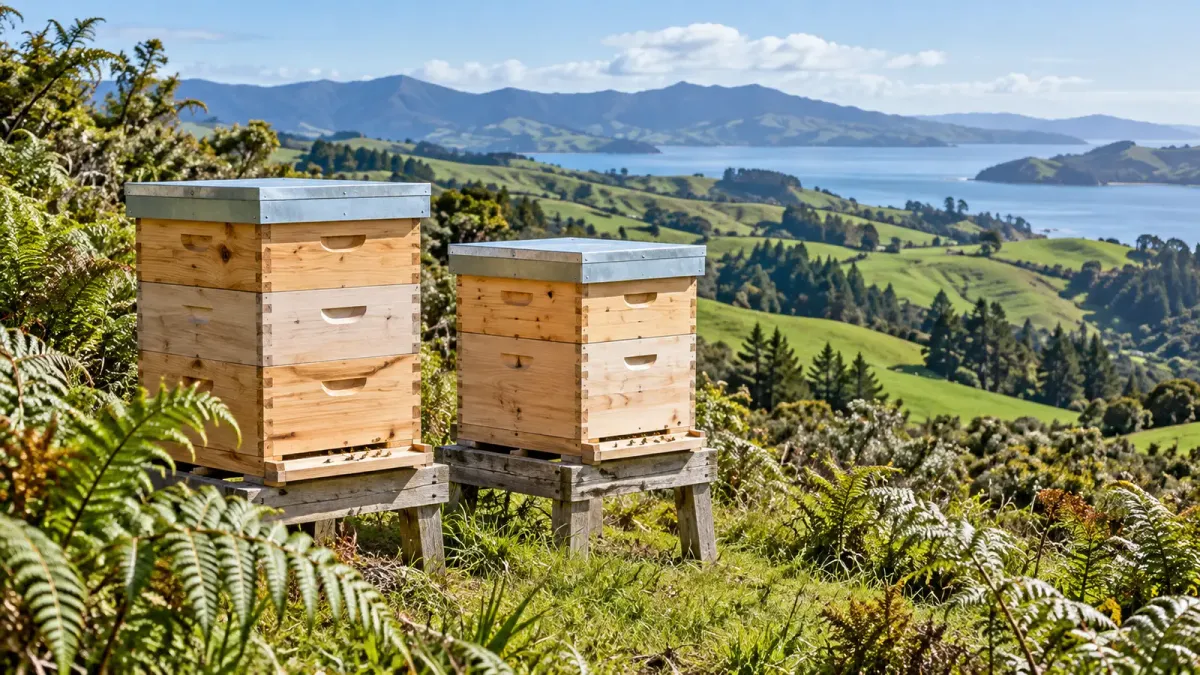
The hero is an AI-generated New Zealand landscape illustration, not a registered or inspected apiary.
Compare council-specific hive requirements
The Wellington guide explains its four-hive residential permission threshold and public-land conditions. Christchurch needs a current address and property review, while Hamilton City, New Zealand links hive suitability to section size and nuisance management. The existing Auckland guide covers Auckland’s local framework.
Frequently asked questions
Where do I register a New Zealand apiary?
Register through NZ Bee Health & Biosecurity, normally using HiveHub. AsureQuality’s current register page says it no longer manages the Apiary Register.
How soon must I register a new apiary?
The AFB plan does not allow a beekeeper’s hives to remain in one place for more than 30 consecutive days unless the place has been notified as an apiary. Arrange registration promptly and check any applicable exemption.
What does DECA mean?
DECA means Disease Elimination Conformity Agreement. It is a signed agreement with the management agency, not an automatic result of attending a course. Beekeepers without a current DECA must arrange the required Certificate of Inspection.
Does hobby honey have to meet tutin safety rules?
Honey supplied in trade must meet the applicable food-safety requirements, including tutin controls. MPI says donation and barter are forms of trade. Producing only for your own consumption does not remove the need to protect yourself from contaminated honey.