Washington, DC Beekeeping Laws: Registration & Limits
By UrbanBee Editorial TeamSources checked Aug 9, 2026
⚠️ Not Legal Advice: Summaries for educational purposes only. Verify with official Washington, DC authorities.
Washington, DC is one of the friendlier large East Coast cities for beekeepers - but it is also one of the more precisely regulated. The Sustainable Urban Agriculture Apiculture Act (enacted through the Sustainable DC Omnibus Amendment Act of 2014) legalized beekeeping in the District and put the Department of Energy & Environment (DOEE) in charge.
Is beekeeping legal in Washington, DC?
Yes. Honey bee colonies are legal in the District under the Apiculture Act, with mandatory registration and siting rules administered by DOEE.
The key rules at a glance
- Registration: Register every colony with DOEE within 30 days of establishing it.
- Transport permits: A permit is required before moving a colony or used apiary equipment into or out of the District - relevant if you buy a nuc in Maryland or Virginia.
- Hive limit: More than four hives on a single property requires either a lot larger than a quarter acre (10,890 sq ft) or department permission.
- Setbacks: Keep hives at least 15 feet from property lines, unless other conditions in the regulations are met (barriers and elevation can change the math - read DCMR 19-1525).
- Equipment: Colonies must be kept in hives with removable combs - a Langstroth or top-bar hive qualifies; skeps and fixed-comb boxes do not.
- Water: You must provide a “convenient, adequate, and constant” water source.
- Africanized bees: Possession is prohibited.
DC-specific realities
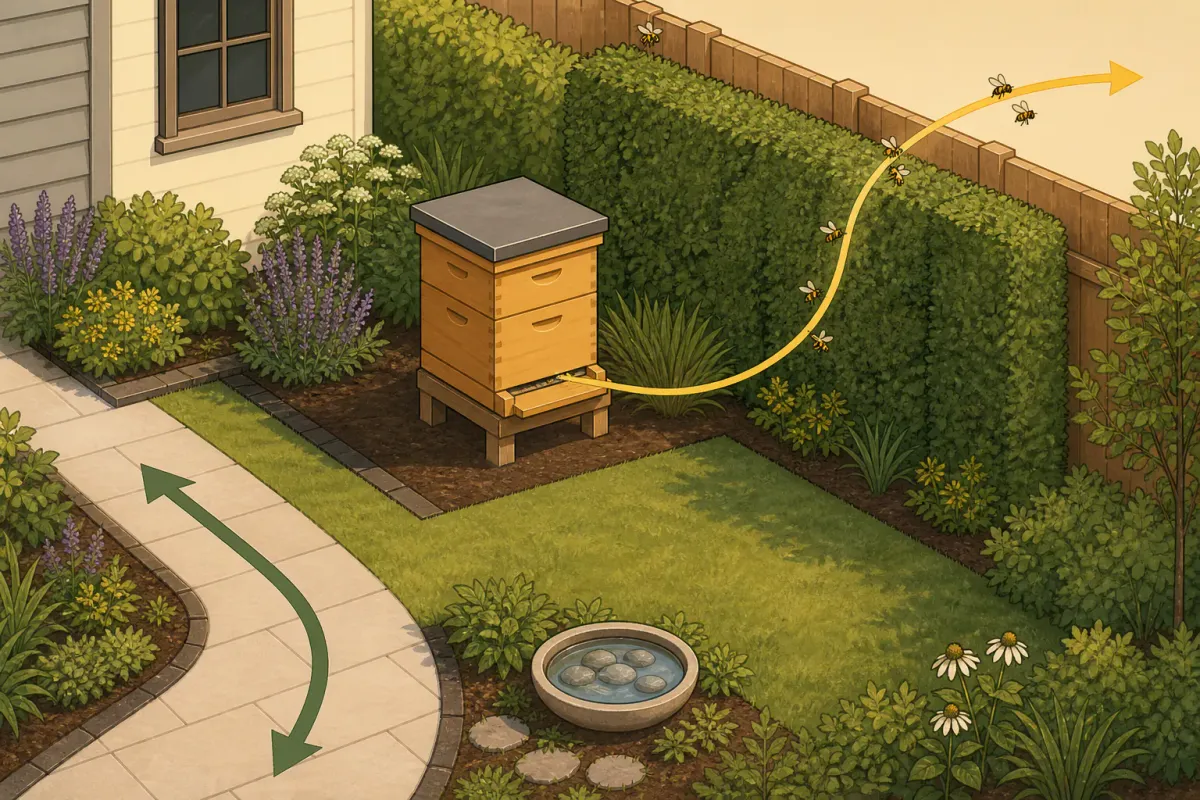
The 15-foot setback is large for row-house lots. Many DC yards simply cannot place a ground hive 15 feet from every property line. The regulations allow alternatives under specific conditions - flyway barriers and rooftop placement are the usual answers. Our rooftop beehive setup guide covers wind protection and weight questions, and the balcony beekeeping guide addresses small-space compromises honestly.
The water rule is enforced by complaint. Bees discovering a neighbor’s birdbath or AC condensate line is the most common trigger for a nuisance call. Set up water before the bees arrive and keep it filled through DC’s hot, humid summers - see our advice on helping hives through heat waves.
Swarms attract attention fast. A swarm on a Capitol Hill sidewalk gets photographed, posted, and reported within the hour. City beekeepers should run active swarm prevention from early spring - our urban swarm prevention guide explains the checkerboarding and split techniques that matter most in dense neighborhoods.
Before you install a hive in DC
- Read the current registration, transport, hive-density, and placement guidance on DOEE’s Beekeeping in the District page. That page summarizes the applicable District rules and provides the current agency contact.
- Plan your registration - the 30-day window starts when the colony is established.
- If buying bees outside the District, ask DOEE about the transport permit first.
- Confirm your building: landlords, condo boards, and HOAs can prohibit hives even where the city allows them.
- Design placement around the 15-foot rule, a constant water source, and a flyway barrier - then walk through our beginner’s setup plan.
Not legal advice. Rules change - verify with DOEE before installing hives.