Wales Beekeeping Laws: BeeBase & Welsh Bee Health Rules
By UrbanBee Editorial TeamSources checked Oct 14, 2026
⚠️ Not Legal Advice: Summaries for educational purposes only. Verify with official Wales authorities.
Wales beekeeping rules make disease and pest reporting a separate duty from voluntary BeeBase registration. A registered apiary must still meet the property’s conditions and any applicable council requirements.
Register the location with BeeBase, save the local inspector’s contact details and obtain site permission before purchasing colonies. If you already have an account, check that its apiary locations and Varroa status reflect the actual operation.
Welsh requirements compared
| Topic | Current position | Useful next step |
|---|---|---|
| BeeBase account | Free, voluntary and strongly encouraged | Register every apiary accurately |
| Notifiable diseases or pests | Suspicions must be reported promptly | Save the NBU or inspector contact |
| Varroa | Reportable since April 21, 2021 | Check the apiary’s recorded status |
| Pre-April-2021 BeeBase apiary | Defaulted Varroa-positive under the guidance | Ask about a change to free-from status |
| Garden or allotment use | Separate local and property review | Obtain the responsible operator’s agreement |
The Welsh Government healthy-honey-bee guidance, updated February 24, 2026, explains the current registration and reporting routes.
Wales has its own bee-health legislation
The Bee Diseases and Pests Control (Wales) Order 2006 is part of the Welsh framework. Its 2021 amendment addresses Varroa reporting.
The National Bee Unit supports the Welsh service, including inspection and information through BeeBase. Use the appropriate inspector contact rather than waiting for a general club meeting when a reportable concern arises.
Keep supplier, movement and brood-inspection records. They make it easier to explain where a colony or suspect frame originated.
Check what your BeeBase record actually says
A new keeper should enter the current apiary details and use the prescribed reporting route. For an older account, distinguish the historical default-positive status from a later change in the yard’s circumstances.
Do not rewrite the record as free from Varroa merely because the last inspection found no visible mites. Ask the NBU how that status should be assessed and recorded.
Continue routine monitoring and management after reporting. Recording a status is an administrative step; it does not eliminate the need for inspections.
Prepare for a suspect-disease report
Welsh guidance lists American foulbrood, European foulbrood, small hive beetle and Tropilaelaps among notifiable concerns. A suspected case requires prompt contact.
Record the colony identifier, symptoms and date, and keep clear photographs where it is safe to do so. Stop sharing suspect bees, comb and equipment while obtaining instructions. Our foulbrood comparison guide helps describe the concern without substituting for official inspection.
Check movement requirements before arranging an imported colony or queen. A seller’s documents should match the actual consignment and destination.
Allotment and garden permission
An allotment operator, landlord or shared-property agreement can impose conditions on honey bees. Ask about the precise location, inspections, public access, insurance and removal process.
A small private garden also needs an entrance route that avoids doors and frequently occupied neighboring areas, plus dependable water. Our residential hive-site guide helps organize the proposal.
Keep property permission, BeeBase information and colony records together. The UK framework guide and international research hub link the other national and local guides.
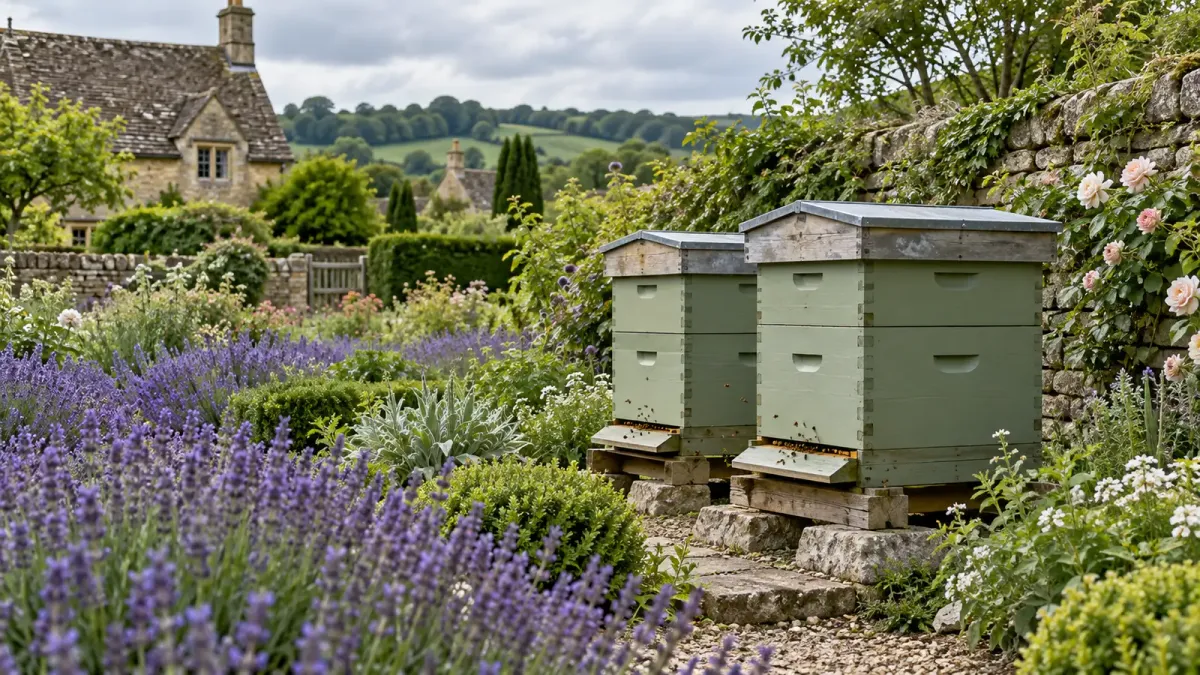
The hero image is an AI-generated illustration; it does not document an approved apiary or measured legal distances.
Frequently asked questions
Is beekeeper registration mandatory in Wales?
Welsh Government guidance strongly recommends free BeeBase registration. Ordinary registration is voluntary; this does not remove mandatory disease or pest reporting.
Who should a Welsh beekeeper contact about suspected foulbrood?
Notify the National Bee Unit or local bee inspector immediately using the current BeeBase contacts. Do not wait for the next routine inspection.
Is Varroa reportable in Wales?
Yes. Varroa became reportable on April 21, 2021. Welsh guidance explains reporting through BeeBase or the reporting form for an unregistered keeper.
Do older BeeBase records need a new Varroa report?
Welsh guidance says apiaries registered before April 2021 were defaulted as Varroa-positive. Those keepers need to contact the NBU again if changing the apiary status to free from Varroa; check that guidance against your actual record.