Tasmania Beekeeping Laws: Registration & Biosecurity
By UrbanBee Editorial TeamSources checked Oct 14, 2026
⚠️ Not Legal Advice: Summaries for educational purposes only. Verify with official Tasmania authorities.
Tasmania beekeeping laws require compulsory registration for recreational and commercial keepers. A small backyard apiary is part of this system, and registration does not approve a garden site or a mainland shipment.
Use the current NRE Tasmania registration page and BeeTAS portal before acquiring colonies. Read the linked conditions, then confirm the proposed location with the council and landowner.
Tasmanian requirements at a glance
| Task | Official route | What to organize |
|---|---|---|
| Register or renew | BeeTAS, linked by NRE Tasmania | Keeper details and accurate apiary locations |
| Review obligations | Current registration conditions | Inspection and biosecurity record system |
| 20 or more hives | Annual AFB honey-sampling process | Laboratory submission and result |
| Import bees or equipment | Biosecurity Tasmania entry conditions | Commodity-specific confirmation before dispatch |
| Choose a backyard site | Local council and property authority | Site drawing and permission |
NRE’s beekeeper registration page is the starting point for current forms and conditions. The Biosecurity Act 2019 framework explains why regulated activities carry responsibilities beyond filling out a form.
Register through the current BeeTAS system
The official page links BeeTAS for registration, renewal and apiary updates. Start from that link rather than an old downloaded form whose submission route may have changed.
Enter each location accurately. For a borrowed site, agree on the physical position and access route before recording the apiary. Save the registration confirmation and the current conditions together.
Use the expiry or renewal instructions supplied for your registration; do not copy another state’s renewal cycle. Revisit the account when colonies, locations or contact details change.
Build records that support disease control
Keep a dated log of brood inspections, introductions, movements and treatment decisions. Connect each entry to an identifiable colony and apiary so a later disease concern can be traced.
NRE requires annual AFB honey sampling for keepers with 20 or more hives and provides laboratory and declaration information. Arrange the correct sample and submission process early; a honey test is not a substitute for examining brood.
For suspect brood, use our foulbrood warning-sign guide to recognize a reason for follow-up. Keep affected equipment away from robbing bees and obtain official instructions before transferring or disposing of it.
Check island entry conditions before purchasing
A registered Tasmanian keeper must still check import controls. Give Biosecurity Tasmania the supplier location, item description and shipment format before agreeing to delivery.
A nuc on comb, a queen shipment, secondhand boxes and other bee products are different commodities. Permission for one should not be extrapolated to the rest. Ask the seller to hold dispatch until the required documents and entry conditions are established.
The Australia overview explains the overlapping national framework without replacing Tasmania’s entry rules.
Choose a site you can manage through the season
Ask the council which land-use, nuisance or local animal provisions apply to the address. Provide a plan showing the hive, neighboring occupied spaces, paths and intended inspection area.
For a rental, shared garden or institutional site, confirm who authorizes the apiary and who will manage it during absences. Plan dependable water, entrance direction and storage that keeps spare comb protected.
Use our residential hive-site guide to prepare those questions. Recheck permission before adding colonies or relocating the yard, and use the international research hub for other locations.
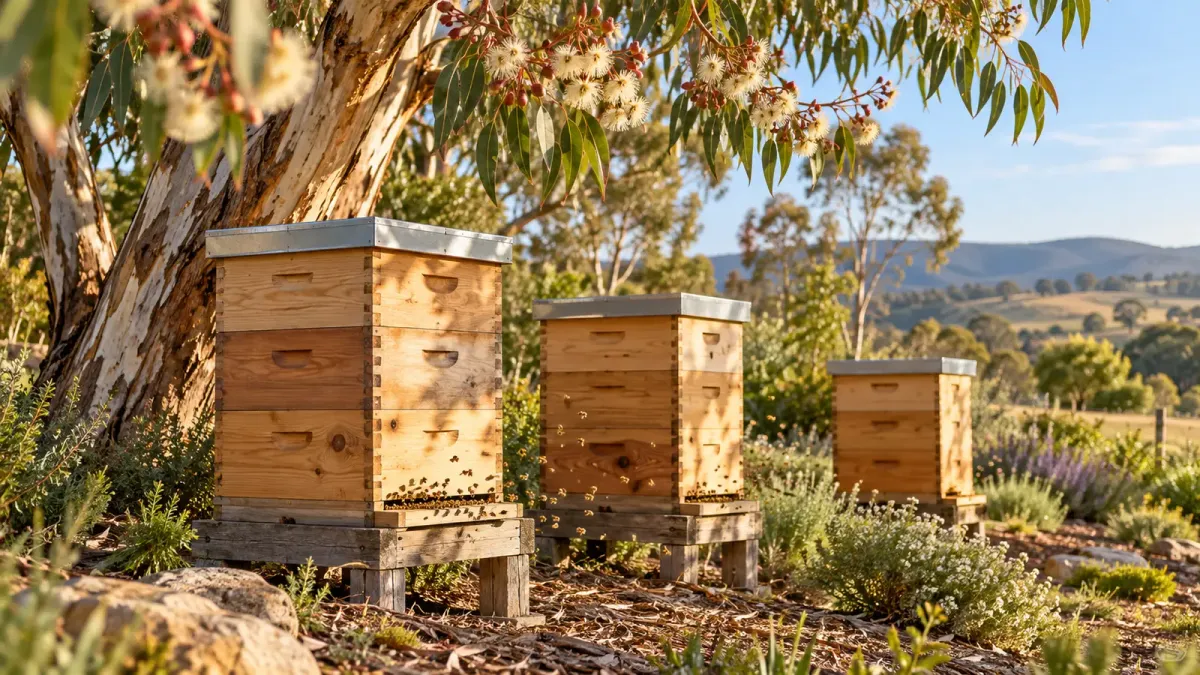
The hero image is an AI-generated illustration; it does not document an approved apiary or measured legal distances.
Frequently asked questions
Do hobby beekeepers have to register in Tasmania?
Yes. NRE Tasmania says registration is compulsory for recreational and commercial beekeepers under the Biosecurity Act 2019 framework.
Where do I register a Tasmanian apiary?
Use the BeeTAS portal linked by NRE Tasmania for registration, renewal and apiary updates. Read the current conditions linked from the official registration page.
Who needs annual AFB honey sampling in Tasmania?
NRE Tasmania states that beekeepers with 20 or more hives must submit an annual AFB honey sample through its Animal Health Laboratory process. Confirm the current sampling instructions before submission.
Can I bring a mainland nuc into Tasmania after registering?
Registration is not import permission. Check current Tasmanian entry conditions for the exact bees, comb, equipment or products before buying or arranging shipment.