South Australia Beekeeping Laws: Registration & Hives
By UrbanBee Editorial TeamSources checked Oct 14, 2026
⚠️ Not Legal Advice: Summaries for educational purposes only. Verify with official South Australia authorities.
South Australia beekeeping laws require PIRSA registration every 12 months, including a single backyard hive. Registration and renewal records are part of bee-health control; they do not grant municipal permission to install colonies.
Register through myPIRSA, confirm the apiary’s renewal category and ask the council about the address before bringing bees home. Begin inspection records immediately so renewal is supported by evidence from the required period.
Compare PIRSA renewal categories
| Hive count | Renewal documentation | Planning consequence |
|---|---|---|
| 1–19 | Disease-information acknowledgement and required biosecurity records or approved assurance documentation | Keep records from the first colony |
| 20–49 | The above, plus AFB honey-test results | Arrange approved sampling and laboratory submission |
| 50 or more | The above, plus an approved pest-and-disease course certificate | Check course-certificate validity before renewal |
The PIRSA registration page explains the accepted documents and deadlines. The current fee schedule exempts 1–4 hives from registration fees and hive contributions, but those keepers must still register.
Plan renewal around records, not the reminder letter
Set a reminder well ahead of the registration expiry. Retain inspections, pest observations, treatments, movements and ownership changes in the format PIRSA requires.
Where AFB testing applies, confirm the sample, approved laboratory and sampling period before sending honey. A supermarket jar, an old mixed harvest or an undocumented sample may not answer the required apiary question.
Keep the actual submission confirmation with the registration. A course certificate or laboratory result is one part of the renewal file; it does not complete every other requirement.
Choose a manageable backyard site
The PIRSA recreational guide provides placement and management guidance. Its screening or distance advice should not be presented as a single enacted setback for every council.
Draw the hive, doors, nearby outdoor living areas and public paths. Ask the council whether a permit, local allowance or additional property condition applies. Obtain the owner’s approval on rented or shared land.
Provide water before installing the colony and leave a working route that does not cross the entrance. Our urban water-source guide helps plan a shallow landing area and dependable refill routine. Water availability deserves particular attention during hot, dry periods.
Use current Varroa and movement information
PIRSA’s current Varroa page discusses detection in South Australia. Advice describing the risk as confined to New South Wales is insufficient for a current management plan.
Check the latest official monitoring, reporting and movement directions before buying colonies from another region. Record the source and destination, and avoid transferring suspect brood or equipment while seeking instructions.
A neighbor’s healthy-looking colony does not establish the health status of a shipment. Ask the supplier for traceable records and any required movement documents before dispatch.
Keep the registration and property files connected
Save your keeper details, hive identification, colony count, council response and landowner permission together. Update PIRSA when ownership or contact information changes using its current process.
Use the Australia beekeeping laws overview for overlapping biosecurity responsibilities and the international research hub for the wider directory.
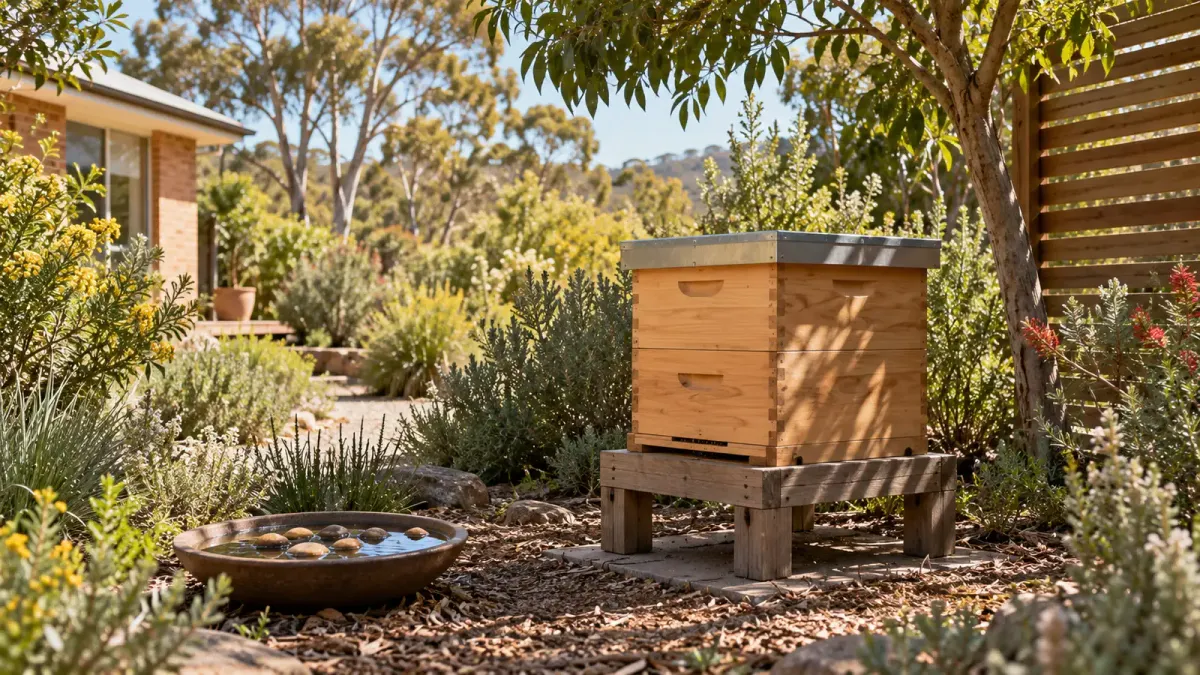
The hero image is an AI-generated illustration; it does not document an approved apiary or measured legal distances.
Frequently asked questions
Does one backyard hive need registration in South Australia?
Yes. PIRSA requires honey-bee keeper registration every 12 months regardless of hive number, type or purpose. A fee exemption for a small apiary does not remove registration.
Do South Australian beekeepers with fewer than 20 hives need records?
Yes. The 1-to-19-hive renewal category includes pest-and-disease information acknowledgement and the required biosecurity records or approved assurance documentation.
When does PIRSA require AFB honey testing for renewal?
The 20-to-49-hive category adds laboratory AFB honey testing, and the 50-or-more category adds approved pest-and-disease training. Use PIRSA’s current renewal instructions for sampling and document validity.
Is there one backyard setback for every South Australian council?
Do not assume a universal distance. PIRSA’s recreational placement guidance is useful, but check the enacted council requirements and property permission for the actual site.