Brisbane Beekeeping Rules: Biosecurity & Local Checks
By UrbanBee Editorial TeamSources checked Oct 14, 2026
⚠️ Not Legal Advice: Summaries for educational purposes only. Verify with official Brisbane, Queensland authorities.
Brisbane honey-bee keepers must complete Queensland biosecurity registration and a site-specific local and property review. Older Brisbane animal-law tables should not be used as current bee permits or hive allowances.
Before installing colonies, give the council your address, proposed hive number and site plan. Ask for the current provisions and any applicable conditions, then obtain the property authority’s agreement.
Keep the different approvals clear
| Question | Relevant starting point | What to avoid assuming |
|---|---|---|
| Honey-bee registration | Queensland biosecurity entity registration | Registration approves the backyard |
| Local apiary conditions | Current council laws and planning advice | A general animal fee applies to bees |
| Property permission | Owner, body corporate or land manager | An unused garden is available |
| Building or roof works | Relevant planning and building review | Hive permission also authorizes alterations |
| Nuisance response | Council and an experienced beekeeper | A manageable initial colony stays suitable indefinitely |
The Queensland registration page applies to honey-bee keepers, including hobbyists. The Queensland guide explains the state framework and hive identification.
Why some online Brisbane hive tables conflict
The current Animals Local Law 2017 defines an animal as a vertebrate in its interpretation schedule. Honey bees are not covered by that definition.
Section 75 repeals both the Animals Local Law 2003 and the Animals Subordinate Local Law 2003. A page reproducing the older schedules does not establish current bee-specific permission.
These findings do not establish a ban or unrestricted permission. They explain why the 2017 law’s animal schedules, general animal fees and old hive tables cannot simply be copied into a current bee guide.
Use the council’s current local-law directory and request the enacted provision relevant to the site. A proposed planning amendment should also be distinguished from an adopted requirement.
Ask about the actual apiary use
Describe whether the operation is a small private backyard apiary, a shared-property installation, a commercial activity or a public-facing education site. Include any platform, fence, roof screen or storage area.
Ask whether the use is allowed at that address, whether approval is needed and which conditions determine the acceptable location or colony number. Retain the response and cited provisions.
For body-corporate property, obtain the required agreement for use and alterations. Our residential property guide helps prepare a complete request.
Water and flight traffic matter in a suburban garden
Provide a dependable on-site water source before the bees arrive. Plan the entrance away from paths, pools and routinely occupied neighboring space, with room to inspect without blocking access.
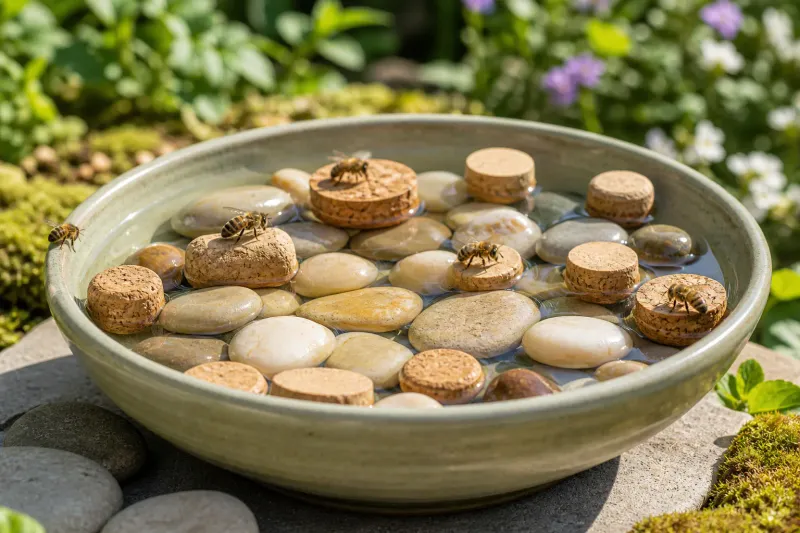
The illustration shows landing access, not a measured legal placement. Refill and clean the station as part of the inspection routine.
Arrange backup help for swarm management or defensive colonies. Keep a record of observed problems and the action taken when neighbors raise concerns.
Recheck before expanding
Update state registration details when required and review the local response before adding colonies or relocating the apiary. The Australia overview and international research hub explain the overlapping responsibilities.
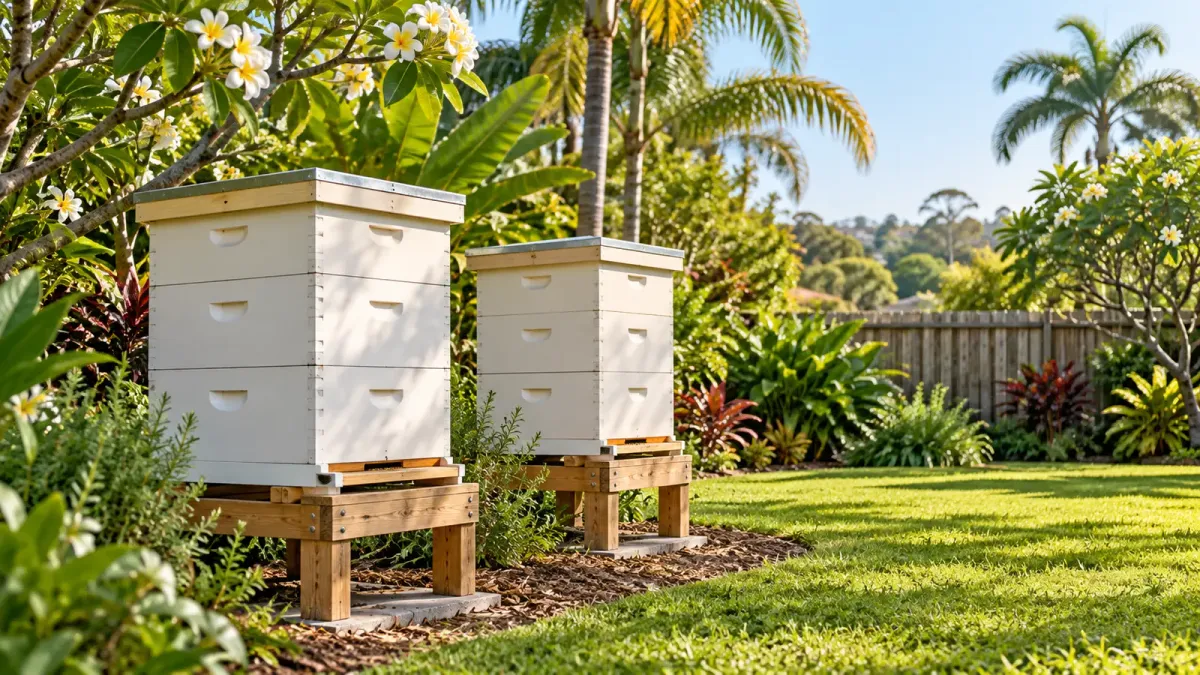
The hero image is an AI-generated illustration; it does not document an approved apiary or measured legal distances.
Frequently asked questions
Do Brisbane backyard beekeepers need Queensland registration?
Yes. Queensland requires people who keep honey bees to register as a biosecurity entity. Native-bee keepers are exempt from this honey-bee registration requirement.
Does Brisbane’s Animals Local Law 2017 set bee permit fees?
Its definition of animal covers vertebrates, and the law does not provide a bee-specific permit table. Do not apply its general animal fees or schedules to a honey-bee proposal.
Can I rely on Brisbane’s 2003 animal-law hive limits?
No. Section 75 of the Animals Local Law 2017 repeals the Animals Local Law 2003 and Animals Subordinate Local Law 2003. Ask the council for the current provision applicable to your apiary.
Does Brisbane have unlimited backyard beekeeping?
That conclusion is not supported. Check the site’s land use, property conditions, nuisance risks and any specific council requirements; the absence of a verified general cap is not unrestricted permission.