Atlanta Beekeeping Rules & Georgia Apiary Code
By UrbanBee Editorial TeamSources checked Oct 2, 2026
⚠️ Not Legal Advice: Summaries for educational purposes only. Verify with official Atlanta, Georgia authorities.
Before installing a hive in Atlanta, confirm the property’s jurisdiction and zoning, then ask City Planning how your proposed apiary is classified at that address. Georgia protects beekeeping from local bans, but that does not make every hive location acceptable or override a lease, condominium rule, or private covenant.
Send the planner your parcel information, proposed colony count, a site sketch, and whether you intend to sell bees or honey. Ask for the applicable code citations and required approvals in writing. We could not verify the often-repeated two-to-four-hive limits, twenty-five-hive allowance, or 25-foot/10-foot setback formula as general Atlanta backyard rules in the official materials reviewed.
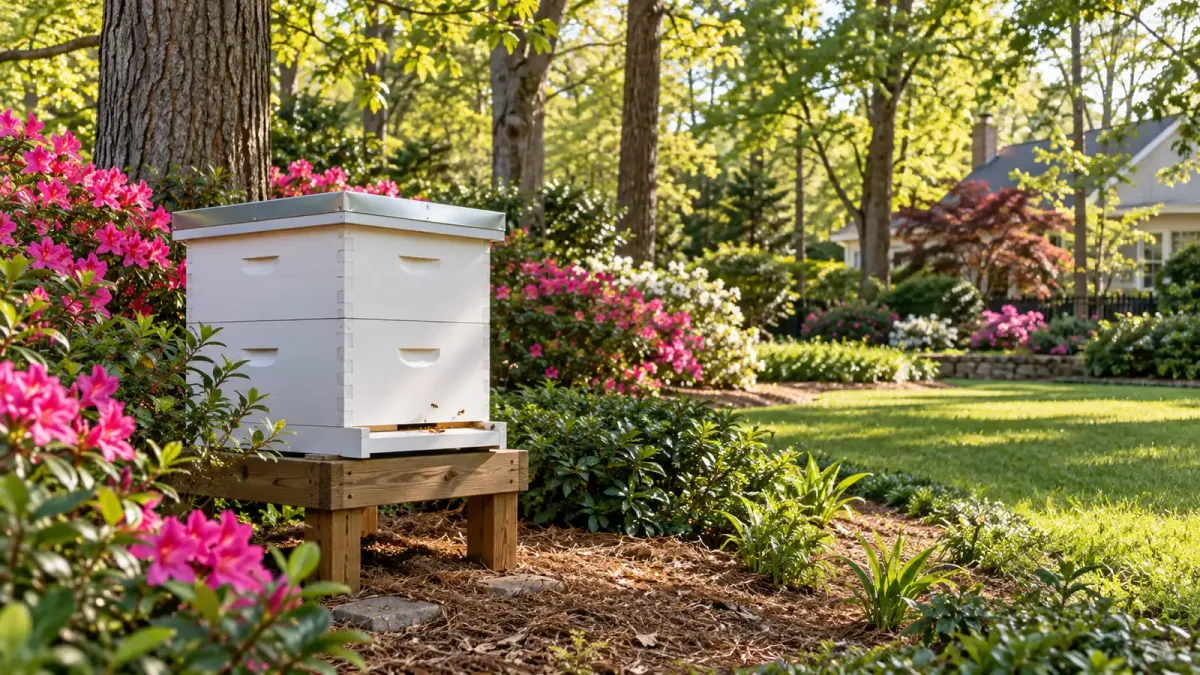
Sources checked October 2, 2026. The AI-generated hero is an Atlanta-inspired garden illustration, not evidence that a particular apiary is permitted.
Legal alert: This is an educational research guide, not an approval or legal opinion for a property. Some municipal pages were not fully accessible during review. Unverified numerical limits are therefore omitted; obtain a current, address-specific answer before buying bees or relying on an exemption.
Atlanta Beekeeping Permits, Zoning, and State Rules
| Your question | Starting point | What to ask for |
|---|---|---|
| Is the property inside Atlanta city limits? | City property and zoning maps | Confirm the actual jurisdiction, not just the mailing city |
| Is the proposed apiary allowed here? | Atlanta City Planning, or the relevant municipality/county | Written use classification, conditions, and code citations |
| Does a fence or garden installation need approval? | Local planning/building authority | Requirements for the specific proposed improvement |
| May I sell queens, packages, or nucs as a business? | Georgia Department of Agriculture, Apiary Program | Licensing and inspection instructions |
| May I bring colonies into Georgia? | GDA Apiary Program | Movement permit and health-document requirements |
| May I sell bottled honey? | GDA food-safety program | Whether the own-honey retail exemption applies to the operation |
| Can I use this rented or shared site? | Owner, landlord, or association | Written permission and access terms |
Start with Atlanta’s property-information map. “Atlanta” on a mailing address does not settle whether Atlanta, another municipality, or an unincorporated county controls the site. Fulton and DeKalb should not be treated as interchangeable sets of backyard rules.
What the Urban-Garden Rules Do—and Do Not—Establish
The published Atlanta zoning definitions distinguish urban gardens from personal-use gardens at residential properties. Section 16-29.001(83) addresses accessory urban gardens and a special administrative permit route for urban gardens as a principal use on undeveloped residential lots.
That is useful context, but it does not by itself establish a universal apiary allowance. Do not infer a hive count or bee setback from a general garden definition. Ask how the hive proposal fits the district and any overlay or parcel-specific conditions.
ATL311’s zoning guidance directs residents to City Planning’s GIS and the Office of Zoning and Development. A useful inquiry includes:
- Street address and parcel ID.
- Whether the hives are personal, educational, or commercial.
- Proposed count, including any seasonal nucs or splits.
- Distances to boundaries, doors, paths, and neighboring outdoor areas.
- Proposed screens, stands, water station, and any onsite customer activity.
Ask whether an informal written determination is enough or whether a formal zoning verification or permit is needed. Save the reply with your plan.
Georgia Apiary Licensing, Registration, and Bee Movement
The GDA Apiary Program explains that O.C.G.A. § 2-14-41.1 prevents local governments from banning beekeeping while allowing certain local siting regulation. That protection is not a reason to skip the zoning inquiry or assume private property restrictions disappear.
Selling bees is different from keeping a hobby colony
Rule 40-4-1-.01 requires a license for the business of selling packages, queens, or nuclei and ties licensing to inspection. Before advertising nucs, ask GDA which records and inspections your operation needs. Use the agency’s current application instructions rather than an old fee quoted in a forum.
Moving bees across state lines needs advance checks
Georgia’s rules distinguish queens and packages from bees on comb or in hives. They prescribe certificates and, for incoming colonies on comb or in hives, a permit process. Resident in-state movement is treated separately and remains subject to quarantine restrictions. Contact GDA before arranging an interstate pickup.
BeeCheck is voluntary, not a permit
GDA identifies BeeCheck as a voluntary communication program for beekeepers and pesticide applicators. Mapping the apiary does not replace another regulatory requirement.
Selling Honey Has Its Own Requirements
The GDA guide for honey producers describes a Food Sales Establishment License exemption for qualifying producers processing and retailing their own honey directly to household consumers, including specified market settings. Sanitary processing and labeling requirements still apply.
Wholesale, distribution, purchased honey, or a different business model can change the answer. Describe the actual sales arrangement to GDA before printing labels or fitting out a processing space; do not assume “small producer” means unregulated.
Plan for Neighbors and Atlanta’s Growing Season
A legal inquiry should run alongside practical site planning. Sketch entrance direction, places people regularly sit or walk, and where water can be refilled without crossing the flight path. Our guide to constructing residential flyway barriers explains the siting purpose; a barrier does not automatically reduce an Atlanta setback.
UGA’s Georgia management calendar identifies tulip poplar among seasonal nectar sources. Use local bloom and colony observations rather than assuming every Atlanta garden gets the same flow.
During hot weather, keep water dependable and monitor stores and colony health. UGA’s small hive beetle guidance explains the damage beetles can cause in colonies and stored equipment. Keep that issue distinct from ants; our advice on managing hive pests in hot southern climates focuses on ant prevention.
Safety alert: Do not put a hive where inspections block a shared exit or expose passersby to defensive bees. Have an experienced beekeeper assess persistent defensiveness, and establish an authorized relocation site before a neighbor problem becomes urgent.
For local learning, check Metro Atlanta Beekeepers Association for current education and mentoring opportunities. Then use the ultimate urban beekeeping foundation guide to turn the approved location into a workable management plan.
A Zoning Inquiry You Can Adapt
Use the following wording as a starting point, replacing the description with your actual proposal. It is a request for clarification, not a claim that the use is already approved.
I would like written guidance on keeping honey bee colonies at my property. I can provide the street address, parcel ID, zoning district, intended colony count, and a sketch showing hive locations and neighboring uses. The proposal is for personal beekeeping unless otherwise described. Does this use require a zoning approval or permit, and which current provisions govern colony count, setbacks, water, barriers, or nuisance conditions? Please also identify any separate approvals for the proposed stand, screen, or onsite sales.
If the reply says that bees are “generally allowed,” ask whether it addresses the particular site and layout you submitted. If it refers you to another office, keep that referral and resolve the remaining question before installation. A garden approval, seller’s license, or voluntary apiary-map listing answers only part of the question.
Keep an Apiary Compliance Folder
Organize your records by the decision they support:
| Record | Why keep it? | When to revisit it |
|---|---|---|
| Parcel and jurisdiction check | Establishes which local authority you consulted | Before moving the hive to another property |
| Written zoning response and cited provisions | Records the proposal and conditions actually considered | Before changing colony count, layout, or use |
| Owner or association permission | Documents control of the site and access terms | When the lease, ownership, or building rules change |
| Applicable GDA documents | Keeps licensing, inspection, and movement records together | Before a covered sale or shipment and at stated renewal dates |
| Site and management notes | Tracks water, flight-path concerns, and responses to complaints | During routine management and after a reported problem |
This is a practical recordkeeping suggestion, not a statement that Atlanta requires a particular folder or inspection schedule. Avoid treating your own notes as a substitute for an agency decision.
If a requirement remains unclear, record it as unresolved. For a purchase decision, it is better to know that a proposed second location has not been checked than to assume the first property’s answer follows the bees.
Frequently Asked Questions
Can I keep bees at my Atlanta home?
Start with an address-specific zoning inquiry and written property permission. Georgia’s protection against local bans does not remove all siting rules, private restrictions, or nuisance responsibilities.
Does Atlanta allow two, four, or twenty-five hives?
We could not verify those numbers as general Atlanta backyard limits in the official materials reviewed. Ask City Planning for the current rule and its citation for your parcel and proposed use.
Do I need a Georgia license to sell queens or nucs?
Yes, engaging in the business of selling package bees, queens, or nuclei requires a Georgia Department of Agriculture license under Rule 40-4-1-.01. Confirm current application and inspection requirements before selling.
Is Georgia BeeCheck registration mandatory?
GDA describes BeeCheck as voluntary. It is a communication tool for beekeepers and pesticide applicators, not a substitute for licenses, movement requirements, or local approvals.