WA Beekeeping Laws: Registration, Branding & Records
By UrbanBee Editorial TeamSources checked Oct 14, 2026
⚠️ Not Legal Advice: Summaries for educational purposes only. Verify with official Western Australia authorities.
Western Australia beekeeping laws require DPIRD registration, proper hive identification and traceable records, even for a single backyard honey-bee colony. Registration does not decide whether your council or landowner approves the site.
Apply before acquiring bees, check the council’s rules for the address and plan how every new box will be marked. Keep movement documents with the apiary record from the first purchase.
WA requirements compared
| Duty | Current state requirement | Action before installation |
|---|---|---|
| Registration | All honey-bee keepers | Apply through DPIRD |
| Hive identification | Registered brand on required hive components | Prepare durable, correctly sized marks |
| Acquired hive | Apply your brand within 7 days | Record the transfer and marking date |
| Records | Retain required records for 7 years | Set up a backed-up apiary log |
| Land owned by someone else | Required apiary contact signage | Agree on sign placement and access |
| Local site | Council and property checks | Confirm permission in writing |
The DPIRD registration and responsibilities page links the current forms, Brands Portal and identification regulations.
Brand equipment before it becomes hard to trace
The identification requirements include brood boxes and honey supers, with letters and numerals at least 19 mm high. The approved marking must remain conspicuous and durable outdoors. When buying a previously branded hive, follow the instructions for adding your identifier and striking through the old mark while retaining its legibility.
Prepare a labeling station before the colony arrives. Mark spare supers as well as the occupied box, and record which equipment came from each supplier. A painted nickname or handwritten colony number can help management but does not necessarily meet the registered-brand requirement.
Keep a useful seven-year record
Record the apiary address, introductions, movements and transfers. When disposing of a hive, check the recipient’s registration and keep the required identity and brand information.
A simple log can connect the date, colony identifier, origin, destination, recipient and accompanying documents. Back it up separately from your phone so a lost device does not erase the apiary’s history.
On another person’s land, the required sign includes the keeper’s name, telephone number, registered brand and residence or business address. Agree on the sign and inspection access when obtaining permission.
Backyard permission and Crown-land sites
DPIRD’s backyard beekeeping guidance directs keepers to consider local rules and responsible placement. Ask the council whether the property’s use, hive count, setbacks or nuisance controls require approval.
For rented gardens, strata property or community sites, establish who can authorize the apiary. Our residential site guide helps assemble the address and layout questions.
A Crown-land apiary authority concerns a separate land-management process. A nearby unused patch of bush is not available simply because the beekeeper holds a state registration.
Check movement restrictions before arranging transport
WA has additional import and internal movement controls. Confirm the origin, destination and exact commodity with DPIRD; used comb, hive equipment and live bees can present different disease risks.
Keep stored comb and used equipment inaccessible to robbing bees. Do not leave a dead-out hive open while deciding whether to reuse it. Have suspect brood assessed before exchanging frames with another keeper.
Use the Australian biosecurity overview for the national context and the international regulations hub to compare jurisdictions.
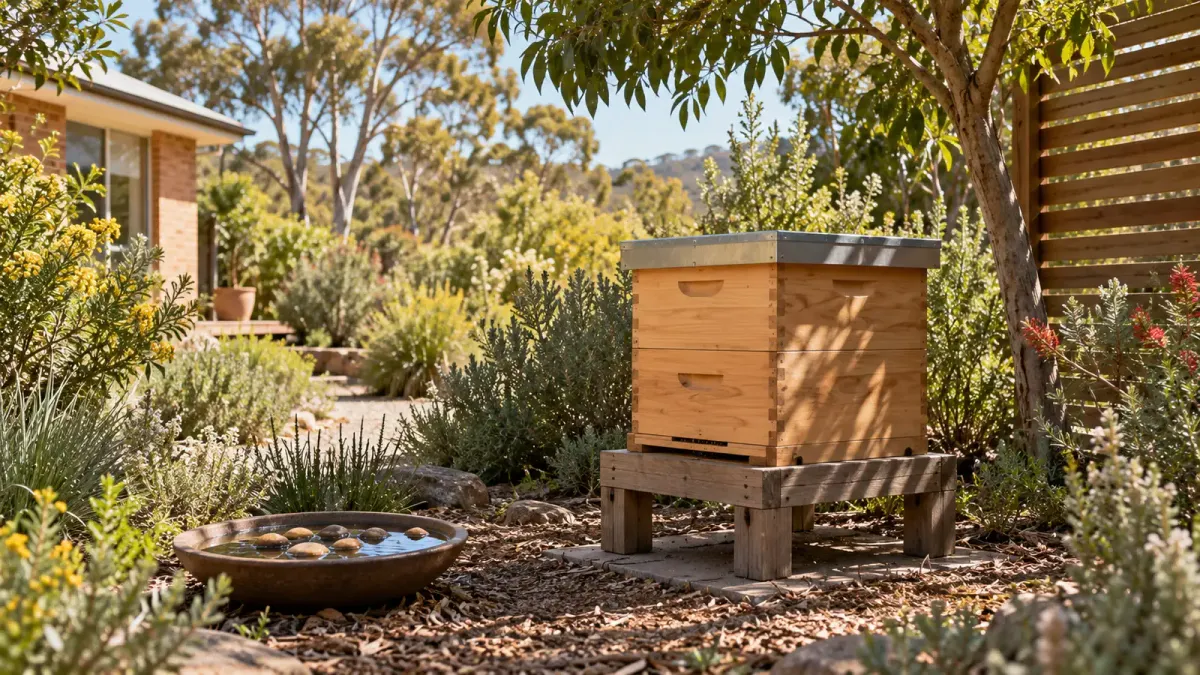
The hero image is an AI-generated illustration; it does not document an approved apiary or measured legal distances.
Frequently asked questions
Do I need to register one backyard hive in WA?
Yes. DPIRD requires registration regardless of hive number, hive type or whether the bees are kept for a hobby, commercial operation or pollination.
Which WA hive components need the registered brand?
The identification requirements cover the hive boxes and externally surfaced hive components, including brood boxes and honey supers. Use the approved durable marking method and dimensions.
How long must WA beekeeping records be retained?
Required records of apiary sites, movements, sales and introductions are retained for seven years and must be available to biosecurity inspectors.
Does WA registration permit hives on Crown land?
No. Registration is separate from authority to use Crown land or a particular apiary site. Obtain the relevant land-management permission and check movement conditions before transporting bees.