Phoenix Beekeeping Laws: Lot Size & Neighbor Consent
By UrbanBee Editorial TeamSources checked Aug 9, 2026
⚠️ Not Legal Advice: Summaries for educational purposes only. Verify with official Phoenix, AZ authorities.
Phoenix writes its beekeeping rules directly into the city code - Chapter 8, Section 8-8 - and they are built around lot size math rather than flat hive caps. Understand three numbers (6,000 / 1,700 / 5) and you understand Phoenix beekeeping law.
Is beekeeping legal in Phoenix?
Yes, with lot-size conditions. Phoenix City Code § 8-8(f) permits bees outright on lots of at least 6,000 square feet; smaller lots need written permission from surrounding neighbors.
The key rules at a glance
- Minimum lot size: keeping bees on a lot under 6,000 sq ft is unlawful unless you first obtain written permission from neighboring property owners and occupants (per § 8-9).
- Density cap: no more than one hive or colony per 1,700 sq ft of lot area - a typical 7,000 sq ft Phoenix lot supports up to four colonies.
- Setback: no hive may sit within 5 feet of any boundary line of the lot.
- Water is mandatory: you must provide a “constant and easily accessible supply of water” sufficient for all your bees - codified, not just good practice.
- Nuisance layer: the general animal-keeping provisions still prohibit odor, noise, and unsanitary conditions, and HOAs (very common in Phoenix) can restrict hives independently of the city.
Work Through a Site Example
| Site question | Example check |
|---|---|
| Lot area | A 7,000-square-foot lot exceeds the 6,000-square-foot consent threshold |
| Density | 7,000 divided by 1,700 permits at most four colonies under the density rule |
| Placement | Draw a five-foot exclusion zone inside every lot boundary |
| Water | Plan a constant, accessible supply before bees arrive |
| Other permission | Check property restrictions and any other applicable requirements |
The arithmetic does not prove the site is suitable. On a lot below 6,000 square feet, first resolve the written-consent requirement with the city, including which adjoining owners and occupants must consent under sections 8-8 and 8-9. The city code was checked for these figures September 29, 2026.
Phoenix-specific realities
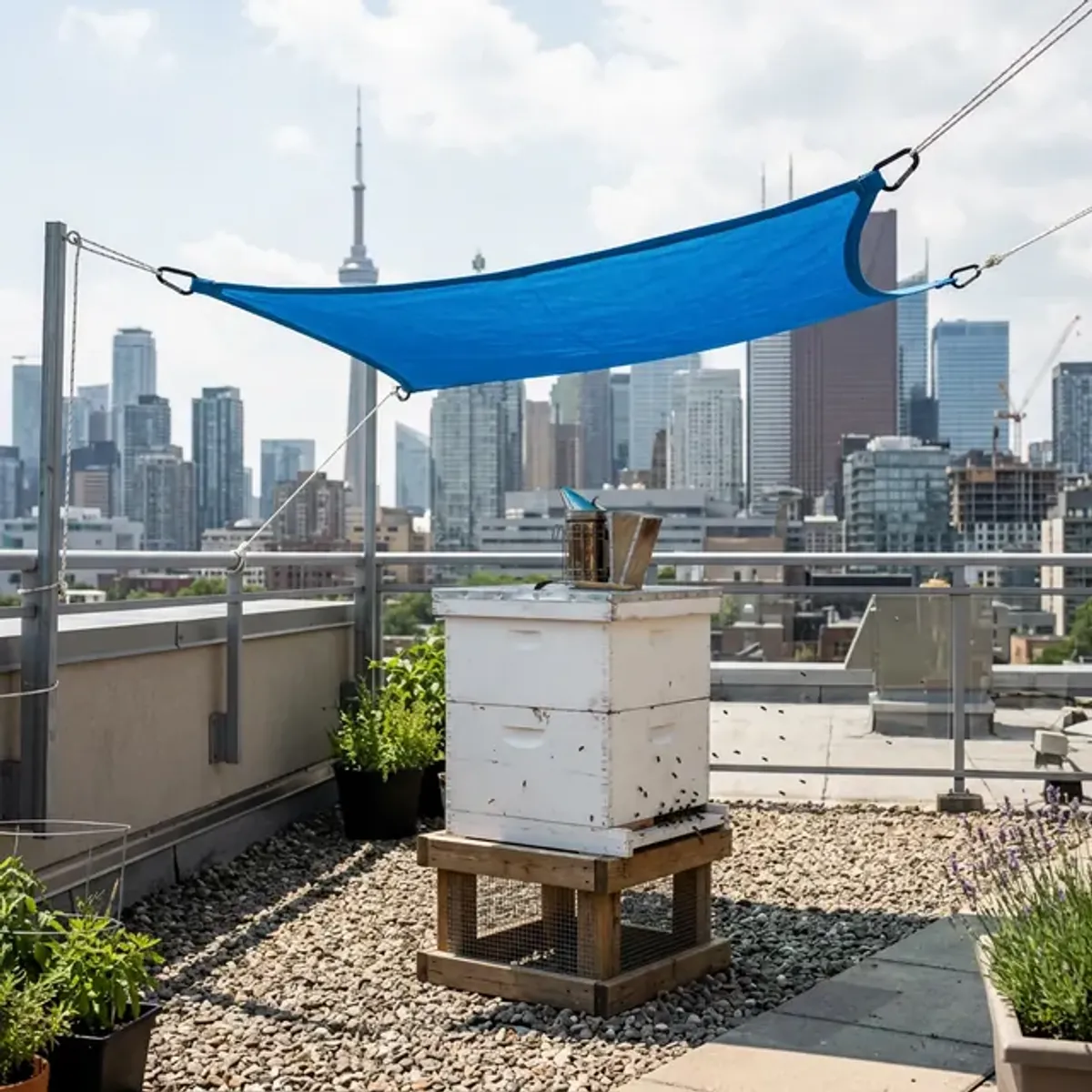
Heat is the defining constraint. At 115°F, colonies can abscond or melt comb. Afternoon shade is close to mandatory - a shade structure, north-east placement, or mature tree. Our heat-wave management guide is written for exactly this, and bearding will be your normal summer evening view.
The water rule solves your biggest neighbor problem in advance. In the desert, bees find pools, misters, and AC drip lines within days. A deep, always-full water source at the hive - established before the bees arrive - is both the law and your neighbor-relations strategy.
Africanized genetics are present in Arizona. Buy queens from gentle commercial stock, re-queen when temperament shifts, and never keep a hot hive on a small lot - see how to calm an aggressive colony.
Winter is your buildup season. Phoenix beekeeping runs on a flipped calendar: colonies build through the mild winter and survive the summer. Adapt our month-by-month calendar by shifting the “dearth” playbook to June–September.
Before you install a hive in Phoenix
- Measure your lot: 6,000+ sq ft keeps it simple; smaller means collecting written neighbor consents first.
- Do the density math (1 colony per 1,700 sq ft) and map the 5-foot setbacks.
- Check your HOA covenants - in Phoenix they say no more often than the city does.
- Install shade and the mandatory water source before the bees.
- Then follow the beginner setup plan and the startup budget.
Not legal advice. Rules change - verify with the current Phoenix City Code before installing hives.